SC: Multiplier Applies Based on Deceased’s Age, Not Dependents’
 Copy Link
 Share
Share Save
Save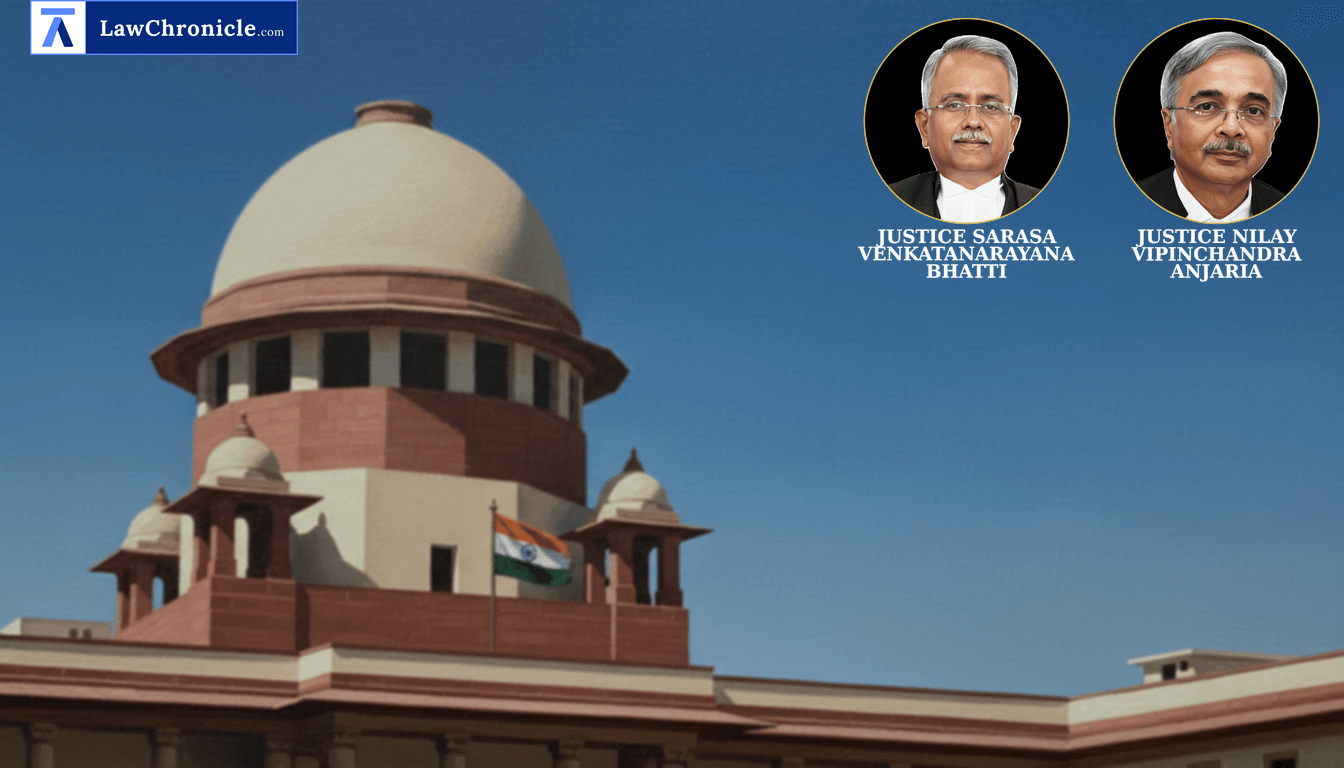
Setting a decisive precedent on motor accident claims, the Supreme Court has affirmed that compensation multipliers must strictly correspond to the deceased victim's age rather than that of the surviving dependents, while also ruling that corporate workplace accommodations cannot be used to reduce functional disability assessments for catastrophic injury victims.
A bench comprising Justice S.V.N. Bhatti and Justice N.V. Anjaria adjudicated appeals arising from a fatal 2011 road accident near Brijghat Bridge involving a motorcycle and a heavy goods vehicle. The accident resulted in the immediate death of 33-year-old Sushant Prabhakaran and left pillion rider Priyanka Das with severe, life-altering injuries.
Key Takeaways
Deceased's Age Governs Multiplier: Multipliers in fatal motor accident claims depend entirely on the age of the deceased, even if the victim was a bachelor.
Workplace Compassion Not Functional Ability: Employer-provided accommodations, special software, or retained salary do not negate functional disability for competitive open-market employability.
Evidentiary Burden in Summary Claims: Registration of an FIR and filing of a chargesheet establish primary onus regarding rash and negligent driving under the preponderance of probabilities standard.
Evaluating the legal framework for multiplier selection, the Court upheld the application of a 16-multiplier based on the deceased's age bracket. Addressing the severe disability claims of the surviving victim, the Court enhanced her functional disability rating from 80% to 100% after a Court-mandated Medical Board certified a 100% permanent physical impairment involving total blindness and a permanent colostomy.
The Court, in its reasoning, observed: "The calculation of functional disability depends on assessing the victim’s earning capacity in the open, competitive market, rather than on retention in a specific, highly accommodated role... she is able to perform her current duties only through specially created software, flexible working hours, and extreme accommodations provided by her employer as an act of corporate compassion."
Ratio
In motor accident claim proceedings, the selection of the multiplier for calculating loss of dependency is determined exclusively by the age of the deceased, regardless of whether the deceased was unmarried. Furthermore, the assessment of functional disability and loss of earning capacity must evaluate a victim's employability in the open, competitive labour market rather than compassionate retention or post-accident salary increments provided by an existing employer.
Background
The dispute stemmed from an accident on April 10, 2011, when a truck collided with a motorcycle driven by Sushant Prabhakaran, carrying Priyanka Das as a pillion rider. The Motor Accident Claims Tribunal (MACT), Gurugram, awarded compensation in two separate petitions one for the fatal claim of Sushant Prabhakaran and another for the grievous personal injuries suffered by Priyanka Das.
In the fatal claim, the insurer argued that since compensation was awarded to the parents, the multiplier ought to correspond to the age of the parents rather than the 33-year-old deceased. Rejecting this contention, the High Court and Supreme Court relied on the landmark principles in Sarla Verma v. Delhi Transport Corporation ( "(2009) 6 SCC 121": 2009 CaseBase(SC) 380), as approved by the Constitution Bench in National Insurance Co. Ltd. v. Pranay Sethi & Ors. ( "(2017) 16 SCC 680": 2017 CaseBase(SC) 551), and further reiterated in Munna Lal Jain v. Vipin Kumar Sharma ( "(2015) 6 SCC 347": 2015 CaseBase(SC) 818) and Sube Singh v. Shyam Singh ( "(2018) 3 SCC 18": 2018 CaseBase(SC) 1012). The Court affirmed that the age matrix for bachelors is settled law and no longer res integra.
Regarding the personal injury claim, the High Court had increased Priyanka Das's functional disability to 80%, applying the ratio from Pappu Deo Yadav v. Naresh Kumar & Ors. ( "(2022) 13 SCC 790": 2020 CaseBase(SC) 1924) to hold that permanent disablement must focus on the loss of income-generating capacity rather than mere physical limb impairment. The High Court also considered the non-fatal entitlement principles discussed in Manjuri Bera v. Oriental Insurance Co. Ltd. & Anr. ( "(2007) 10 SCC 643": 2007 CaseBase(SC) 909). Following a fresh medical examination ordered by the Supreme Court at Vardhman Mahavir Medical College & Safdarjung Hospital, New Delhi, which reported 100% total permanent physical impairment, the Supreme Court enhanced the total injury compensation to Rs. 3,77,84,297/- with 7.5% interest per annum.
Case Details:
Case No.: Civil Appeal No. 12085 of 2026 with Civil Appeal No. 12086 of 2026 and Civil Appeal Nos. 12087-12088 of 2026
Neutral Citation: 2026 INSC 950
Case Title: Reliance General Insurance Company Limited v. Priyanka Das and Others
Source: 2026 CaseBase(SC) 2577
 Breaking News