


SC Permits Formaldehyde Units to Continue Operations Pending Decision on Environmental Clearance
 Copy Link
 Share
 Save
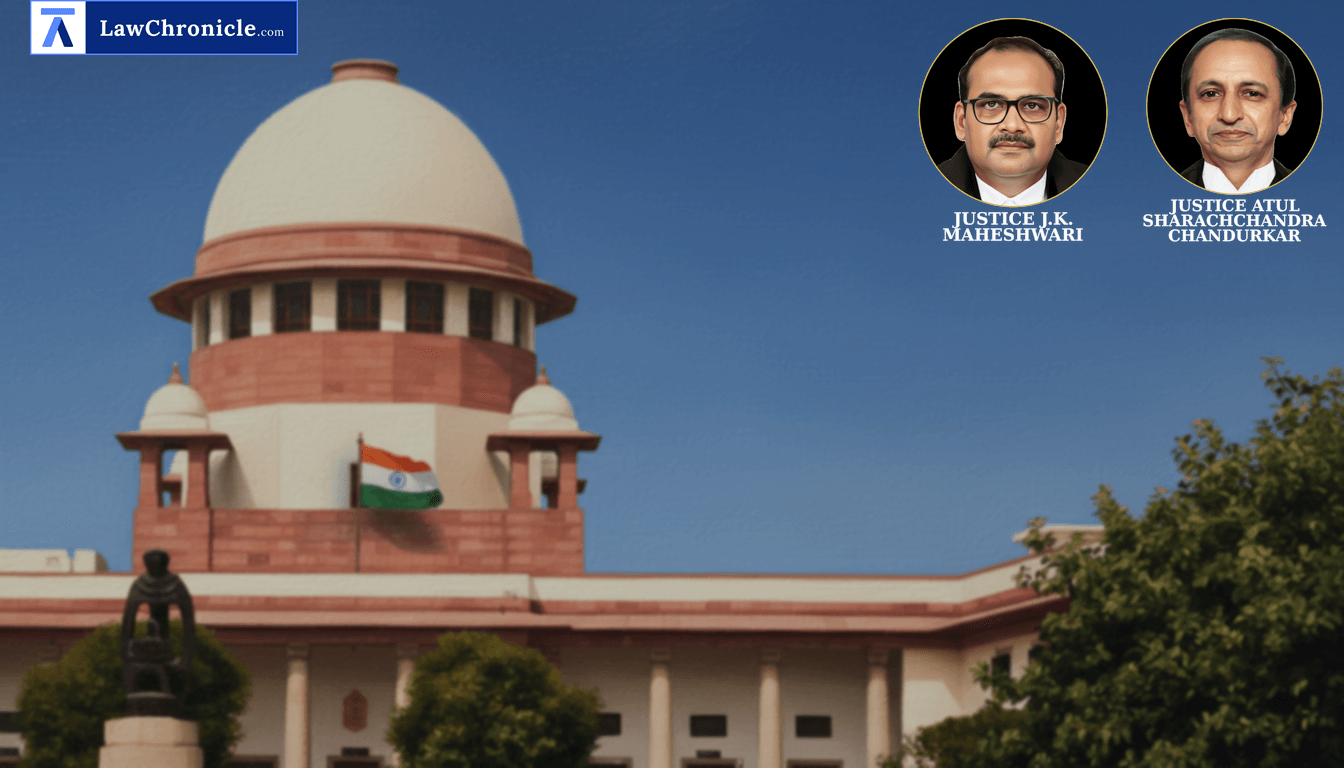
The Supreme Court of India set aside the order of the NGT that directed the closure of the units for operating without prior Environmental Clearance. The Court permitted several formaldehyde manufacturing facilities in Rajasthan and Haryana to remain operational, while directing them to apply for Environmental Clearance at the earliest and furnish proof of the same within 60 days.
A bench of Justice J.K. Maheshwari and Justice Atul S. Chandurkar heard a batch of appeals by manufacturers of formaldehyde and related resins challenging National Green Tribunal orders that directed closure for want of prior environmental clearance, and the Court considered whether units established on consents from state pollution control boards could continue to operate while ex-post facto clearance applications were decided.
Decision Summary: The Court allowed the appeals and set aside the directions of the NGT insofar as they mandated closure of units that were established and operating pursuant to valid Consent to Establish and Consent to Operate, and which had applied for environmental clearance and completed preliminary stages of the process. The Court relied on the reasoning in Pahwa Plastics Private Limited and Anr. v. Dastak NGO and Ors. and addressed the impact of the litigation arising from the Office Memoranda and the subsequent review.
The Court, in its reasoning, observed: "It is necessary to emphasize that the units of the appellants are not at the stage of establishment or starting operation. These are the units which, where established and started operation based on CTE and CTO granted by the PCB of the concerned State. Thereafter, the respective PCBs have examined the EIA 2006 notification wherein it was found that formaldehyde manufacturing units are covered under synthetic organic chemical listed at Sr. No. 5(f) of the Schedule 1 of the notification and such being the case, it was appropriate that the units which are in operation be required to seek EC." The Court further recorded that "Ex post facto EC should not ordinarily be granted, and certainly not for the asking," but held that in cases where consents were granted and the statutory process was substantially complete, the units could continue to function pending a decision.
Background
The appeals arose from three Original Applications before the NGT, including the matter that produced an order on 03.06.2021 which had directed that formaldehyde manufacturing units could not operate without prior environmental clearance. The appellants were units in Rajasthan and Haryana that had obtained Consent to Establish and Consent to Operate from the respective State Pollution Control Boards and were subsequently required by those boards to apply for environmental clearance under the EIA 2006 notification. The appellants complied and applied within the stipulated time; Screening and Scoping were completed and Terms of Reference were granted, with public consultation generally found inapplicable because most units were in notified industrial estates. The NGT orders were challenged and, in the decision that this Court relied upon, Pahwa Plastics Private Limited and Anr. v. Dastak NGO and Ors. set aside the NGT direction in similar circumstances and directed prompt disposal of pending clearance applications while permitting operations to continue. The case also engaged the review litigation in Confederation of Real Estate Developers of India (CREDAI) v. Vanashakti and Another, which had considered the lawfulness of Office Memoranda dealing with ex-post facto clearance; the Court noted the interplay between those proceedings and the pendency of appraisal by the central authority. The respondents had argued differences in the statutory schemes, invoking Section 25(7) of the Water (Prevention and Control of Pollution) Act, 1974 and Section 21(4) of the Air (Prevention And Control Of Pollution) Act, 1981, but the Court observed that where the PCB had granted CTE and CTO and the CTO was not disputed, the resultant factual matrix warranted application of the earlier precedent. Concluding that the factual position of the appellants matched the circumstances addressed in Pahwa Plastics Private Limited and Anr. v. Dastak NGO and Ors., the Court directed that the authorities decide the pending EC applications in accordance with law within one month, permitted continued operation pending such decision, ordered restoration of electricity if disconnected, subject to payment of charges, and provided procedural directions for communication of any further requirements by the Union of India.
Case Details:
Case No.: CIVIL APPEAL NO. 2881 OF 2021
NeutralCitation: 2026 INSC 455
Case Title: NEETU SOLVENTS v. VINEET NAGAR & ORS.
Appearances:
For the Petitioner(s): Mr. Nidhesh Gupta, Senior Counsel
For the Respondent(s): Mr. Ankit Jain, Senior Counsel; Ms. Archana Pathak Dave, Additional Solicitor General
Source: 2026 CaseBase(SC) 388
Similar Articles



 Breaking News


