SC Quashes Backdoor Deputation and Absorption of Engineers in Haryana PWD
 Copy Link
 Share
Share Save
Save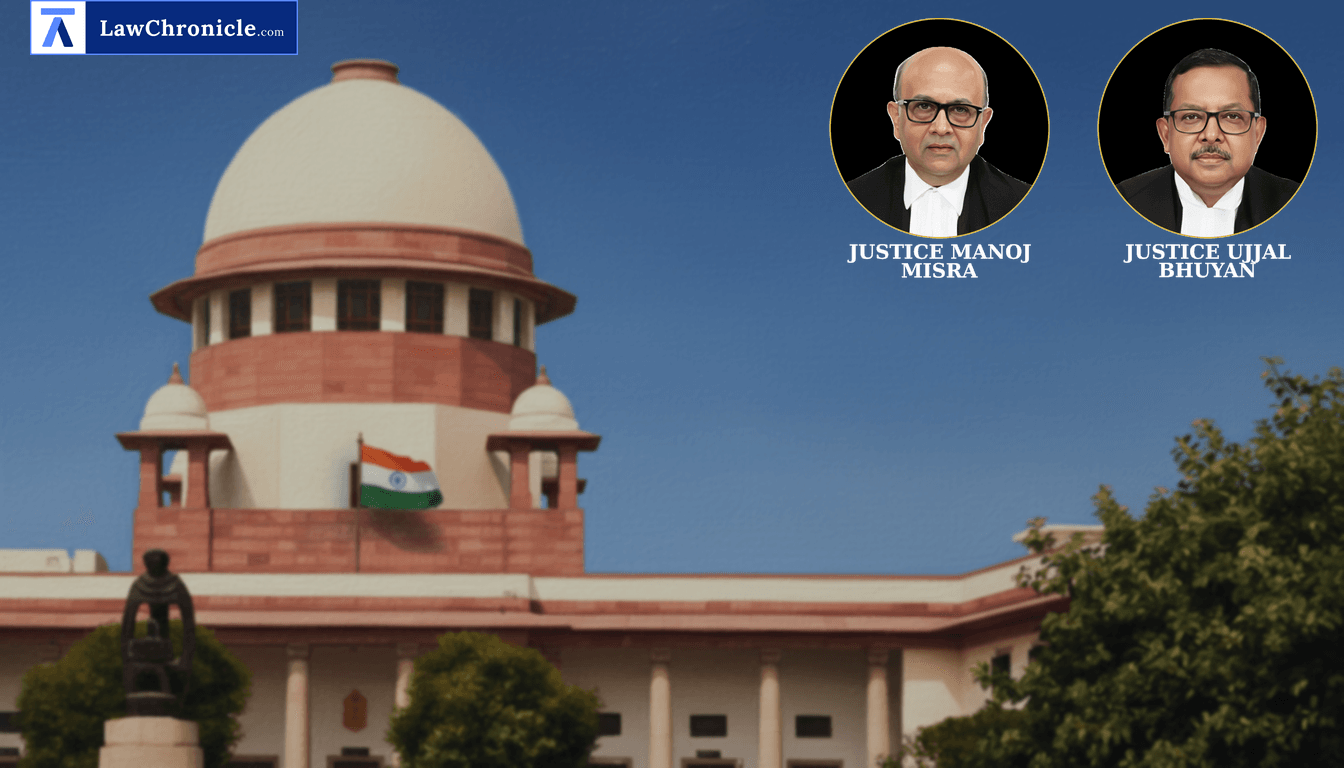
Delivering a stern rebuke to executive arbitrariness and political influence in public employment, the Supreme Court has set aside the absorption of four officers into Haryana's Public Works Department, ruling that backdoor entries via deputation cannot be validated through judicial sympathy.
A Division Bench of Justice Manoj Misra and Justice Ujjal Bhuyan held that the transfer and absorption of officers into the borrowing department without fulfilling the requisite statutory requirements was illegal, void ab initio, and a product of political machinations.
Key Takeaways
No Backdoor Entry: Deputation and absorption cannot be used as an indirect route to circumvent transparent, merit-based public recruitment processes.
Judicial Sympathy Barred: Long service rendered under an illegal appointment does not cure initial invalidity or entitle appointees to equitable retention.
Lien Restoration: Upon the cancellation of an illegal absorption, an employee's lien in their substantive parent department automatically revives.
Strict Rule Compliance: Executive powers to relax rules or absorb officers by transfer under special circumstances require genuine public interest exigencies rather than routine administrative shortages.
Court Observations and Directions
The Supreme Court observed that the process of deputation and subsequent absorption of the four officers suffered from manifest illegality and was driven by political intervention rather than administrative necessity. Addressing the High Court's decision to retain the officers on sympathetic grounds despite declaring their entries illegal, the Apex Court observed that illegality cannot be regularized by lapse of time or judicial sympathy.
The Court, in its reasoning, observed: "Illegality means something which is contrary to law; something which is wrong right from the inception. It is void ab initio. Illegality cannot be cured and made legal and valid by lapse of time. Illegality, which is distinct and different from irregularity, cannot be regularized by taking a sympathetic view on the ground of long continuance in service. This position has been explained by a Constitution Bench of this Court in Secretary, State of Karnataka Vs. Umadevi ( "(2006) 4 SCC 1": 2006 CaseBase(SC) 148). If the appointment itself is in infraction of the rules, in this case the 1965 Rules, it is an illegality. Such an illegality cannot be cured by resorting to the novel method of absorption which has been explained as appointment by transfer."
Analyzing the statutory landscape under the Constitution of India, 1950 and the 1965 Rules, the Court clarified that routine staff shortages do not constitute "special circumstances" to bypass regular recruitment quotas. Relegating the officers back to their parent department, the Court issued specific operational directions.
The Court has following directions:
"The above four officers are therefore directed to be repatriated back to the Development and Panchayat Department, Government of Haryana where their cadre and seniority will be determined by the authority of the said Department placing them immediately above the candidates who were junior to them in order of seniority in the cadre of Sub-Divisional Officer (Panchayati Raj)."
Ratio
Appointments or absorptions made in contravention of statutory recruitment rules constitute illegalities that are void ab initio and cannot be validated or regularized on grounds of equity, long tenure, or judicial sympathy. Deputation and absorption mechanisms cannot be utilized to bypass competitive selection processes, and upon setting aside an illegal absorption, the employee's lien in the parent department revives to restore them to their original position.
Background
The legal dispute originated from the deputation of four officers Shri Pradeep Atri, Shri Praveen Chaudhary, Shri Pankaj Gaur, and Shri Arun Bhatia from the Development and Panchayat Department, Government of Haryana, to the Public Works Department (Building and Roads) as Sub-Divisional Officers/Assistant Engineers (Civil). These officers were subsequently absorbed permanently into the PW (B&R) Department and granted seniority over direct recruits and promotees.
Several direct recruits challenged the deputation, absorption, and seniority assignments before the High Court of Punjab and Haryana. The High Court held that the deputation and absorption were bad in law, product of political machinations, and contrary to Rule 10 of the 1965 Rules. However, taking a sympathetic view as the officers had been serving since 2005 and allegedly had no lien in their parent department, the High Court refrained from terminating their services, while denying them seniority over direct recruits.
Assailing this judgment, both the direct recruits and the deputationist officers approached the Supreme Court. The direct recruits argued that having found the entries illegal and contrary to Articles 14 and 16 of the Constitution of India, 1950, the High Court erred in retaining them. The deputationists argued that their absorption was backed by statutory provisions and departmental consent.
The Supreme Court analyzed precedents including State of Punjab Vs. Inder Singh, Umapati Choudhary Vs. State of Bihar ( "(1999) 4 SCC 659": 1999 CaseBase(SC) 1195), Kunal Nanda Vs. Union of India ( "(2000) 5 SCC 362": 2000 CaseBase(SC) 203), CBI Vs. Ramesh Chander Diwan, and Ramlal Khurana Vs. State of Punjab regarding the legal parameters of deputation, lien, and regular recruitment. The Apex Court held that the deputation of Shri Pradeep Atri and Shri Praveen Chaudhary was illegal, while that of Shri Pankaj Gaur and Shri Arun Bhatia was irregular. Crucially, the absorption of all four officers was held to be illegal, non-est, and void. Setting aside the High Court's relief granting retention on sympathetic grounds, the Supreme Court ordered their immediate repatriation to their parent department with revival of their original cadre seniority.
Case Details:
Case No.: Civil Appeal Nos. of 2026 (Arising out of Special Leave Petition (C) Nos. 12017-12018 OF 2023)
Neutral Citation: 2026 INSC 878
Case Title: Hemant Kumar & Ors. v. State of Haryana
Source: 2026 CaseBase(SC) 806
 Breaking News