SC Questions Two-Child Policy in Panchayat Elections, Refers Javed Precedent To Larger Bench
 Copy Link
 Share
 Save
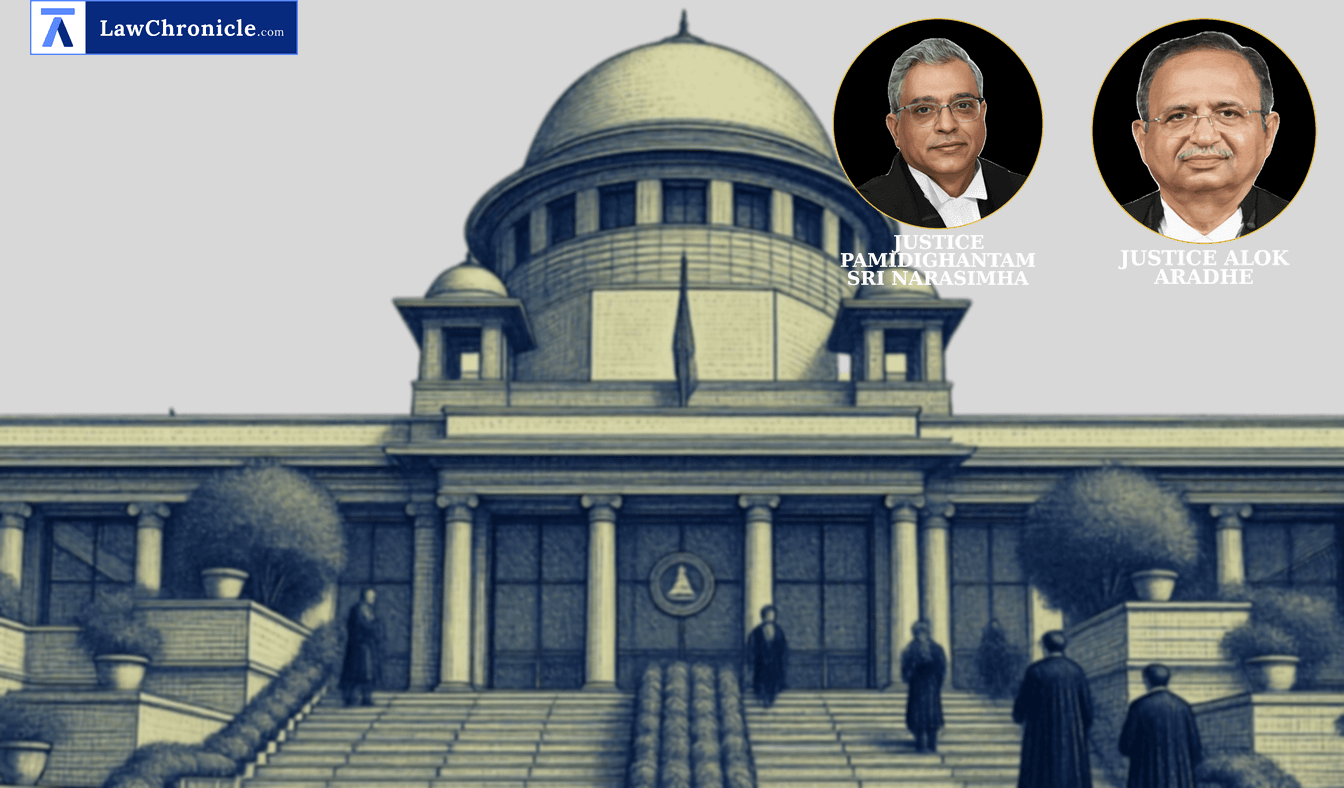
The Supreme Court has expressed that the demographic realities have rendered laws penalizing citizens for having more than two children obsolete, as India's Total Fertility Rate has dropped below the replacement level. The Apex Court has referred its 2003 precedent in Javed v. State of Haryana ( "(2003) 8 SCC 369": 2003 CaseBase(SC) 160) to a larger Bench, questioning the constitutional sustainability of imposing two child policy in Panchayat ELections.
A Bench of Justice Pamidighantam Sri Narasimha and Justice Alok Aradhe heard an appeal challenging the disqualification of an elected Sarpanch under Section 14(1)(j-1) of the Maharashtra Village Panchayats Act, 1959. The Bench observed that the fear of overpopulation which supplied the foundation for such legislative restrictions no longer exists, and failing to adapt legal norms to changing social realities amounts to an abuse of power.
Key Takeaways
Demographic Shift Invalidates Past Rationale: India's Total Fertility Rate has fallen to 1.9, below the replacement level of 2.1, making population control-based electoral disqualifications irrelevant.
Revisiting Binding Precedent: The Court doubted the correctness of Javed v. State of Haryana ( "(2003) 8 SCC 369": 2003 CaseBase(SC) 160), noting that its underlying assumptions about population explosion and social progress have collapsed over the past two decades.
Infringement on Constitutional Rights: Penalizing individuals with more than two children from contesting local body elections impacts their right to reproductive autonomy under Article 21 of the Constitution of India, 1950 and creates an arbitrary barrier to political representation.
Gender and Social Disparity: The two-child norm disproportionately affects women and historically marginalized communities, exacerbating existing gender inequalities and social exclusion.
Two-Child Policy in Panchayat Elections
Recently, reports suggested that the fertility rate in India is witnessing a dip. This means that the population graph is meant to go down. The policies aimed at promoting family planning and keeping population in control, thus, need to pass the test of time. On that note, the Supreme Court observed: "We are of the strong opinion that laws that penalise having more than two children have lost their relevance. The foundation of such laws, i.e. the fear of overpopulation, has crumbled due to demographic changes in the past few decades... Adapting to change is important for achieving justice, as failure to adapt produces injustice and is, in a sense, an abuse of power. Thus, failure to use power to adapt to change is in its own way an abuse of power."
Ratio
Under the doctrine of temporal reasonableness, a statutory provision or judicial precedent that was constitutionally valid at the time of its origin may become arbitrary and unconstitutional over time if the factual, demographic, or social circumstances that supplied its underlying rationale have fundamentally changed.
Background
The dispute arose after the appellant was elected as Sarpanch of Kakoda Gram Panchayat in 2022. Her election was subsequently set aside under Section 14(1)(j-1) of the Maharashtra Village Panchayats Act, 1959 on the ground that she gave birth to a third child in 2014, thereby violating the statutory restriction. Aggrieved by the High Court's decision enforcing the disqualification, the appellant approached the Supreme Court.
While examining the appeal, the Apex Court analyzed how Javed v. State of Haryana ( "(2003) 8 SCC 369": 2003 CaseBase(SC) 160) had relied on the National Population Policy, 2000, and China's population control strategies to uphold the Haryana Panchayati Raj Act, 1994. The Apex Court noted that earlier decisions, including Malpe Vishwanath Acharya v. State of Maharashtra ( "(1998) 2 SCC 1": 1997 CaseBase(SC) 1647), Satyawati Sharma v. Union of India, and State of Maharashtra v. Super Max International (P) Ltd., firmly established the doctrine of temporal reasonableness, that legislation valid when enacted may become arbitrary with the passage of time. The Court also referred to Maganlal Chhaganlal (P) Ltd. v. Municipal Corporation of Greater Bombay, where Justice H.R. Khanna emphasized that law must adapt to new situations rather than petrify into fossilized rigidity, and Union of India v. Raghubir Singh, which recognized that the doctrine of precedent must respond to evolving social contexts.
The Supreme Court Bench noted that Javed v. State of Haryana ( "(2003) 8 SCC 369": 2003 CaseBase(SC) 160) was later followed in Rajbala v. State of Haryana ( "(2016) 2 SCC 445": 2015 CaseBase(SC) 367) to uphold additional socio-economic disqualifications for local elections. However, subsequent decisions like Sukanya Shantha v. Union of India ( "2024 INSC 753": 2024 CaseBase(SC) 729) highlighted the discriminatory and exclusionary consequences of such rules on marginalized communities. The Court also referred to Yash Developers v. Harihar Krupa Co-operative Housing Society Ltd. ( "2024 INSC 559": 2024 CaseBase(SC) 353) regarding the institutional role of Constitutional Courts in auditing the working of statutes.
Addressing fundamental rights, the Supreme Court emphasized that reproductive choices fall under personal liberty under Article 21 of the Constitution of India, 1950, relying on Suchita Srivastava v. Chandigarh Administration, X v. Principal Secretary, Health and Family Welfare Department, Government of NCT of Delhi, and K.S. Puttaswamy v. Union of India. The Bench concluded that forcing a citizen to choose between reproductive autonomy and democratic participation is manifestly arbitrary. Consequently, the Supreme Court stayed the High Court's order, allowed the appellant to continue as Sarpanch, and directed the Registry to place the matter before the Chief Justice of India for constitution of a larger Bench to reconsider Javed v. State of Haryana ( "(2003) 8 SCC 369": 2003 CaseBase(SC) 160).
Case Details:
Case No.: Civil Appeal No(s). OF 2026 @ Special Leave Petition (C) No. 30772 of 2025
Neutral Citation: 2026 INSC 1193
Case Title: Mangala Bhimrao Ingle v. The Additional Commissioner, Amravati Division & Ors.
Source: 2026 CaseBase(SC) 9527
 Breaking News