


Supreme Court Rebukes Misplaced Sympathy, Cancels Probation Relief For Habitual Offenders
 Copy Link
 Share
 Save
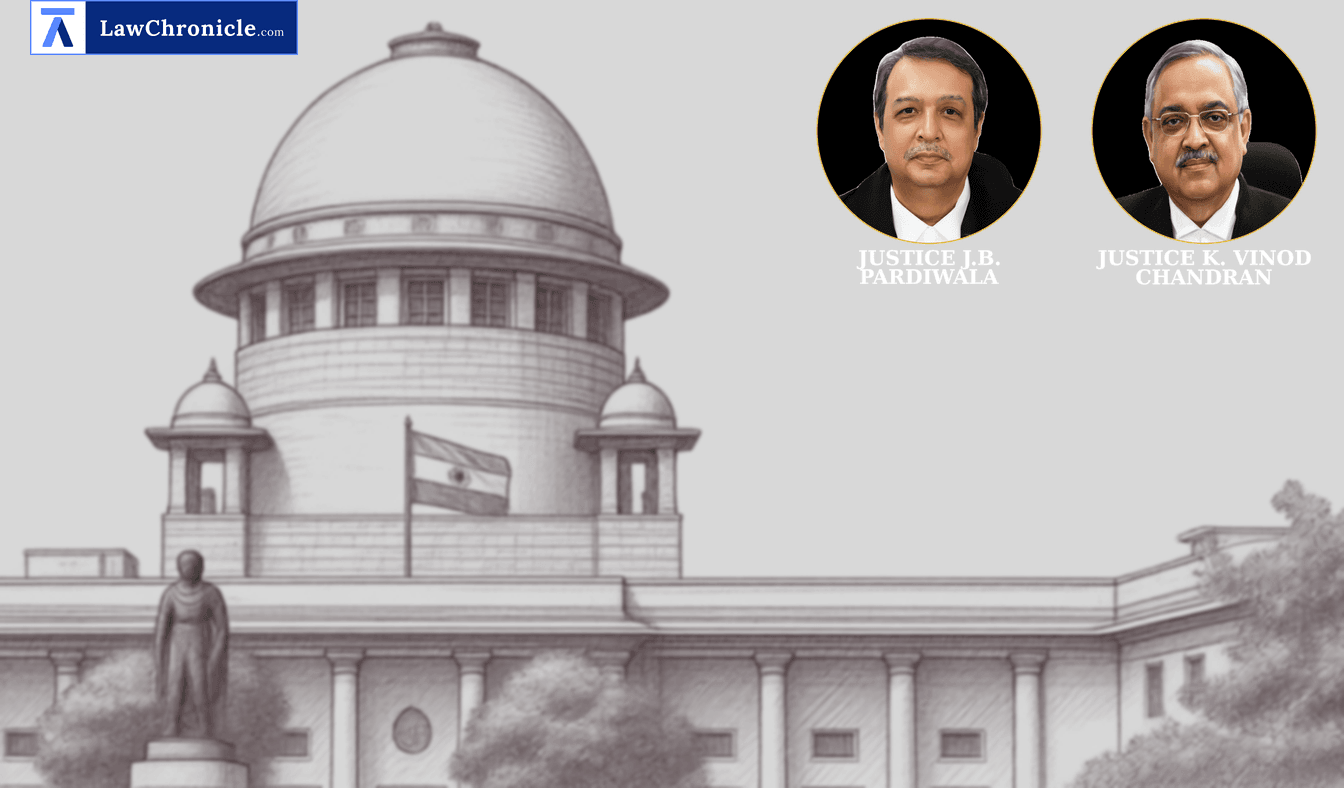
The Supreme Court criticized the judicial leniency shown to criminal offenders, ruling that granting probation under the pretext of good conduct to habitual criminals who inflicted brutal injuries on a victim constitutes a fatal diversion from essential tenets of criminal law. A Bench of Justice J.B. Pardiwala and Justice K. Vinod Chandran set aside the Allahabad High Court order that released two accused on probation of good conduct after being convicted of a violent attack. Rebuking the lower courts for being overly indulgent towards the perpetrators, the Apex Court directed the accused to surrender within two weeks.
Key Takeaways
No Automatic Probation for First Offenders: Merely being a first conviction does not entitle an accused to relief under probation laws when the nature of the crime is heinous.
Prioritizing Criminal Antecedents: Courts must systematically examine pending criminal cases and probation officer reports before extending leniency.
Judicial Sympathy vs. Victim Suffering: Protracted trial timelines cannot justify releasing accused individuals on probation when they continue indulging in criminal activities while on bail.
Strict Compliance with Statutory Mandates: High Courts cannot ignore adverse reports on the character of the offender submitted by state authorities or probation officers.
Court's Rationale on Misplaced Sympathy and Character of Offenders
Expressing strong consternation over how both the trial court and High Court evaluated the matter, the Supreme Court pointed out that the brutal nature of the offense and the character of the offenders must remain paramount. The Bench highlighted that “The accused have gone scot-free without suffering a single day of imprisonment, especially by reason of the misplaced sympathy based on grandiose expositions of law; totally inapplicable to the facts of the case. Section 4 of the PoO Act does not permit its invocation, when it is found that the accused is a first offender. We also are unable to comprehend as to why the High Court observed that the accused were suffering for twenty-two years. True, protracted trial is agonizing but here, the accused were on bail and merrily indulging in criminal activities. The victim, on the other hand, in the ensuing years was, day-in and day-out suffering the debilitating effects of the attack. The circumstances of the case including the nature of the offence and the character of the offender should be the reigning factor in deciding as to whether it is expedient to release the accused on the premise of good conduct; which in the facts of this case is lacking.”
Ratio
Section 4 of the Probation of Offenders Act, 1958 cannot be invoked automatically on the premise of an accused being a first-time convict or due to a protracted trial, without considering the severity and brutality of the offense alongside the true character and post-incident criminal antecedents of the offender.
Background
The dispute originated from an incident in 2003 where the victim was brutally attacked with a cutting weapon and a gun by the accused owing to business rivalry. The Additional Sessions Judge, Bahraich, convicted the accused under Section 308 of the Indian Penal Code, 1860, sentencing them to five years of rigorous imprisonment. The Supreme Court highlighted that given the severe cut and gunshot injuries falling within 'grievous hurt' under Section 320 of the Indian Penal Code, 1860, the charge ought to have been framed under Section 307 of the Indian Penal Code, 1860.
On appeal, the Allahabad High Court affirmed the conviction but modified the sentence by applying Section 4 of the Probation of Offenders Act, 1958, relying on the absence of prior convictions and the 22-year duration since the crime, alongside provisions under Section 360 and Section 361 of the Code of Criminal Procedure, 1973. Challenging this order, the brother of the severely disabled victim approached the Supreme Court.
The Supreme Court observed that the High Court ignored the counter-affidavits filed by state authorities detailing multiple pending criminal cases against the accused under various provisions including the SC/ST ACT and Uttar Pradesh Control of Goondas Act, 1970. Setting aside the High Court's order, the Supreme Court allowed the appeal and ordered the accused to surrender.
Case Details:
Case No.: Criminal Appeal Nos. of 2026 (Arising out of SLP (Crl) Nos.6984-6985 of 2026)
Neutral Citation: 2026 INSC 1114
Case Title: Umesh Chand v. State of U.P & Ors.
Appearances:
For the Petitioner(s): Sri L.B. Rai, learned Counsel
For the Respondent(s): Sri Namit Saxena, learned AoR (State), Sri Aishvary Vikram, learned AoR
Source: 2026 CaseBase(SC) 9487
Similar Articles




 Breaking News


