SC: Rehabilitation Agreements Are Not Private Contracts Outside Writ Jurisdiction
 Copy Link
 Share
Share Save
Save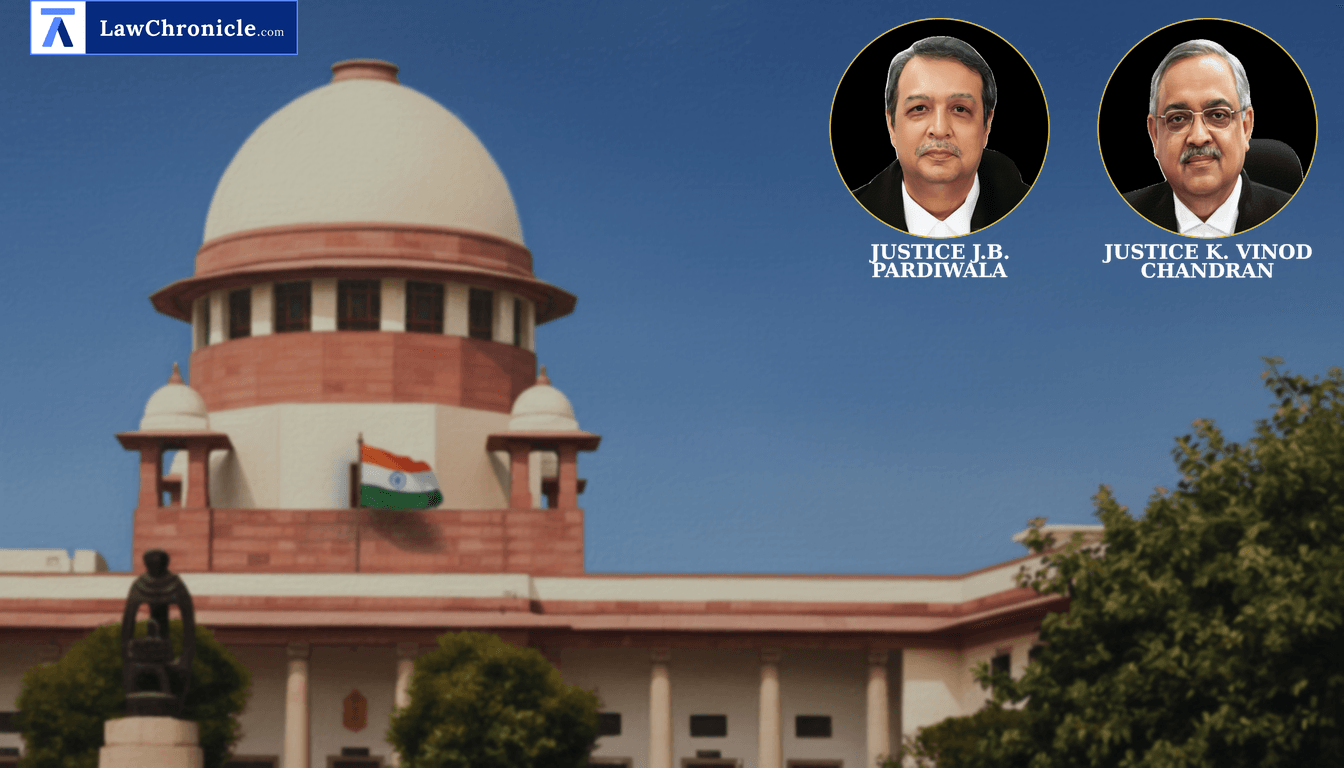
The Supreme Court has effectively barred developers from weaponizing internal partnership disputes or mala fide civil suits to bypass statutory rehabilitation obligations under redevelopment schemes. In a stern rebuke to 'owner-developers' attempting to resile from Permanent Alternate Accommodation Agreements (PAAA), the Court ruled that such arrangements, conducted under statutory frameworks, remain amenable to regulatory enforcement and cannot be treated as mere private arrangements to escape the reach of writ jurisdiction.
A bench comprising Justice J.B. Pardiwala and Justice K. Vinod Chandran heard an appeal challenging a Bombay High Court decision that had characterized a PAAA as a 'private arrangement' and relegated the occupants to a civil suit. The Apex Court found that the developer, having obtained consent and vacant possession of the old cessed building on the promise of providing alternate premises, cannot subsequently challenge the 'occupant' status of the beneficiaries or the validity of the agreement executed by former partners.
Rehabilitation Rights Under Statutory Supervision
The dispute centered around the redevelopment of a cessed building under the Maharashtra Housing and Area Development Act, 1976 and the Development Control Regulations for Greater Bombay, 1991. The developer initially admitted the appellants' status as joint 'occupants' in a 2010 public notice but later attempted to challenge their eligibility after obtaining a completion certificate. The High Court had stayed the orders of the Maharashtra Housing and Area Development Act, 1976 Authority which directed the developer to handover possession, citing a lack of mind application regarding floor space utilization and the private nature of the contract.
Defining 'Occupier' and Statutory Protection
The Supreme Court emphasized that the definition of an 'occupier' under Section 2 (25) of the Maharashtra Housing and Area Development Act, 1976 is broad, covering even those without formal tenancy. The Court, in its reasoning, observed: "An occupancy, hence is not a statutory tenancy which continues at the will of the owner or on the strength of an agreement. A person in occupation without any rent, or liable to pay the owner damages, brings in even a rank trespasser who can have a valid claim of occupancy based only on her possession enabling reallotment of space, when there is attempted a redevelopment/reconstruction."
Developer's Resilement Labeled Misconceived and Mala Fide
The Bench took a grim view of the developer filing a civil suit to challenge the PAAA after giving an undertaking to the High Court. The Court noted that internal 'Consent Terms' between partners could not absolve the firm of its obligations toward the beneficiaries of a validly executed agreement. It was held that since the project commenced under a No Objection Certificate (NOC) from the Maharashtra Housing and Area Development Act, 1976 Authority, the authority retained the power to ensure the rehabilitation of certified occupants.
The Court has the following directions:
"(i) We direct the 1st and 2nd respondents to execute the PAAA and handover possession of the three apartments in the new building within a period of two months from today, failing which the appellants would be entitled to the damages at the monthly rental value for the three flats in that location, which they would be entitled to recover from the 1st and 2nd respondents.
(ii) We also make it clear that the appellants would be entitled to sue for damages for the delay caused in delivering the property, computed on the value as hereinabove mentioned.
(iii) In the interest of justice, we are also of the opinion that the High Court be directed not to proceed with Civil Suit No.4579 of 2026."
Key Takeaways
Statutory Character of PAAAs
Agreements entered into under redevelopment regulations like Rule 33(7) of the Development Control Regulations for Greater Bombay, 1991 are not merely private contracts but are regulated by statute, making them enforceable through regulatory authorities and writ courts.
Broad Interpretation of 'Occupant'
Status as an 'occupant' is based on possession and statutory definitions, which the Court held can include even those without formal rent receipts, provided they were certified in the initial eligibility lists.
Estoppel Against Developers
Once a developer obtains vacant possession and demolishes a building based on an occupant's consent and a PAAA, they are estopped from later challenging the occupant's title or the authority of the signing partner.
Mala Fide Litigation Quashed
The Court exercised its power to direct a stay on lower court civil proceedings that it deemed 'misconceived and mala fide,' intended only to frustrate the rights of rehabilitated tenants.
Ratio
Under the Maharashtra Housing and Area Development Act, 1976 and associated Development Control Regulations, a Permanent Alternate Accommodation Agreement (PAAA) executed as a condition of a redevelopment NOC is a statutory instrument. A developer cannot resile from such an agreement by citing internal partnership disputes or by filing subsequent civil suits challenging the occupancy status of beneficiaries after having already utilized their consent to gain redevelopment benefits. The regulatory authority (MHADA) possesses the jurisdiction to enforce such agreements to ensure the mandatory rehabilitation of certified occupants.
Background:
The appellants were occupants of a cessed building in Mumbai. In 2010, the 1st Respondent developer issued a public notice listing the appellants as occupants and subsequently entered into a PAAA in 2019 to provide three flats in the reconstructed building. After the original tenant died and the developer management changed, the new partners claimed the PAAA was 'concocted' and unauthorized. They refused to handover the flats despite orders from the Maharashtra Housing and Area Development Act, 1976 Authority and a Show Cause Notice under Section 91A of the Maharashtra Housing and Area Development Act, 1976. The High Court had stayed these regulatory orders, prompting the appeal to the Supreme Court. The Supreme Court set aside the High Court judgment, revived the MHADA orders, and allowed the appeal with costs.
Case Details:
Case No.: Civil Appeal No.9342 of 2026
Case Title: Mrs. Mahabanoo Contractor and Anr. Versus M/s. Kalikund Developers and Ors.
Appearances:
For the Petitioner(s): Mr. Shyam Divan, Senior Counsel
For the Respondent(s): Mr. Vinay Navare, Senior Counsel; Mr. Chirag M. Shroff, Counsel for MHADA
Source: 2026 CaseBase(SC) 683
 Breaking News