SC: Right to Walk Is a Fundamental Right; Pedestrians Take Priority Over Motorised Vehicles
 Copy Link
 Share
Share Save
Save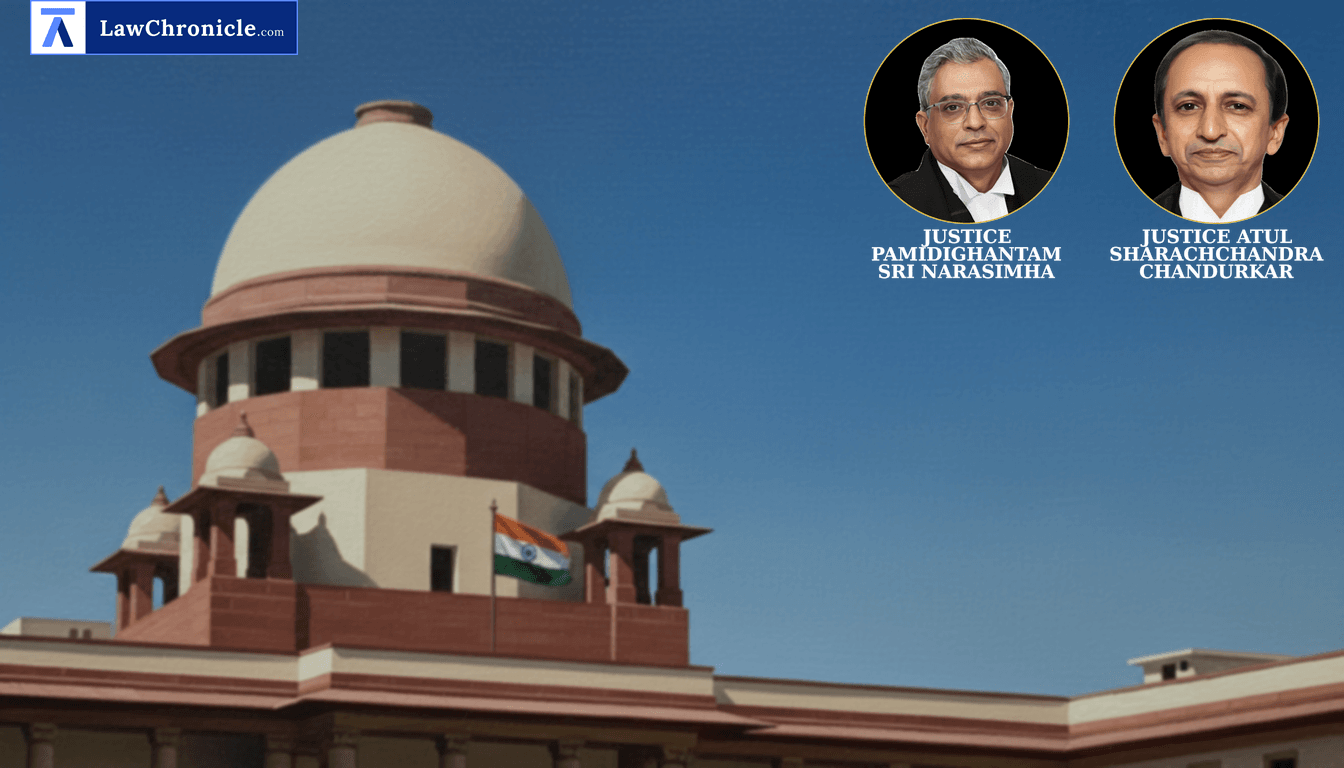
In Maniyar Iliyaz @ Shaik Riyaz & Anr. v. P. Ayyappan & Ors., the Supreme Court redefined urban space and personal liberty by elevating the act of walking to a fundamental right, holding that pedestrian access to demarcated footpaths must take priority over motorized traffic. This judicial declaration comes as a beacon for civic rights, emphasizing that the right to move freely is not tethered only to those on wheels.
A bench comprising Justice Pamidighantam Sri Narasimha and Justice Atul S. Chandurkar delivered this transformative ruling while hearing an appeal arising from a tragic motor accident involving a five-year-old child. The Court took a broader view of the incident, transitioning from a mere compensation claim to a constitutional discourse on the "Right to Walk."
The Primacy of the Pedestrian: Walking as a Fundamental Right
The Court, in its reasoning, observed: "The primary right of movement under the Constitution of India is the Fundamental Right to Walk, a right that precedes the right to move on wheels and this precious right must extend to guaranteeing access to safe and well demarcated footpath. The citizen’s fundamental right to walk on a demarcated footpath is primary and shall have priority over movement by motorised vehicles."
The bench noted that the Motor Vehicles Act, 1988 has historically acted as an impediment, focusing almost exclusively on "vehicles" while treating human interest as incidental. The Court highlighted that walking is inextricably connected to the rights guaranteed under Article 19(1)(d), Article 19(1)(a), Article 19(1)(b), and Article 19(1)(c) of the Constitution of India.
Establishing Accountability for Municipal and Urban Authorities
The Court has issued the following directions:
"a. The right to walk is a fundamental right under Part III of the Constitution. It is integral to the right to movement guaranteed under Article 19(1)(d), read with Article 19(1)(a), Article 19(1) (b), Article 19(1) (c) and Article 21 of the Constitution of India. The fundamental right to walk will take within its sweep the right to demarcated footpaths. These rights are primary and shall have priority over movement by motorised vehicles.
b. The fundamental right to walk on demarcated footpaths has a correlative duty. If the road exists, there is a duty to ensure that there are demarcated and well-maintained footpaths for walkers. The duty bearers are the urban development authorities, municipal corporations, municipalities and even panchayats, who must endeavour to demarcate, construct, maintain, and safeguard footpaths and other necessary pedestrian infrastructure, as walking is integral to life.
c. The violation of the right to walk on demarcated footpaths will entitle the citizens to invoke constitutional and legal remedies against duty bearers for restitution and compensation. This remedy is independent of the remedies that are available under the Motor Vehicles Act, 1988."
Furthermore, the Court directed the Registry to re-number the case as a petition under Article 32 by changing the cause title to "Re: Fundamental Right to Walk and Footpath" for continued monitoring. It also sent copies of the judgment to the Law Commission and relevant Ministries to reflect on a new legal framework.
Background:
The case originated from the death of a five-year-old boy who was crushed by a tanker while walking to school with his father. The Motor Accidents Claims Tribunal (MACT) had awarded Rs. 7,82,000, which the High Court subsequently reduced to Rs. 4,70,000.
Challenging this reduction, the appellants approached the Supreme Court. The bench relied on the precedent set in Karuna Parmar v. Prakash Sinha to recalculate the compensation, fixing the child's daily income based on the Minimum Wages Act, 1948. The Court eventually enhanced the compensation to Rs. 11,44,628.
While addressing the compensation, the Court delved into the systemic failure to provide footpaths. It compared the current lack of a pedestrian regulatory framework with robust statutes like the Right to Education Act, 2009, National Food Security Act, 2013, and Right to Information Act, 2005. The Court observed that just as these acts effectuate fundamental rights, a similar framework is needed for walkers. The Court emphasized that restitutionary remedies for the enforcement of public duties could be sought under Sections 38-40 of the Specific Relief Act, 1963 against municipal bodies.
Case Details:
Case No.: CIVIL APPEAL NO(S). 4665-4666/2025
NeutralCitation: 2026 INSC 647
Case Title: MANIYAR ILIYAZ @ SHAIK RIYAZ & ANR. v. P. AYYAPPAN & ORS.
Appearances:
For the Petitioner(s): Mr. Mamidipudi V Mukunda (Amicus Curiae)
For the Respondent(s): Mr. K.M. Nataraj (ASG)
Source: 2026 CaseBase(SC) 594
 Breaking News