

SC Rules Specific Performance Decree Unenforceable Over Delay in Balance Payment
 Copy Link
 Share
Share Save
Save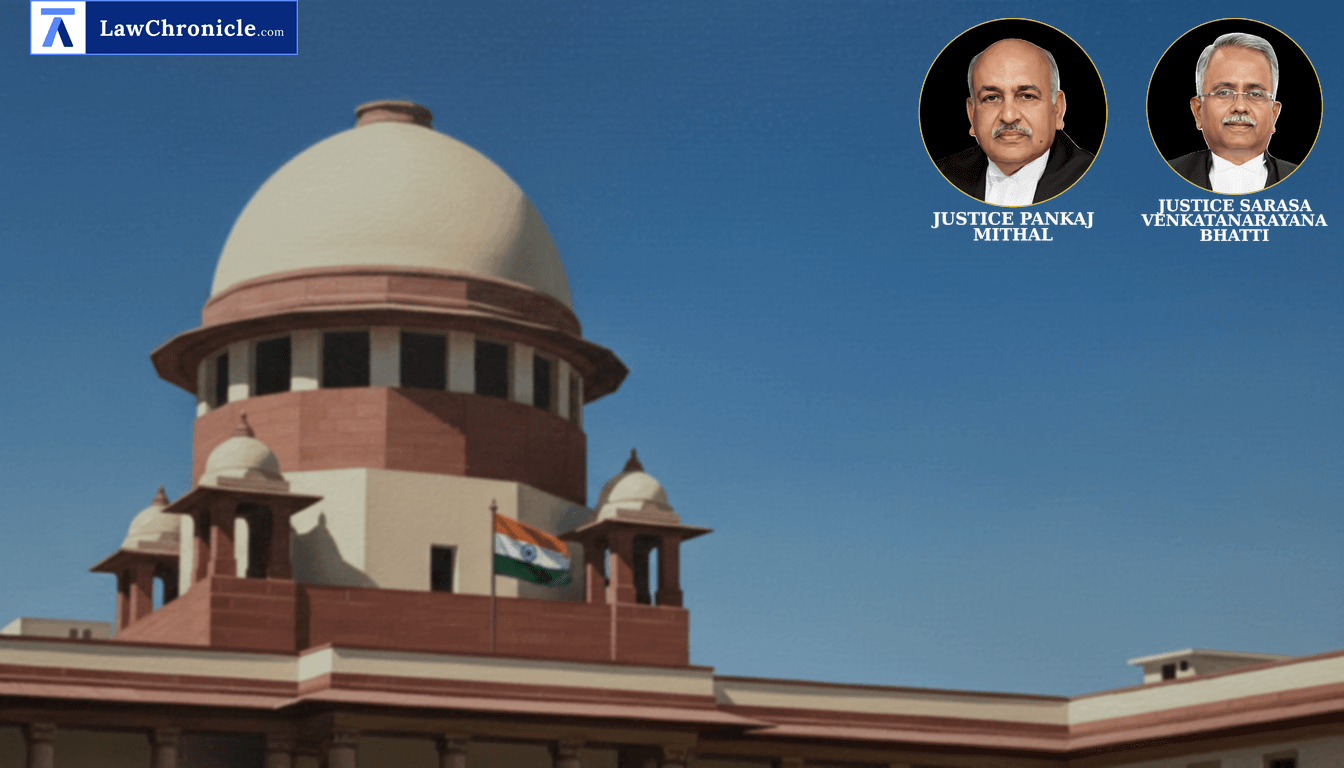
The Supreme Court of India in Habban Shah v. Sheruddin held that a decree for specific performance becomes inexecutable where the plaintiff fails to deposit the balance sale consideration within the stipulated period of three months, and upon such non-compliance, the contract as a whole stands rescinded by operation of Section 28 of the Specific Relief Act, 1963.
A bench of Justice Pankaj Mithal and Justice S. V. N. Bhatti heard an appeal that raised a short but intricate question of law, whether a decree for specific performance dated 31.10.2012 directing execution of a sale deed on deposit of the balance sale consideration within three months would become inexecutable because the amount was not deposited in the time stipulated.
The Court allowed the appeal and held that the decree was rendered inexecutable by non-compliance with the condition to deposit the balance sale consideration within the stipulated period, and directed equitable relief to adjust the parties. The Court noted the operative directions in the decree that "The defendant is directed to execute the sale deed in favour of the plaintiff in respect to the suit land in view of the agreement to sell dated 19.10.2005 after receiving the balance sale consideration within the period of three months from the date of this judgment failing which the plaintiff will be at liberty to get execute the sale deed by approaching this court."
The Court, in its reasoning, observed: In view of the ratio laid down in P.R. Yelumalai (supra) that the suit for specific performance of contract stands automatically dismissed, no sooner than the condition contemplated under the decree is not complied with, coupled with the fact that there is no mandatory requirement of moving an application for rescinding a contract in terms of Section 28 of the Specific Relief Act, 1963 in view of Prem Jeevan (supra), we are of the opinion that the plaintiff-respondent having not only failed to deposit the balance sale consideration within the time stipulated under decree but also having failed to move any application for extension of time within the time permitted disentitled himself from executing the decree. There is neither automatic extension of time nor condonation of delay in making the deposit. The decree ceases to exists due to non-compliance and becomes inexecutable. The court also reiterated the principle that "he who seeks equity must do equity."
In reaching its conclusion the bench applied earlier precedents and statutory principles. It relied on P.R. Yelumalai v. N.M. Ravi ( "(2015) 9 SCC 52": 2015 CaseBase(SC) 769) to hold that failure to deposit the balance consideration within the period fixed in a conditional decree may lead to automatic dismissal of the suit for specific performance, and on Prem Jeevan v. K.S. Venkata Raman and Another to record that moving an application under Section 28 of the Specific Relief Act, 1963 for rescission was optional and not a mandatory precondition. The bench further observed that the language of Section 28 supported the court's continuing jurisdiction as explained in Balbir Singh and Another v. Baldev Singh (Dead) Through his legal representatives and Others, treated dismissal for default as not barring a fresh execution application as held in Bhagyoday Cooperative Bank Limited v. Ravindra Balkrishna Patel, and used N.P. Thirugnanam (Dead), by LRs v. Dr. R. Jagan Mohan Rao and Others ( "(1995) 5 SCC 115": 1995 CaseBase(SC) 845) to emphasize that assessment of readiness and willingness required scrutiny of the plaintiff's conduct before and after decree.
Background
The dispute arose from an agreement to sell dated 19.10.2005 for agricultural land; the seller had accepted Rs.80,000 as earnest money and the sale deed was to be executed on or before 15.03.2006. On failure to execute the deed the buyer instituted a suit for specific performance which was decreed on 31.10.2012 with a direction for execution after receipt of the balance sale consideration within three months. An interim order in the first appeal restrained alienation until 25.01.2013 but lapsed; the first appeal was dismissed on 11.11.2014 and the second appeal was dismissed on 12.01.2017. The decree-holder moved execution on 04.03.2013 but that execution was dismissed for want of prosecution on 01.08.2014; a fresh execution was filed on 08.01.2015. The executing court on 07.09.2015 overruled objections that the decree had become inexecutable and permitted deposit proceedings, and an amount of Rs.6,92,410 was recorded as deposited on an order dated 09.10.2015. The High Court by its order dated 24.03.2025 dismissed the revisional challenge to the executing court.
The Supreme Court examined whether the decree's conditional timeline was essential and whether the delay was cured by later deposit or by permission of the executing court. Applying the principles of equity and the settled precedents cited above, the Court found that the decree imposed reciprocal obligations and that the decree-holder had not deposited the balance within the three months fixed nor moved for extension within that period under Section 28 of the Specific Relief Act, 1963 or otherwise; the interim appellate restraint did not bar depositing the amount. Relying on precedent that conditional decrees may become ineffectual on non-compliance, the Court held there was no automatic extension or condonation of delay and the decree ceased to be executable. The result was that the contract stood rescinded under Section 28 of the Specific Relief Act, 1963 and the execution proceedings were to be closed. The Court directed refund of the earnest money of Rs.80,000 with simple interest at 8% per annum from 19.10.2005 until refund; in default the seller was permitted to sell one-half acre of the land to make good the amount within three months.
The Court thereby balanced equitable considerations, held that specific performance remained discretionary under Section 16(C) and Section 20 of the Specific Relief Act, 1963, and affirmed that continued readiness and willingness to perform were material to the relief.
Case Details:
NeutralCitation: 2026 INSC 451
Case Title: HABBAN SHAH v. SHERUDDIN
Appearances:
For the Petitioner(s): Shri Manoj Swarup, learned senior counsel
For the Respondent(s): Shri Divyesh Pratap Singh, learned counsel
Source: 2026 CaseBase(SC) 385
 Breaking News