SC Slams 13-Year Delay in Appointments; State Must Obey Judicial Orders
 Copy Link
 Share
Share Save
Save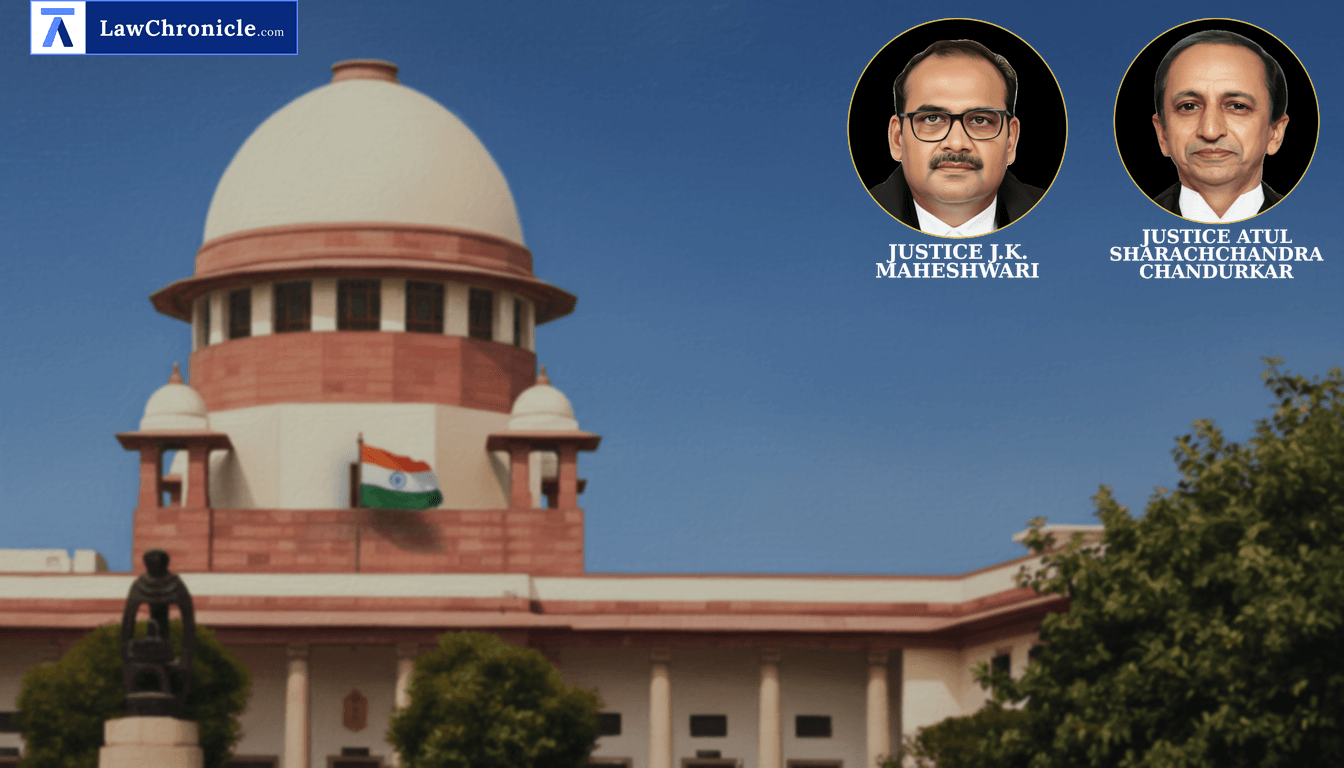
The Supreme Court has set aside a High Court order that dismissed contempt petitions against the State of Uttar Pradesh, emphasizing that clear judicial directions cannot be subverted through 'subjective understanding' or 'misreading' by executive authorities. A bench comprising Justice J.K. Maheshwari and Justice Atul S. Chandurkar heard the appeals arising from a long-standing dispute regarding the regular appointment of Auxiliary Nurse and Midwives (ANMs) as Basic Health Workers (Female).
The Court expressed deep concern over the thirteen-year delay in implementing a 2013 judgment, noting that women who served the public health system were forced into a 'prolonged saga' of litigation to secure rights that should have been granted within six weeks. While the Court eventually disposed of the proceedings following the State's belated compliance, it imposed a symbolic cost of Rs. 1,00,000/- for the institutional failure.
Misinterpreting 'Preference' as Mere Consideration Erroneous
The apex court found that the High Court had fundamentally erred in its interpretation of the directions issued on 01.02.2013 and 21.10.2013. The State had argued that the direction to give 'preference' to the appellants meant they were only entitled to be considered in a common merit pool alongside outside candidates. Rejecting this, the Supreme Court clarified that the directions mandated a two-stage sequence where the appellants were to be appointed first against existing vacancies, and only residual vacancies were to be opened to outsiders.
The Court, in its reasoning, observed: "A 'preference' is against the outside candidates in appointment, subject to the inter se merit as outside candidates is having no preference at all, otherwise, it would render Direction No. 3 otiose... The evident purpose of the directions, read as a whole, was to recognize and protect the legitimate claim of experienced, long-serving Auxiliary Nurses and Midwives to the post of Basic Health Worker (Female) before the vacancies were opened to the outside candidates."
Contempt Jurisdiction and Willful Disobedience
Addressing the dismissal of contempt proceedings by the High Court, the Supreme Court noted that the principle of 'error of judgment' cannot be used to shield authorities when directions are clear and unambiguous. Referring to Anil Ratan Sarkar v. Hirak Ghosh ( "(2002) 4 SCC 21": 2002 CaseBase(SC) 1178), the Court reiterated that once an order is clear, its implementation cannot be conditional. Furthermore, while citing Kapildeo Prasad Sah v. State of Bihar ( "(1999) 7 SCC 569": 1999 CaseBase(SC) 125), the Court explained that the primary objective of contempt power is to maintain an effective legal delivery system.
The Court has the following directions:
"(i) The respective appellants are directed to join their duties at their designated places of posting at the earliest possible opportunity.
(ii) The State Respondents shall facilitate the seamless joining of all selected candidates without creating any further procedural or administrative hurdles.
(iii) All pending Interlocutory Applications for intervention and impleadment shall stand disposed of in terms of the final order.
(iv) The rule nisi stand discharged."
Background: A Decade of Legal Struggle
The dispute originated when the High Court of Judicature at Allahabad, Lucknow Bench, on 01.02.2013, directed the State to consider ANMs for regular appointment as Basic Health Workers (Female) with relaxations in qualifications and age. Despite these orders attaining finality after the dismissal of the State's Special Leave Petition by the Supreme Court in 2013, the State failed to implement them for years.
Contempt petitions were filed in the High Court but were dismissed in 2018 on the grounds that the State had 'considered' the candidates and found them unsuitable based on a common merit list. The Supreme Court found this approach to be a subversion of the original judicial mandate. It was only after the Supreme Court's intervention in May 2026, including a threat of personal appearance of the Additional Chief Secretary, that the State finally issued appointment orders for the eligible candidates. The Court concluded by reminding the State of its role as a 'model employer' under the Constitution of India, urging the creation of administrative mechanisms to ensure prompt compliance with judicial orders.
Case Details:
Case No.: CIVIL APPEAL NOS. OF 2026 (ARISING OUT OF SLP (C) NOS. 7317-7319 OF 2019)
NeutralCitation: 2026 INSC 642
Case Title: REENA KUMARI & ORS. ETC. VERSUS PRAVEER KUMAR & ORS. ETC.
Source: 2026 CaseBase(SC) 591
 Breaking News