


Section 132 of IT Act Is Person-Centric And Not Premises-Centric: Karnataka HC
 Copy Link
 Share
 Save
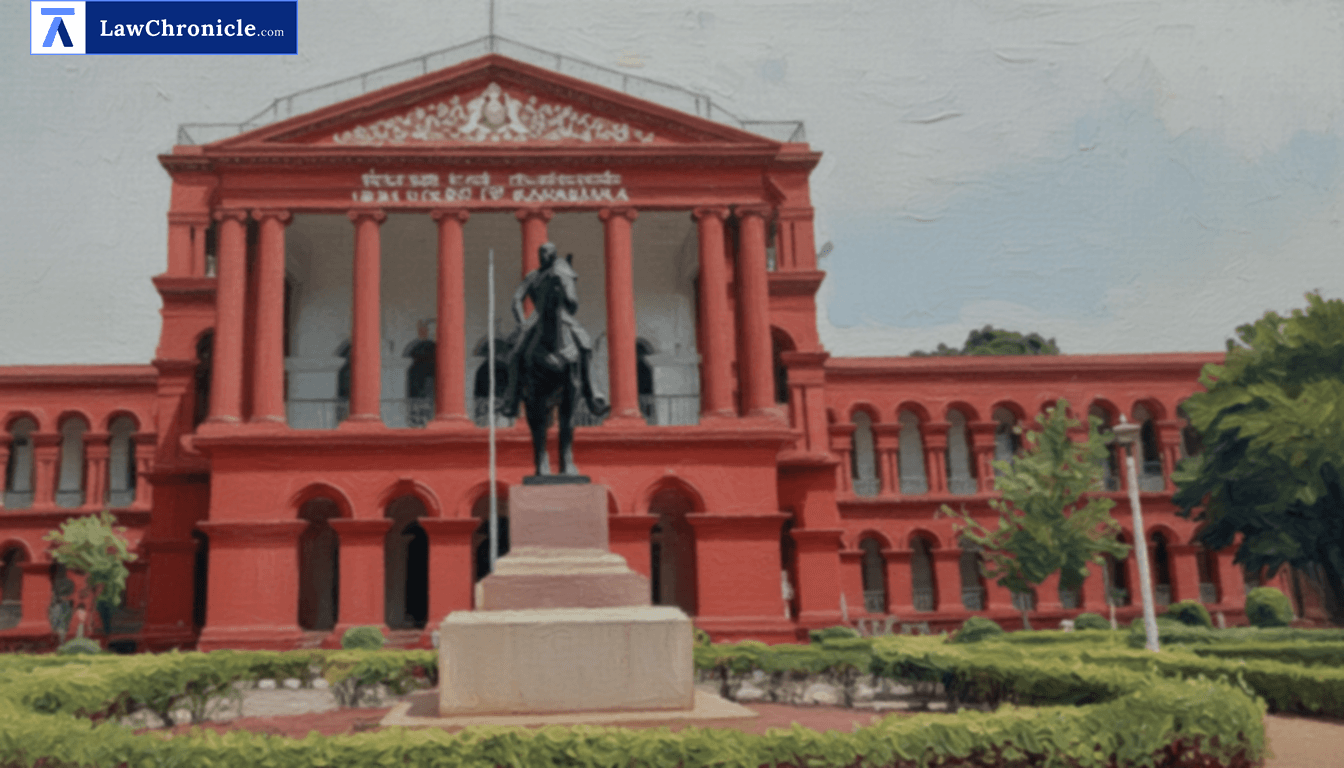
The Karnataka High Court, in The Deputy Commissioner of Income Tax & Anr. v. Sri C. R. Ram Mohan Raju, held that Section 132 of the Income Tax Act, 1961 is person-centric rather than premises-centric. The Court clarified that the expression “searched person” refers to the person in respect of whom satisfaction has been recorded under clauses (a) to (c) of sub-section (1) of Section 132, and not merely to the person whose premises were subjected to search.
A bench of Justice S.G. Pandit and Justice K. V. Aravind heard a writ appeal by the Revenue challenging the Single Judge's order quashing notices issued under Section 153C of the Income Tax Act, 1961 and considered whether the identity of a “searched person” was to be determined by the person named in the warrant or by the ownership of the premises that were searched. The Court heard arguments on the proper construction of Section 132 of the Income Tax Act, 1961, the procedural prescriptions in Rule 112 of the Income Tax Rules, 1962, and the jurisdictional prerequisites of Section 153C of the Income Tax Act, 1961 and restored the impugned notices.
The Court comes to the conclusion: " (i) Section 132 of the Act is person-centric and not premises-centric. The expression “searched person” refers to the person in respect of whom satisfaction has been recorded under clauses (a) to (c) of sub-section (1) of Section 132, and not merely the person whose premises has been subjected to search.
(ii) The scheme of Section 132 of the Income-tax Act, 1961 draws a clear distinction between the person in respect of whom “reason to believe” is recorded under clauses (a) to (c) of sub-section (1), and the premises in respect of which “reason to suspect” is formed under clauses (i) to (v) thereof. The warrant of authorization is, therefore, fundamentally person-specific, while the place of search is merely incidental to such satisfaction.
(iii) The expression “searched person” must be construed to mean the person against whom satisfaction is recorded and in whose name the warrant of authorization is issued, and not the person whose premises are merely subjected to search. A search conducted at the premises of a third party, on the basis of “reason to suspect” that material belonging to the searched person is kept therein, does not render such third party a “searched person”.
(iv) The procedure under Section 153A of the Income-tax Act, 1961 is confined to the person against whom search is initiated within the meaning of Section 132. Proceedings against any other person, in whose premises a search is conducted or from whom material is seized, can be initiated only under Section 153C, subject to satisfaction of the statutory conditions.
(v) The proceedings initiated against the respondent being the occupant of the premises under Section 153C of the Income-tax Act, 1961, treating him as an “other person”, are in accordance with law. The contention that such proceedings ought to have been initiated under Section 153A of the Act is devoid of merit.
(vi) Section 153C of the Income-tax Act, 1961 does not mandate the recording of a separate satisfaction note for each assessment year. A consolidated satisfaction note, duly recording that the seized material belongs to or pertains to the “other person”, satisfies the jurisdictional requirement.”
Background
The appeal arose from a search operation authorised under Section 132 of the Income Tax Act, 1961 in a matter where the warrant named K. Narayan Raju while the search was executed at the residential premises of the respondent. The Assessing Officer of the searched person handed over seized records which were later used to issue notices under Section 153C of the Income Tax Act, 1961 to the respondent. The Single Judge set aside the Section 153C notices on the basis that the panchanama recorded the respondent’s premises as the place searched and treated him as a "searched person." The Division Bench undertook a statutory and precedential review and disagreed, holding that the identity of the searched person was to be determined from the satisfaction recorded under Section 132 and the name in the warrant, not merely from the ownership of premises.
In reaching its conclusion, the High Court analysed earlier decisions and administrative guidance. It followed the reasoning in earlier Division Bench decisions of this court such as C. Ramaiah Reddy vs. ACIT and PCIT v. Associated Mining Company which were applied to the construction of Section 132 and the question of whether search is person‑centric or premises‑centric; the Court observed that decisions like MDLR Resorts Pvt. Ltd. v. CIT and Shilpa Chowdhary vs. CIT had been considered on similar issues by other High Courts and that the Delhi and Gujarat precedents such as MDLR Resorts Pvt. Ltd. v. CIT and Zinzuwadia & Sons v. CIT had been treated as instructive on the link between warrant, panchanama and place of search. For the specific question of invoking Section 153C and the requirement of a satisfaction note and transmission of material, the bench relied on the Supreme Court and Division Bench authorities discussed in the judgment including CIT vs. Calcutta Knitwears, Super Malls (P) Ltd. v. CIT, and Commissioner of Income Tax v. IBC Knowledge Park Pvt. Ltd which explained the mandatory steps to be taken by the assessing officer of the searched person and the procedure when the same officer covered both the searched person and the "other person." The Court also surveyed authorities on precedential value and on the doctrines of per incuriam and sub silentio, citing Jabalpur Bus Operators Association v. State of M.P., Kunhayammed v. State of Kerala ( "2000 SCC OnLine SC 1008": 2000 CaseBase(SC) 4) and Property Owners Association v. State of Maharashtra ( "2024 SCC OnLine SC 3122": 2024 CaseBase(SC) 712) to explain why an earlier coordinate judgment that had not considered binding precedents could not supplant the established line.
The Court rejected the argument that a separate satisfaction note was required for each assessment year, following the exposition in the authorities including CIT vs. Calcutta Knitwears and Super Malls (P) Ltd. v. CIT that a consolidated satisfaction note by the assessing officer, where he was common to both searched and other persons, could satisfy Section 153C. The Court further noted the holdings in CIT v. Smt. Umlesh Goyal, Secunderabad Club v. CIT, CIT v. Laljibhai Kanjibhai Mandalia and Commissioner of Income Tax v. IBC Knowledge Park Pvt. Ltd as supportive of the approach that the place of search need not be owned by the person against whom satisfaction was recorded and that jurisdictional steps required by the statute had been observed.
After reviewing the factual record, the satisfaction note, the warrant in Form No.45 and the panchanama, the Division Bench concluded that the statutory preconditions for invoking Section 153C were met and that the Single Judge erred in treating the respondent as a searched person solely on the basis of the address used for the search. The Court therefore allowed the appeal, restored the Section 153C notices, and dismissed the writ petition.
Case Details:
Case No.: WA No. 382 of 2026
Case Title: The Deputy Commissioner of Income Tax & Anr. v. Sri C. R. Ram Mohan Raju
Appearances:
For the Petitioner(s): Sri Y.V. Raviraj, Senior Standing Counsel A/W Sri M. Dilip, Standing Counsel
For the Respondent(s): Sri A. Shankar, Senior Advocate A/W Sri Chandrasekhar V., Advocate
Source: 2026 CaseBase(KAR) 140
Similar Articles




 Breaking News


