


Section 141 NI Act Inapplicable To Sole Proprietorships: Calcutta High Court
 Copy Link
 Share
 Save
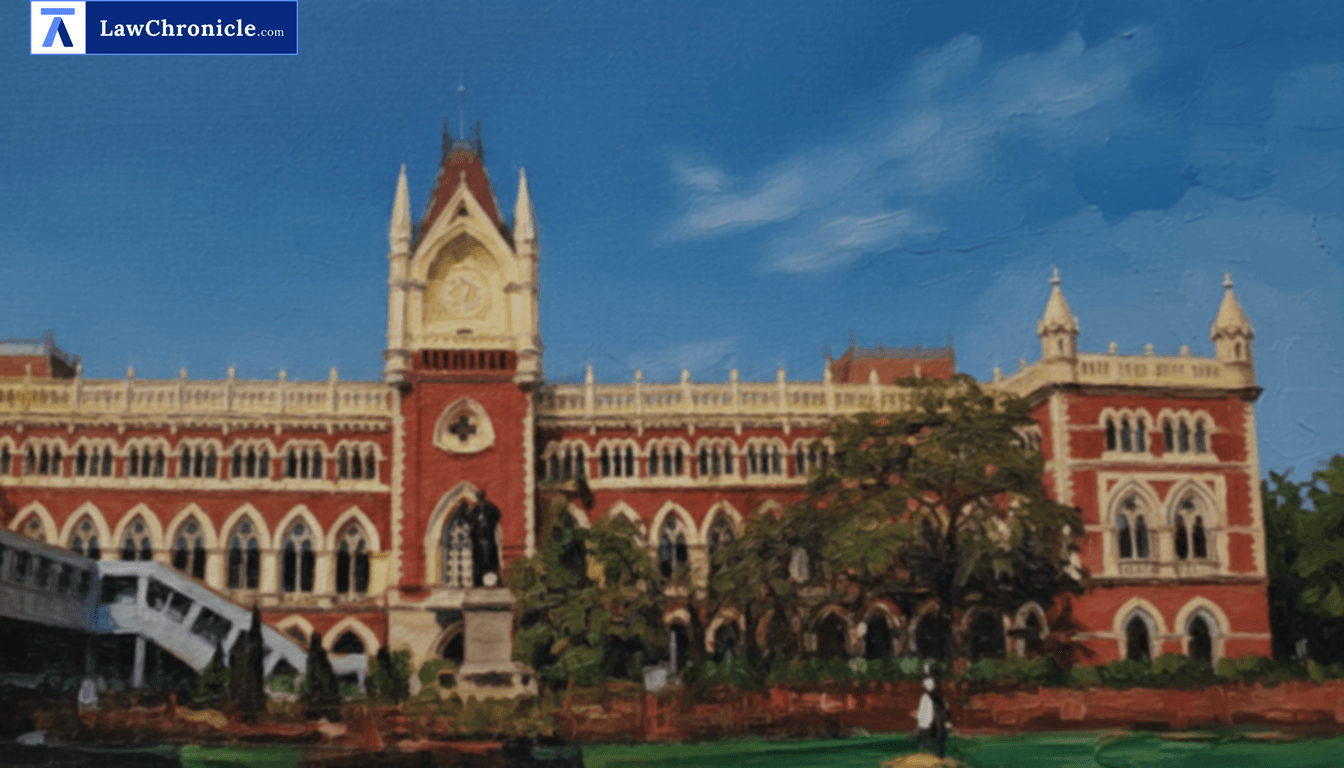
Shielding family members from vicarious criminal liability, the Calcutta High Court has ruled that a sole proprietorship cannot be stretched into a corporate entity under cheque bouncing laws. Expanding criminal liability to non-signatory domestic relatives based on defunct banking mandates is a gross abuse of judicial process.
In a revision application under Section 482 read with Section 401 of the Code of Criminal Procedure, 1973, Justice Uday Kumar evaluated whether family members can be prosecuted under Section 141 of the Negotiable Instruments Act, 1881 for cheques drawn on an account belonging to a sole proprietorship.
Court's Observations and Legal Principles
The High Court observed that Section 141 of the Negotiable Instruments Act, 1881 applies strictly to companies, partnership firms, or associations of individuals, and intentionally excludes sole proprietorships. The Court relied on Raghu Lakshminarayanan v. Fine Tubes and N. Mamatha Nagesh v. State of West Bengal and another to emphasize that domestic relationships cannot serve as legal proxies for registered partnership deeds to attract vicarious criminal liability.
Furthermore, referencing Alka Khandu Avhad v. Amar Syamprasad Mishra ( "(2021) 4 SCC 675": 2021 CaseBase(SC) 982) and TV Today Network Ltd. and others v. Ramesh Bhiduri, the Court reiterated that Section 138 of the Negotiable Instruments Act, 1881 is strictly author-centric, binding only the drawer of the cheque. Under Section 201 of the Indian Contract Act, 1872, any banking mandate automatically revokes upon the account holder's death, rendering post-dated cheques legally nonexistent under the Act. Addressing procedural hurdles raised under Adalat Prasad v. Rooplal Jindal and Others ( "(2004) 7 SCC 338": 2004 CaseBase(SC) 77), Subramanium Sethuraman v. State of Maharashtra and Another ( "(2004) 13 SCC 324": 2004 CaseBase(SC) 1363), and In Re: Expeditious Trial of Cases Under Section 138 of N.I. Act, 1881, the Court clarified that subordinate courts' inability to recall process does not restrict the plenary powers of the High Court under Section 482 to quash groundless prosecutions, as held in Rathish Babu Unnikrishnan v. State (NCT of Delhi) and State of Haryana v. Bhajan Lal.
The Court in its reasoning observed: "...the penal fiction of vicarious liability under Section 141 of the NI Act cannot be stretched by judicial implication to penetrate a sole proprietorship concern. As settled in Raghu Lakshminarayanan (supra) and aligned with Paragraph 61(iv) of N. Mamatha Nagesh (supra), a close domestic or filial relationship within a household is not a legal substitute for a registered partnership deed."
The Court has the following directions:
"The impugned order dated 17.12.2021 passed by the Learned 14th Metropolitan Magistrate at Calcutta in Complaint Case No. CN/533 of 2020 is set aside.
The underlying criminal proceedings in connection with Complaint Case No. CN/533 of 2020 pending before the Learned 14th Metropolitan Magistrate at Calcutta, so far as they relate to the petitioner, Prakash Sharma (Accused No. 3), stand quashed.
The petitioner is discharged from his... bail bonds and all restrictive interim orders passed against him stand vacated."
Key Takeaways
- No Vicarious Liability for Proprietorships: Family members cannot be dragged into cheque dishonour cases under Section 141 of the Negotiable Instruments Act, 1881 for proprietorship concerns.
- Strict Author-Centric Offence: Liability under Section 138 attaches strictly to the signatory maintaining the account.
- Extinction of Banking Mandates: A banking mandate terminates upon the account holder's death under Section 201 of the Indian Contract Act, 1872.
- Inherent High Court Powers: Procedural limits on Magistrates do not restrict High Courts from quashing untenable prosecutions under Section 482 of the Code of Criminal Procedure, 1973.
Ratio
Section 141 of the Negotiable Instruments Act, 1881 does not extend to sole proprietorship concerns, and vicarious criminal liability cannot be imposed on non-signatory family members for cheques drawn on an account whose mandate stood extinguished by operation of law upon the drawer's death.
Background:
The complainant company filed a cheque bounce complaint under Section 138 read with Section 141 of the Negotiable Instruments Act, 1881 against M/s S.R. Telematics and the petitioner, alleging he was a partner in the firm. Two cheques issued in 2020 to settle outstanding liabilities bounced with the remark "ACCOUNT CLOSED".
However, official municipal records proved that the firm was a sole proprietorship belonging to the petitioner's mother, and the alleged drawer (petitioner's father) had passed away in 2017. The Magistrate refused to drop the petitioner from proceedings due to summary trial procedural constraints, leading to the revision petition before the High Court. The High Court allowed the petition and quashed the criminal proceedings against the petitioner.
Case Details:
Case No.: CRR 3433 OF 2022
Case Title: Prakash Sharma v. M/s. Vision Cell (Pvt.) Ltd.
Appearances:
For the Petitioner(s): Mr. Pawan Kumar Gupta, Ld. Adv., Mr. Sovan Bera, Ld. Adv., Ms. Puja Beriwal, Ld. Adv., Ms. S. Nesar, Ld. Adv., Mr. S. Sett, Ld. Adv.
For the Respondent(s): Ms. Manju Ararwal, Ld. Sr. Adv., Ms. Anju Manot, Ld. Adv., Ms. Anita Pandey, Ld. Adv.
Source: 2026 CaseBase(CAL) 1591
Similar Articles



 Breaking News


