


Section 311 CrPC Power Cannot Be Used To Fill Lacunae Or Harass Victims: SC
 Copy Link
 Share
 Save
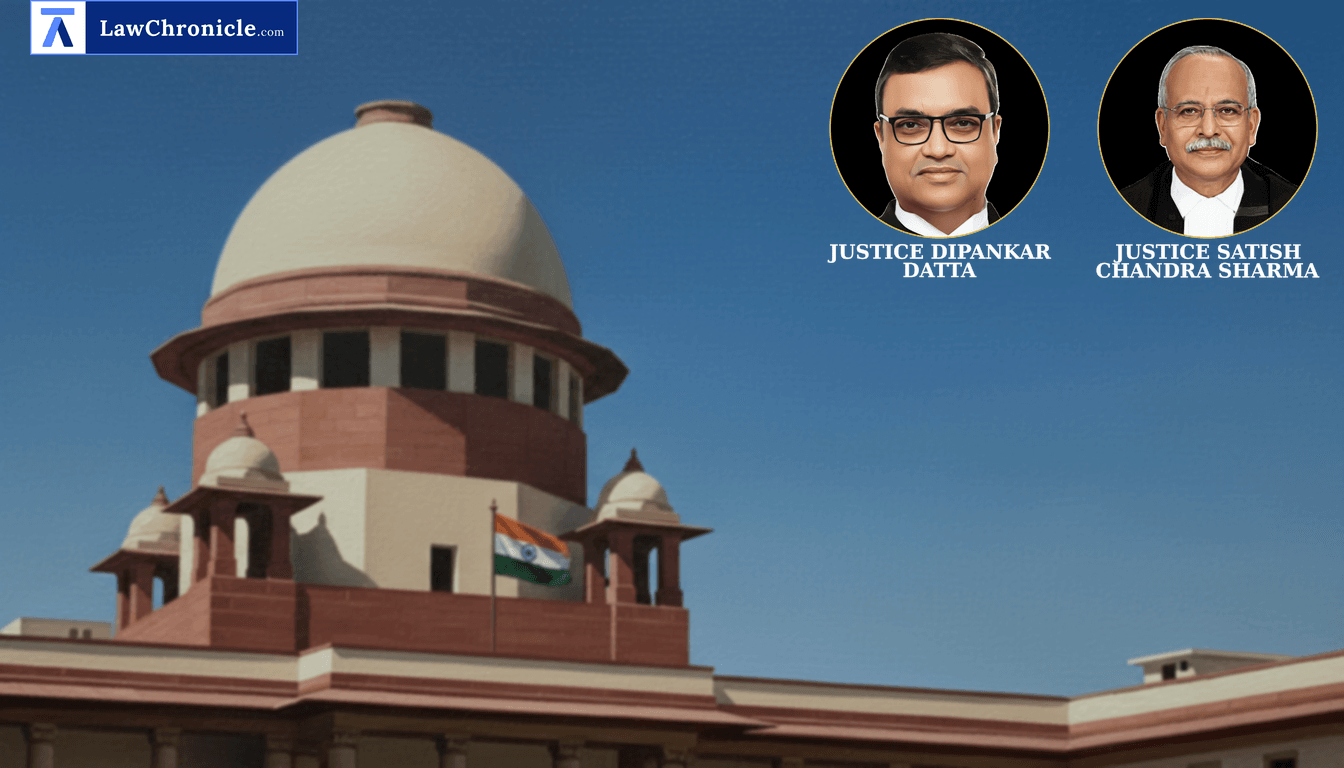
To protect the interests of victims in sensitive cases, the Supreme Court set aside a High Court order that permitted the recall of a prosecutrix for further cross-examination after an inordinate delay of four years. The Court emphasized that while the power to recall witnesses is broad, it must be exercised sparingly and not as a tool to prolong trials or cause undue hardship to witnesses.
An apex court bench comprising Justice Dipankar Datta and Justice Satish Chandra Sharma heard the appeal filed by the State of Tripura against a High Court decision that had permitted the respondent-accused to recall the prosecutrix (PW-1) under Section 311 of the Code of Criminal Procedure, 1973. The case, involving allegations of rape and criminal intimidation under the Indian Penal Code, 1860, had been pending since 2017.
The Limits of Judicial Discretion Under Section 311
The Court observed that the prosecutrix had already been extensively examined and cross-examined on four separate occasions. It noted that the accused sought to recall her to ask 94 questions based on Call Detail Records (CDRs) that were already part of the record since the filing of the chargesheet. Rejecting the plea of 'oversight' by the defence, the Court held that the discretionary power under Section 311 must be balanced against the need for a fair and expeditious trial.
The Court, in its reasoning, observed: "The power conferred under Section 311 of the CrPC is undoubtedly wide; however, such power is required to be exercised sparingly and in judicious manner, and not arbitrarily... The power under Section 311 CrPC cannot be exercised merely to fill up lacunae in the defence case."
Hardship to Victims and Delay in Trial
Justice Sharma, writing the judgment, highlighted the psychological toll on victims who are forced to reappear in court repeatedly. The Court noted: "The witnesses cannot be expected to face hardship of appearing in court repeatedly, particularly in sensitive cases. It can result in undue hardship for the victims, especially so, of heinous crimes, if they are required to repeatedly appear in Court to face cross-examination."
Background:
The dispute originated from an FIR registered in 2016 alleging that the Respondent-accused had forcibly confined and raped the prosecutrix. During the trial, which began in 2017, the prosecutrix was examined and cross-examined in 2018. Following a previous Code of Criminal Procedure, 1973 application by the prosecution, she was again re-examined in 2019. In December 2023, nearly four years later, the accused moved a fresh application to recall her, claiming certain CDR-related aspects were missed due to inadvertence.
While the Trial Court dismissed the application as a delay tactic, the High Court of Tripura reversed this, holding that the CDRs were essential for a just decision. The Supreme Court, however, relied on precedents such as Natasha Singh v. Central Bureau of Investigation ( "(2013) 5 SCC 741": 2013 CaseBase(SC) 312) and Swapan Kumar Chatterjee v. Central Bureau of Investigation ( "(2019) 14 SCC 328": 2019 CaseBase(SC) 1342) to reiterate that Section 311 is for discovering the truth, not for retrials or changing the nature of a case. Referring to Vijay Kumar v. State of Uttar Pradesh & Anr. ( "2011 (8) SCC 136": 2011 CaseBase(SC) 152), the bench noted that the power must be germane to the issue, and State (NCT of Delhi) v. Shiv Kumar Yadav & Anr. supported the view that recall is not a matter of course.
Ultimately, the Supreme Court allowed the appeal, set aside the High Court's order, and restored the Trial Court's decision to refuse the recall, ordering the trial to conclude by the end of 2026.
Case Details:
Case No.: CRIMINAL APPEAL NO. 2848 OF 2026
NeutralCitation: 2026 INSC 584
Case Title: THE STATE OF TRIPURA v. PANNA AHMED
Source: 2026 CaseBase(SC) 592
Similar Articles

 Breaking News


