


Section 482 CrPC Power To Be Used Sparingly In Quashing FIRs: Calcutta HC
 Copy Link
 Share
 Save
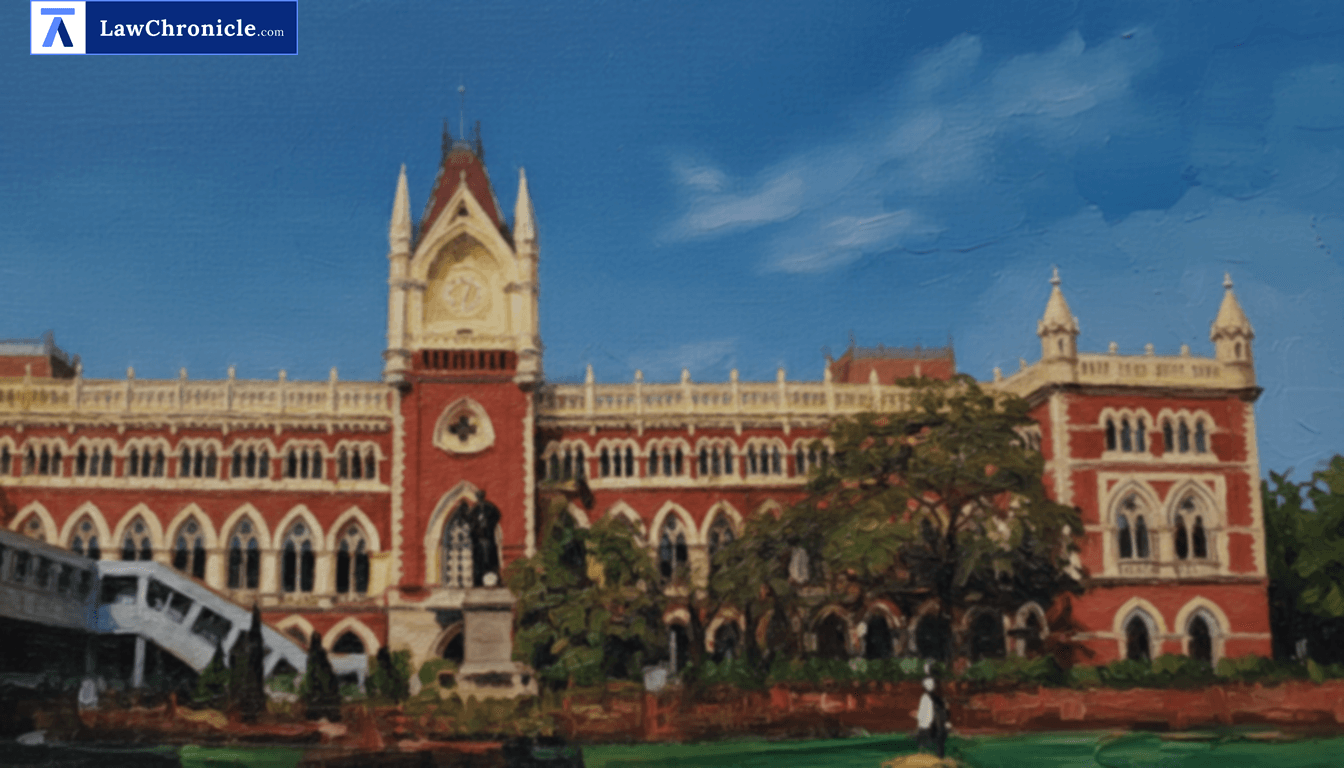
Refusing to quash criminal proceedings against a life convict accused of assault while out on parole, the Calcutta High Court held that inherent powers to derail criminal cases at the threshold must be exercised with extreme circumspection. The Court reaffirmed that where the initial complaint and investigation material prima facie disclose a cognizable offence, courts cannot embark upon an inquiry regarding the genuineness of allegations.
A single-judge bench of Justice Ajay Kumar Gupta dismissed a revisional application seeking the quashing of an FIR registered against a life convict for alleged offences under the Indian Penal Code.
Key Takeaways
Restraint in Quashing FIRs: Criminal proceedings should not be scuttled at the initial stage if allegations disclose a cognizable offence.
No Mini-Trials under Section 482: Courts exercising revisional jurisdiction cannot evaluate the reliability or genuineness of statements recorded during investigation.
Prima Facie Material Prevails: The presence of witness statements and injury reports provides sufficient ground to let the accused face trial.
Court Observations and Directions
The Calcutta High Court observed that the FIR, case diary, statements recorded under Section 161 of the Code of Criminal Procedure, 1973, and the medical injury report established a prima facie case of cognizable offences against the petitioner, rendering the prayer for quashing disentitled at this stage.
The Court, in its reasoning, observed: "In the light of the aforesaid discussion and also in view of the guidelines laid down by the apex court, the application is devoid of any merit. Consequently, this Court finds no reason to quash the impugned proceeding."
The Court issued the following directions:
"All issues raised on behalf of the petitioner are left open to be decided at the time of trial. The observations made by this Court in the instant case are only for the purpose of deciding this instant revisional application. The same shall not stand in the way of the Trial Court in deciding the case on its own merit independently and coming to a logical conclusion."
Ratio
When allegations in an FIR and initial investigative materials prima facie disclose the commission of a cognizable offence, the High Court cannot exercise its inherent powers under Section 482 of the Code of Criminal Procedure, 1973 to evaluate the veracity of the claims or scuttle criminal proceedings prior to trial.
Background
The petitioner, a life convict who was granted parole from Balurghat Central Correctional Home to attend his son's wedding, alleged that he was ambushed and attacked by a group of men while on his way to notify the Garden Reach Police Station about his parole. He contended that despite seeking to lodge a complaint, the police instead registered an FIR against him under Sections 323, 341, and 506 of the Indian Penal Code at the behest of local influential parties, leading to the cancellation of his parole.
The petitioner sought quashing of the FIR under Section 401 read with Section 482 of the Code of Criminal Procedure, 1973, asserting his innocence and requesting the preservation of CCTV footage from the police station and place of occurrence. On the other hand, the State and opposite parties submitted that the petitioner physically assaulted and threatened the complainant at Iron Gate More, violating parole conditions. Relying on the precedent in Neeharika Infrastructure Private Limited v. State of Maharashtra and Ors. ( "(2021) 19 SCC 401": 2020 CaseBase(SC) 1378), the respondents argued that inherent powers to quash proceedings must be applied sparingly, while the State produced 161 statements and injury reports showing prima facie guilt. Dismissing the revisional application, the High Court declined to quash the case and directed the trial court to proceed independently.
Case Details:
Case No.: C.R.R. No. 2448 of 2024
Neutral Citation: 2026:CHC-AS:1257
Case Title: SAYED DARAIN AHSAN @ DARAIN VS THE STATE OF WEST BENGAL & ORS.
Appearances:
For the Petitioner(s): Mr. Syed Shahid Imam, Adv., Mr. Mohammad Khairul, Adv.
For the Respondent(s): Mr. Saptarshi Kr. Kundu, Adv., Mr. Shahid Ansari, Adv., Md. Shahbaz, Adv., Mr. Arnab Chatterjee, Adv., Ms. Ankusha Ghosh, Adv., Mr. Sagar Saha, Adv., Ms. Nayana Mukhopadhyay, Adv.
Source: 2026 CaseBase(CAL) 1636
Similar Articles



 Breaking News


