Section 62 | IBC Limitation Commences from date of Order Pronouncement: SC
 Copy Link
 Share
 Save
The Supreme Court has ruled that statutory limitation under Section 62 of the Insolvency and Bankruptcy Code, 2016 begins on the date of order pronouncement and cannot remain suspended until a party chooses to apply for or collect a copy.
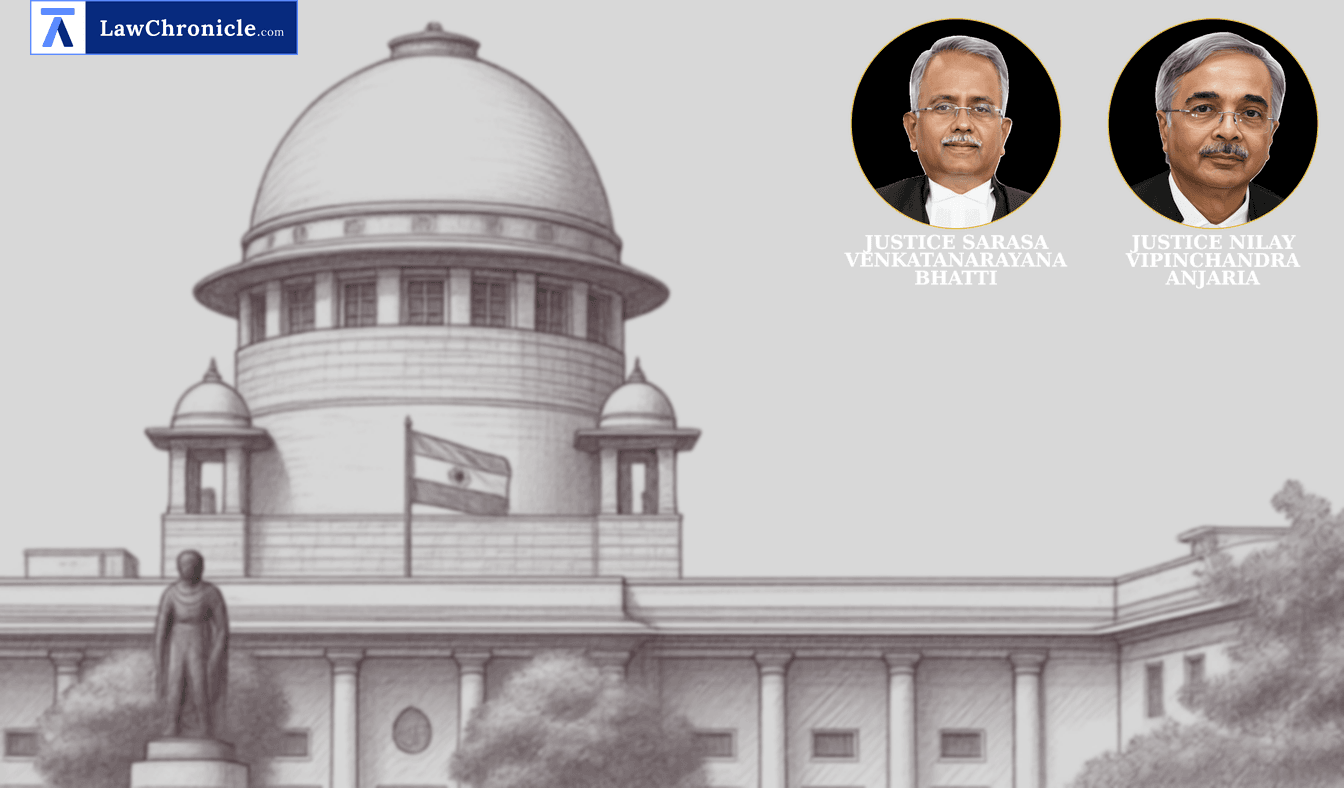
A two-judge bench comprising Justice S.V.N. Bhatti and Justice N.V. Anjaria sustained a preliminary objection regarding limitation and dismissed a civil appeal preferred by the Revenue against an order of the National Company Law Appellate Tribunal (NCLAT). The Court held that allowing litigants to compute limitation purely from the physical receipt of an order at their convenience would render strict statutory deadlines indefinite and fluctuating.
Key Takeaways
Strict Outer Ceiling: Appeals under Section 62 of the Insolvency and Bankruptcy Code, 2016 must strictly comply with the 45-day limitation and the maximum 15-day condonable period, creating an absolute ceiling of 60 days.
Pronouncement Triggers Limitation: The limitation clock begins running on the date the order is pronounced in open court under Rule 91 of the NCLAT Rules, 2016, not when a litigant belatedly decides to obtain a copy.
Exclusion of Time Demands Diligence: Under Section 12(2) of the Limitation Act, 1963, only the actual time spent between applying for and receiving a certified copy is excluded; prior inaction directly erodes the statutory period.
Extinction of Judicial Jurisdiction: The Supreme Court lacks jurisdiction to condone any delay beyond the statutory 60-day window under the Insolvency and Bankruptcy Code, 2016.
Interpretation of Limitation and Statutory Exclusion
Addressing the interplay between the Insolvency and Bankruptcy Code, 2016 and general limitation principles, the Court emphasized that statutory timelines under the Code are non-negotiable. Reaffirming the binding precedents in Sagufa Ahmed and Others v. Upper Assam Plywood Products Private Limited and Others ( "(2021) 2 SCC 317": 2020 CaseBase(SC) 887), V. Nagarajan v. SKS Ispat and Power Limited and Others ( "(2022) 2 SCC 244": 2021 CaseBase(SC) 860), and CA Ramchandra Dallaram Choudhary v. Adani Infrastructure and Developers Private Limited ( "2026 SCC OnLine SC 1097": 2026 CaseBase(SC) 625), the bench observed that the Insolvency and Bankruptcy Code, 2016 is an exhaustive self-contained code that overrides general procedural provisions by virtue of Section 238.
The Supreme Court delved into the statutory provision of Section 62 IBC limitation to address that "The phrase 'from the date of receipt of the order' in Section 62(1) cannot be read as the date on which a party chooses to apply for and collect a certified copy. If the limitation clock remained suspended until physical collection at the litigant’s leisure, the limitation period would then become fluctuating and indefinite. Furthermore, Section 12(2) of the Act, 1963 would be rendered wholly redundant. There would be no reason for Parliament to make the exclusion of 'time requisite for obtaining a copy' applicable via Section 238-A of the IBC if limitation did not already commence upon pronouncement."
Calculating the timelines in the present appeal, the bench noted that 35 days elapsed before the Revenue applied for a certified copy, leaving only 10 days of the initial 45-day window. Even after excluding the 35 days taken by the Registry to deliver the certified copy under Section 12(2) of the Limitation Act, 1963, the Revenue consumed another 41 days post-receipt, totaling 76 actionable days, well beyond the absolute ceiling of 60 days.
Ratio
The statutory limitation period for filing an appeal to the Supreme Court under Section 62 of the Insolvency and Bankruptcy Code, 2016 commences on the date the order is pronounced by the NCLAT. Any period of inaction prior to filing an application for a certified copy counts directly against the statutory period, and the Court possesses no power or jurisdiction to condone delay beyond the absolute outer ceiling of 60 days (45 days initial period plus 15 days condonable period).
Background
The dispute originated from recovery proceedings initiated by the Central Excise and Service Tax Department against the Corporate Debtor, M/s Samyu Glass Private Limited, registered under the Companies Act, 1956. Following the initiation of the Corporate Insolvency Resolution Process (CIRP) under Section 7 of the Insolvency and Bankruptcy Code, 2016 by Union Bank of India, the National Company Law Tribunal (NCLT), Hyderabad approved a resolution plan on August 13, 2021. Under the plan, an amount of Rs. 1,34,657/- was allocated toward excise arrears against the Department's claim of over Rs. 22.60 crores.
The Department challenged the resolution plan before the NCLAT, Chennai, which dismissed the appeal on August 2, 2023. Aggrieved, the Revenue filed a Civil Appeal before the Supreme Court under Section 62 of the Insolvency and Bankruptcy Code, 2016 on November 21, 2023. Respondent No. 2 raised a preliminary objection, contending that the appeal was filed on the 111th day from pronouncement and remained barred even after accounting for the time taken to secure a certified copy. Sustaining the preliminary objection raised by the Respondent, the Supreme Court held the appeal to be barred by limitation and dismissed the same.
Case Details:
Case No.: Civil Appeal No. 7882 of 2023
Neutral Citation: 2026 INSC 1121
Case Title: The Assistant Commissioner of Central Tax, CGST Division v. Sreenivasa Rao Ravinuthala and Another
Appearances:
For the Petitioner(s): Mr. Saurav Roy, learned Counsel
For the Respondent(s): Mr. Ritin Rai, learned Senior Counsel
Source: 2026 CaseBase(SC) 8264
 Breaking News