Secured Creditor Preferential Payment Prevails Over State Tax Arrears: Bombay High Court
 Copy Link
 Share
Share Save
Save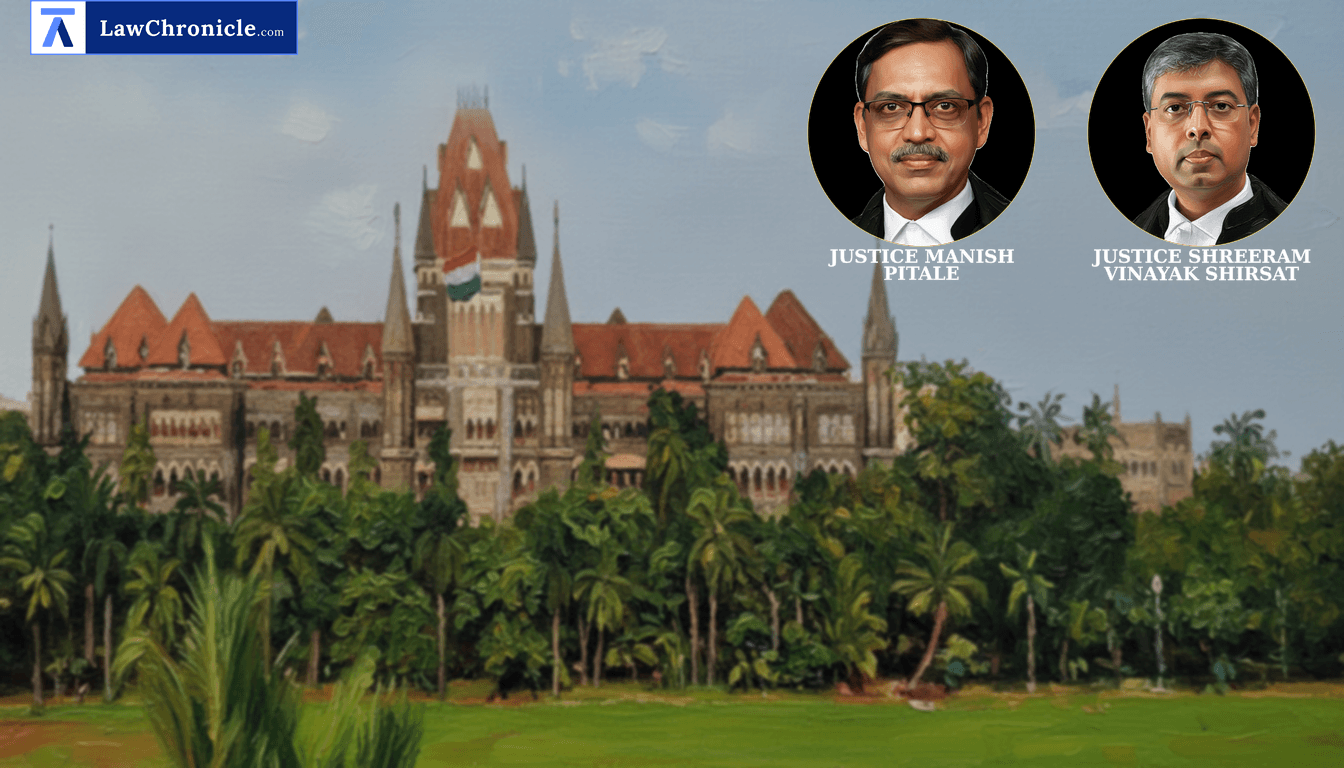
The Bombay High Court has reinforced the Secured Creditor's preferential payment over government dues. The Bench ruled that State’s nominal Re. 1/- auction purchase of a mortgaged property is void if it bypasses the mandatory registration and proclamation requirements of the SARFAESI Act. A division bench comprising Justice Manish Pitale and Justice Shreeram V. Shirsat adjudicated a challenge brought by the Indian Overseas Bank against the Maharashtra State authorities. The petitioner bank contested an auction sale where the Tahsildar had transferred mortgaged land to the State for a nominal bid of Re. 1/- while the bank’s enforcement measures under the Securitisation and Reconstruction of Financial Assets and Enforcement of Security Interest Act, 2002 were already in progress.
Key Takeaways
Supremacy of Section 26E
The Bombay High Court reaffirmed that secured creditors enjoy legal priority over all other government debts, including taxes and revenues, as per the non-obstante mandate of the Securitisation and Reconstruction of Financial Assets and Enforcement of Security Interest Act, 2002.
Invalidity of Nominal State Purchases
State actions to acquire land for a nominal Re. 1/- bid to satisfy revenue arrears are void if they conflict with the enforcement rights of a prior mortgagee bank.
Mandatory CERSAI Compliance
Government departments cannot claim priority unless they have registered their claim or attachment with CERSAI as per the requirements of Chapter IV-A of the SARFAESI Act.
Proclamation is Prerequisite
Mere issuance of an attachment order for land revenue is insufficient; legal priority is only preserved if the attachment is followed by public proclamation through beating of drums or conspicuous notices before the statutory enforcement dates of 2016 and 2020.
The Mandate of Legal Priority and Procedural Compliance
The Bombay High Court examined the interplay between the Securitisation and Reconstruction of Financial Assets and Enforcement of Security Interest Act, 2002 and the MLR Code, 1966. It was observed that while the State has powers to recover dues as arrears of land revenue, such powers are subservient to secured creditor preferential payment, whose charge is duly registered with CERSAI. The Bench noted that in the present case, the bank had registered its interest in February 2015, whereas the State failed to show any CERSAI registration of its own.
The Bombay High Court emphasized that the Department's failure to follow the procedure under Rule 11 of the Maharashtra Realisation of Land Revenue Rules, 1967 regarding public proclamation meant that the dual disability set in, making the State's claim subservient to the bank's rights as established in Jalgaon Janta Sahakari Bank Limited vs. Joint Commissioner of Sales Tax.
Ratio
A secured creditor’s right to recover dues under the Securitisation and Reconstruction of Financial Assets and Enforcement of Security Interest Act, 2002 takes precedence over State government revenues and taxes by virtue of Section 26E, provided the security interest is registered. State authorities cannot claim priority based on administrative attachment alone unless such attachment was publicly proclaimed and registered with CERSAI prior to the enforcement of the 2016 and 2020 amendments to the Securitisation and Reconstruction of Financial Assets and Enforcement of Security Interest Act, 2002 and RDDB Act.
Background
The dispute originated when respondent No. 5 (the borrower) defaulted on financial facilities sanctioned by the Indian Overseas Bank in 2007. The bank had secured these facilities through an equitable mortgage and registered the charge with the Registrar of Companies and later with CERSAI. Following a default in 2010, the bank initiated proceedings under the Securitisation and Reconstruction of Financial Assets and Enforcement of Security Interest Act, 2002, issuing possession notices in 2012.
Concurrently, the District Industries Centre sought to recover government dues worth Rs. 2.68 crores from the same borrower. The Tahsildar (Respondent No. 3) conducted an auction on April 7, 2018. Since no bidders appeared, the property was purchased by the State for a nominal Re. 1/-. The bank challenged this, arguing that its prior charge and CERSAI registration gave it absolute priority. The Bombay High Court, relying on the Full Bench precedent in Jalgaon Janta Sahakari Bank Limited vs. Joint Commissioner of Sales Tax, held that the State's failure to prove registration or proper public proclamation meant the bank's rights prevailed, resulting in the quashing of the State's auction sale.
Case Details:
Case No.: WRIT PETITION NO. 10120 OF 2022
Neutral Citation: 2026:BHC-AS:37533-DB
Case Title: Indian Overseas Bank vs. The State of Maharashtra and Others
Appearances:
For the Petitioner(s): Mr. Cyrus Ardheshir, Senior Advocate a/w. Ms. Nandita Bajpai, Mr. Babu i/b. Mr. Yogesh Pirthani
For the Respondent(s): Ms. Kavita Solunke, Addl.G.P. a/w. Smt. M.S. Bane, AGP
Source: 2026 CaseBase(BOM) 5657
 Breaking News