Settlement Under IBC Process Entitles Plaintiff To Full Refund Of Court Fee: Delhi HC
 Copy Link
 Share
Share Save
Save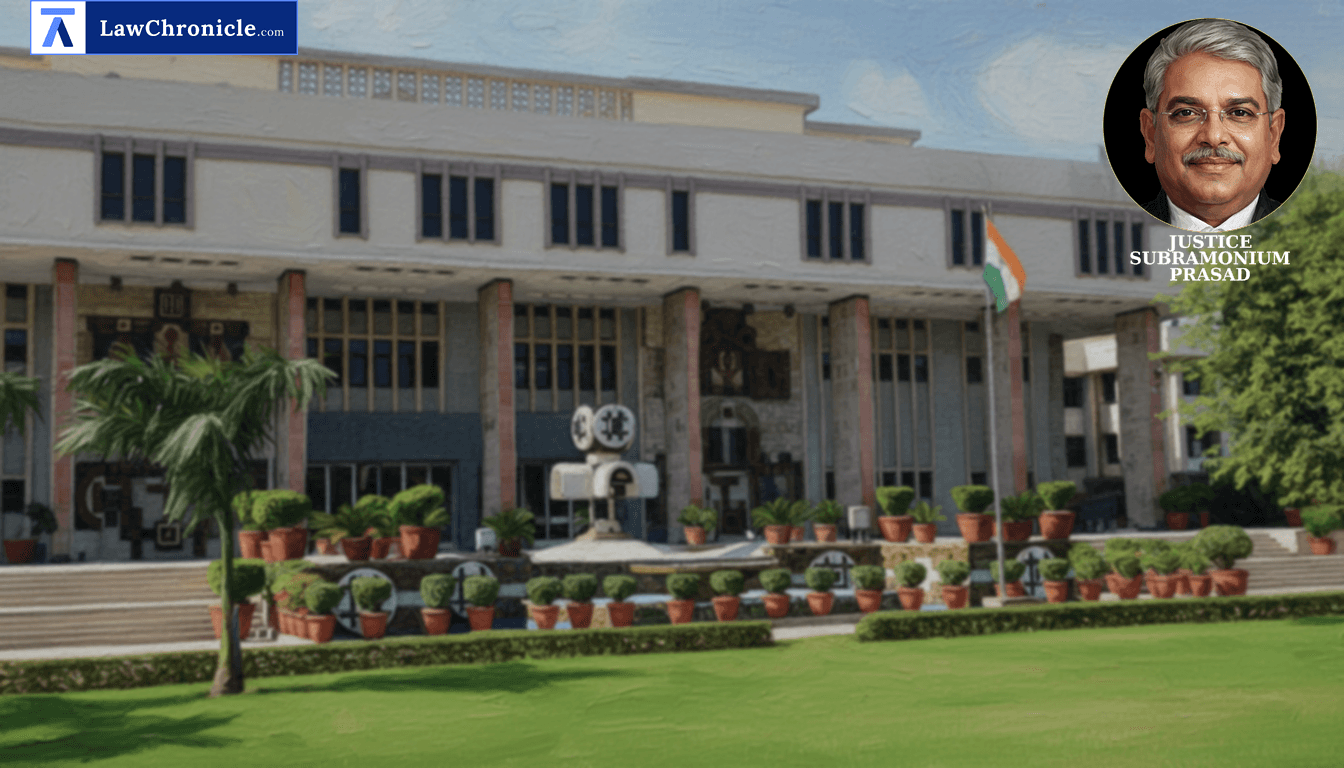
Emphasizing a purposive interpretation of fiscal statutes, the Delhi High Court has held that a plaintiff is entitled to a full refund of court fees even when a settlement is reached through the Corporate Insolvency Resolution Process (CIRP) under the Insolvency and Bankruptcy Code, 2016. The Court underscored that any form of settlement that brings a quietus to a dispute attracts the benefit of court fee refund provisions, regardless of whether it was formally referred by a court under Section 89 of the Code of Civil Procedure, 1908.
Justice Subramonium Prasad presided over the matter, considering an application filed by a plaintiff seeking to withdraw their recovery suit and claim a refund of the court fees paid. The Court had to determine if the acceptance of an amount under a Resolution Plan approved by the NCLT constitutes a 'settlement' within the meaning of the Court Fees Act, 1870.
Purposive Interpretation Over Literal Construction
While the Defendant did not directly settle with the Plaintiff, the initiation of insolvency proceedings led the Plaintiff to submit claims before the Resolution Professional. The Plaintiff subsequently accepted the amount conferred under the NCLT-approved Resolution Plan. The Court observed that while there was no 'settlement' in the traditional sense, the net effect was identical, as it brought an end to the litigation.
The Court, in its reasoning, observed: "The net effect is that the Plaintiff has settled for an amount in order to bring a quietus to its claims and since the Plaintiff has agreed to accept the said amount, the ingredients of settlement are attracted to the facts of this case. The Apex Court is of the opinion that any kind of settlement by which the Plaintiff agrees to bring quietus to the dispute comes within the four corners of Section 16 of the Court Fees Act and that one cannot distinguish cases on the mode of settlement."
Reliance on Judicial Precedents
The Court relied heavily on the Supreme Court's decision in High Court of Judicature at Madras through its Registrar General v. M.C. Subramaniam & Ors., which advocated for a 'purposive interpretation' of Section 16 of the Court Fees Act, 1870. It noted that denying a refund to parties who settle privately or through other statutory mechanisms, while granting it to those referred by the Court, would lead to an "absurd and unjust outcome."
Additionally, the Court referred to the Division Bench ruling in Nutan Batra v. M/s Buniyaad Associates and the Coordinate Bench decision in Proud Securities and Credits Private Limited v. Urrshila Kerkar & Anr. to reinforce that the legislative intent is to provide an incentive to parties who resolve disputes without consuming further judicial resources.
Background:
The dispute originated from an Agreement dated 28.07.2016 for the supply of 5200 MT of sugar. The Plaintiff had made an advance payment of Rs. 10,00,000 to the Defendant, but alleged that the Defendant failed to supply the remaining balance of sugar within the stipulated period. Consequently, the Plaintiff filed a suit for the recovery of Rs. 19,55,30,723/- along with 15% interest.
During the pendency of the suit, insolvency proceedings were initiated against the Defendant under the Insolvency & Bankruptcy Code, 2016. The Plaintiff submitted its claims as an "Operational Creditor" to the Resolution Professional. A Resolution Plan was eventually approved by the NCLT on February 6, 2024. The Plaintiff accepted the settlement amount under this plan and moved the High Court to withdraw the suit under Order XXIII Rule 1 of the Code of Civil Procedure, 1908, seeking a certificate for the refund of the court fee paid at the time of filing. The Court, aligning with the GNCTD notification and the principles of the Court Fees Act, 1870, allowed the application.
Case Details:
Case No.: CS(COMM) 474/2019
Case Title: SAINIK INDUSTRIES PVT. LTD. v. INDIAN SUGAR MANUFACTURING COMPANY LIMITED
Appearances:
For the Petitioner(s): Ms. Preeti Gupta, Ms. Urvashi Tyagi, Advs. along with Vikram Singh, AR of the Plaintiff
Source: 2026 CaseBase(DEL) 402
 Breaking News