


Son's Permissive Occupation Does Not Create Ownership Rights: Delhi HC
 Copy Link
 Share
 Save
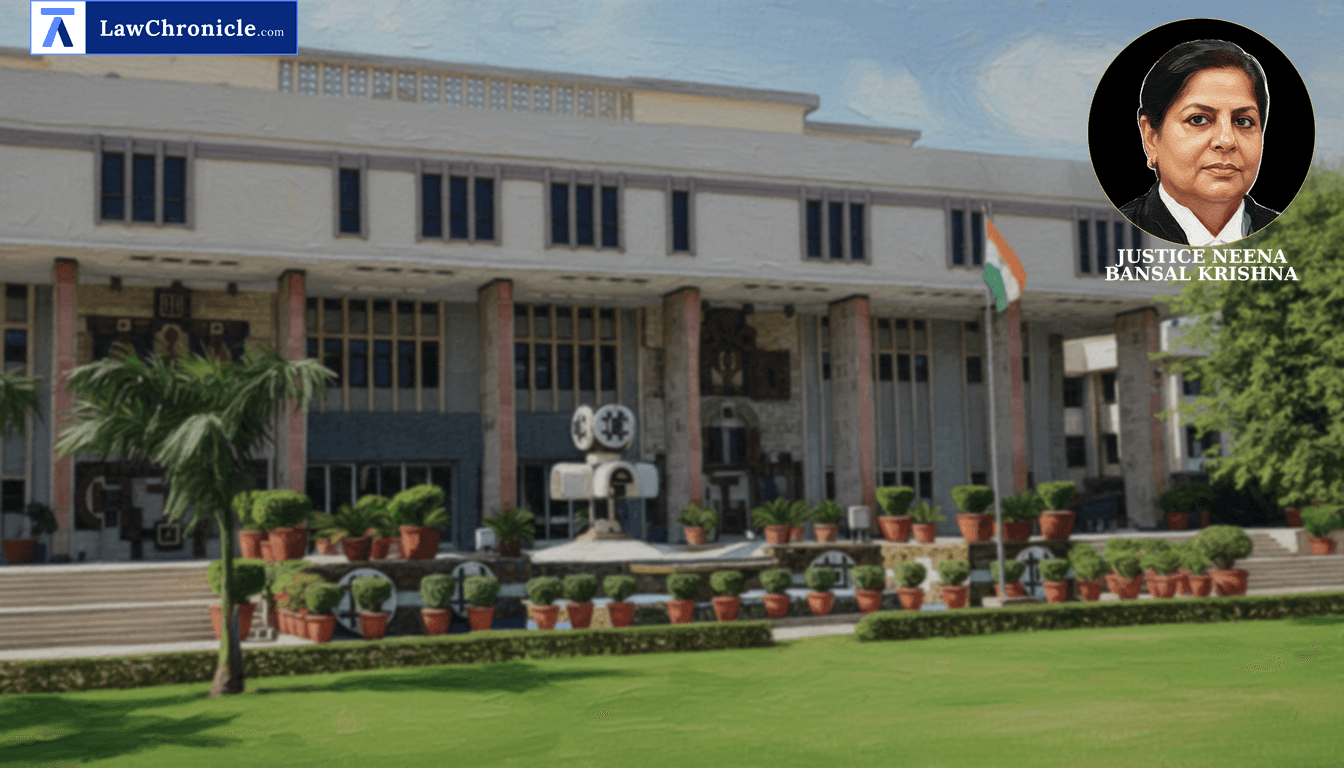
In a poignant legal battle between a father and son, the Delhi High Court has reaffirmed that a family member's long-term residence in a property on a permissive basis does not translate into ownership or title.
Justice Neena Bansal Krishna, presiding over the appeal, dismissed a son's challenge against a trial court decree, holding that his stay at his father's house was merely a license that could be revoked at any time. The Court emphasized that the son could not challenge the father's title while deriving his own possession from him.
The Myth of Ancestral Property and Oral Settlement
The appellant contended that the suit property was purchased using proceeds from ancestral property and that an oral family settlement in 2004 had granted him rights over the first floor. However, the Court found these claims unsubstantiated. It noted that the property in Madangir, claimed to be ancestral, was actually the exclusive property of the grandfather, who had gifted it to the respondent.
Referring to Section 8 of the Hindu Succession Act, 1956, the Court noted that even if the proceeds were from ancestral property, the title would devolve according to the Act. Furthermore, the Court highlighted that under Section 96 of the Code of Civil Procedure, 1908, the appellant failed to prove his financial contribution to the construction or the existence of a definitive family settlement.
Legal Rationale on Permissive Possession
The Court, in its reasoning, observed: "It is well settled that when a person is permitted to reside in the property of another, out of love and affection without payment or any consideration and without any agreement creating a tenancy, such a person is a licensee/permissive user, whose right to continue in the property can be revoked at any time and upon such revocation, his right to continue in the occupation of the property comes to an end."
Addressing the validity of the father's title based on a GPA and Agreement to Sell, the Court acknowledged that while these are not conventional sale documents as per Suraj Lamps vs. State of Haryana, the appellant had no locus standi to question the title since his own possession was derived from the respondent.
Court Directions:
The Court has the following directions:
"The Suit of the Plaintiff for Mandatory Injunction to take the Possession from the Defendant and for User/Occupation Charges @ Rs.5,000/- per month, has been rightly decreed. There is no merit in the present Appeal, which is hereby dismissed. Pending Applications, if any, also stand disposed of, accordingly."
Background:
The respondent (father) filed a suit for mandatory and permanent injunction against his son (appellant) to remove him and his family from the first floor of property No. E-87, Dharampal Colony, New Delhi. The father alleged that despite being allowed to live there since 1995-96 on a permissive basis, the son’s behavior became unruly, causing constant harassment. The son resisted the suit, claiming the property was ancestral and that he had invested his life savings into its construction.
The trial court ruled in favor of the father, decreeing the suit for possession and mesne profits. The son appealed, citing Anathula Sudhakar vs. P. Buchi Reddy ( "(2008) 4 SCC 594": 2008 CaseBase(SC) 1320) and Santosh Hazari vs. Purushottam Tiwari regarding the maintainability of a suit for injunction without seeking a declaration of title. He also relied on Kale & Ors. vs. Deputy Director of Consolidation and S. Shanmugam Pillai vs. K. Shanmugam Pillai ( "(1973) 2 SCC 312": 1972 CaseBase(SC) 381) to argue that an oral family settlement does not require registration. However, the High Court found that the son failed to provide cogent evidence for the settlement or his financial contributions. Citing M/s Nopany Investments (P) Ltd. vs. Santokh Singh (HUF), the Court held that filing the suit itself acted as a notice to vacate. The award of mesne profits was upheld based on the son's own admissions during cross-examination regarding the market rent.
Case Details:
Case No.: RFA 101/2026, CM APPL. 6161/2026
Case Title: BIJENDER SINGH vs. CHANDER BHAN
Appearances:
For the Petitioner(s): Mr. Vikas Jain & Mr. Gargi Vashishta, Advocates.
For the Respondent(s): Respondent in person.
Source: 2026 CaseBase(DEL) 409
 Breaking News


