Staking Money on Uncertain Outcomes Constitutes Betting and Gambling Under GST: SC
 Copy Link
 Share
Share Save
Save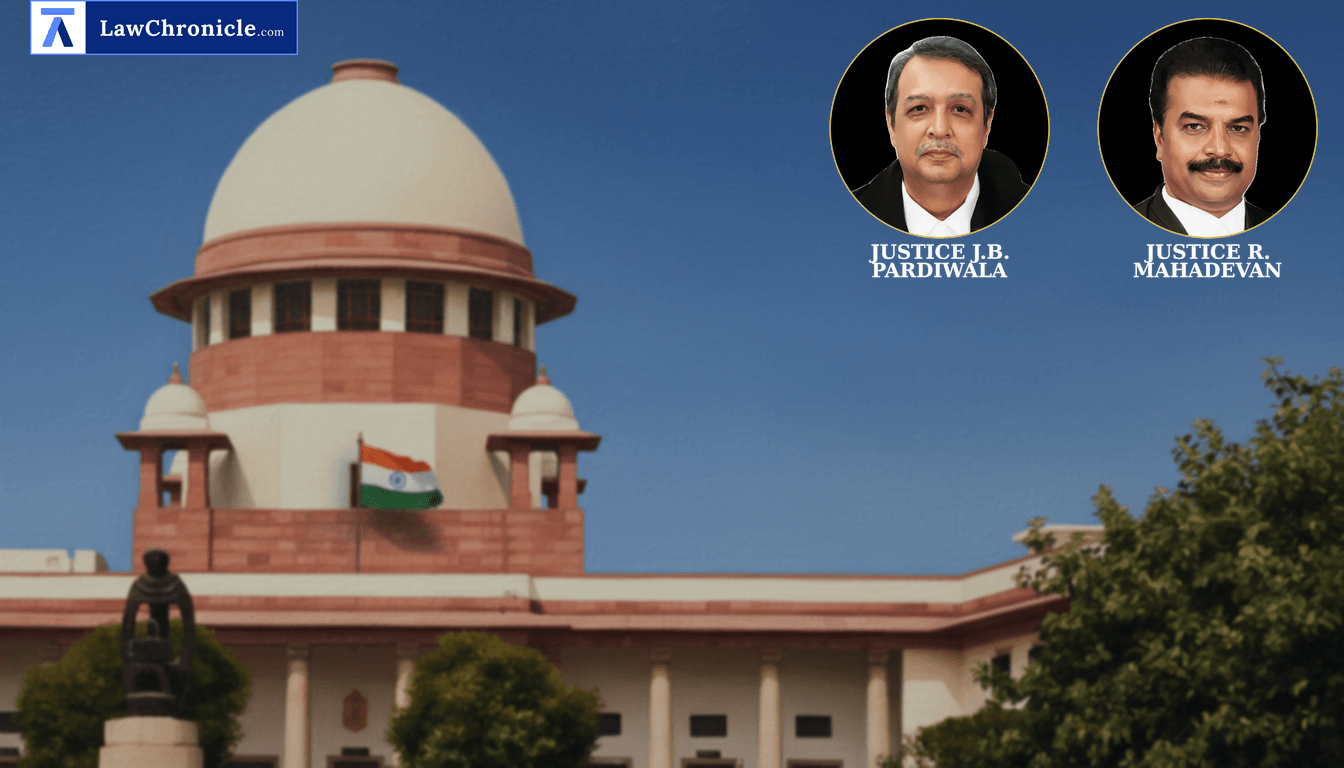
The Supreme Court has clarified that online gaming, fantasy sports, and casino transactions involving stakes constitute 'betting and gambling' exigible to Goods and Services Tax (GST) on the full face value of the bet, rather than just the platform commission.
A bench comprising Justice J.B. Pardiwala and Justice R. Mahadevan delivered this significant judgment while hearing a massive batch of matters, including appeals by the Revenue against a Karnataka High Court order quashing a 21,000-crore show-cause notice issued to a gaming company. The proceedings involved challenges to the constitutional validity of the GST framework governing actionable claims, the classification of skill-based games as gambling, and the retrospective nature of the 2023 GST amendments.
Betting and Gambling: Skill vs Chance Distinction Irrelevant for GST
The Court held that the essential element of betting and gambling lies in staking money upon uncertain outcomes. It clarified that once participation is conditioned upon staking money or money's worth, the transaction acquires the character of 'betting and gambling' within the GST framework, regardless of whether the underlying game is one of skill or chance. The Court observed that organized gaming and betting platforms create a commercial ecosystem where participants acquire contingent beneficial interests in movable property, which qualify as 'actionable claims' under Section 3 of the Transfer of Property Act, 1882.
Constitutional Validity of GST on Actionable Claims
The Bench upheld the constitutional validity of Sections 2(52) and 9(1) of the Central Goods and Services Tax Act, 2017, affirming that Parliament possesses the legislative competence under Article 246A of the Constitution of India, 1950 to tax actionable claims. The Court rejected the argument that actionable claims could only arise from sovereign grants, citing the precedent in Sunrise Associates v. Government of NCT of Delhi and others ( "(2006) 5 SCC 603": 2006 CaseBase(SC) 83). The inclusion of actionable claims within the definition of 'goods' was found to be consistent with the constitutional scheme.
2023 Amendments Declared Clarificatory and Retrospective
Addressing the 2023 amendments that introduced Rules 31B and 31C of the Central Goods and Services Tax Rules, 2017, the Court held these to be clarificatory and explanatory in nature. Consequently, they operate retrospectively. These rules specify the valuation methodology for online gaming and casinos based on total amounts deposited or paid, rather than just the net revenue. The Court also sustained Rule 31A, declaring it a valid machinery provision traceble to Section 15 and Section 164 of the Central Goods and Services Tax Act, 2017.
Directions Issued by the Court
The Court has the following directions:
"(i) The time for submitting replies to the show cause notices shall be eight weeks from the date of receipt of a copy of this judgment and considering the long pendency of the matter, the competent authority shall consider the same and pass orders, in accordance with law and in light of the findings recorded in this judgment, within a period of twelve weeks thereafter.
(ii) As the case may be, the time for filing appeals against the assessment orders shall be twelve weeks from the date of receipt of a copy of this judgment, and the competent authority shall consider the same and pass orders, in accordance with law and in light of the findings recorded in this judgment, as expeditiously as possible."
The Court, in its reasoning, observed: "The taxable event under the GST regime is not the abstract game, whether of skill or chance, but the supply of actionable claims arising from the staking of money on uncertain outcomes. GST laws mark a departure from the previous policy of taxing sale/consignments and focuses on the taxing of supplies. The focus is on the taxation of supply, as opposed to the creation of neat compartments between goods and services."
Background:
The dispute arose from show cause notices issued by the Directorate General of GST Intelligence (DGGI) demanding GST at 28% on the total stake value. Companies like Gameskraft had successfully challenged these in the High Court, arguing that rummy is a game of skill (referencing All India Gaming Federation v. State of Karnataka and State of Andhra Pradesh v. K. Satyanarayana and others ( "1967 INSC 269": 1967 CaseBase(SC) 32)) and that GST should only apply to their service fee. The Revenue appealed, contending that the chance to win is an actionable claim. The Supreme Court set aside the High Court's findings, restoring the show cause notices and affirming that GST applies to the entire amount pooled for betting, as established in Sunrise Associates v. State (NCT of Delhi) ( "(2006) 5 SCC 603": 2006 CaseBase(SC) 83) regarding lotteries.
Case Details:
Case No.: CIVIL APPEAL NO(S). 8241 – 8244 OF 2026
NeutralCitation: 2026 INSC 595
Case Title: DIRECTORATE GENERAL OF GOODS AND SERVICES TAX INTELLIGENCE (HQS) & ORS. v. GAMESKRAFT TECHNOLOGIES PRIVATE LIMITED AND ORS.
Appearances:
For the Petitioner(s): Mr. N. Venkataraman, Additional Solicitor General; Mr. Tushar Mehta, Solicitor General
For the Respondent(s): Dr. Abhishek Manu Singhvi, Senior Advocate; Mr. Harish Salve, Senior Advocate; Mr. Arvind Datar, Senior Advocate; Mr. Gopal Sankaranarayan, Senior Advocate; Mr. Rakesh Dwivedi, Senior Advocate; Mr. Dhruv Mehta, Senior Advocate; Mr. Tarun Gulati, Senior Advocate; Mr. Kavin Gulati, Senior Advocate; Mr. Balbir Singh, Senior Advocate; Mr. Sridharan, Senior Advocate
Source: 2026 CaseBase(SC) 593
 Breaking News