


Stamp Duty Levy on Subsequent Conveyances Must Respect Section 4 Continuity: Bombay HC
 Copy Link
 Share
 Save
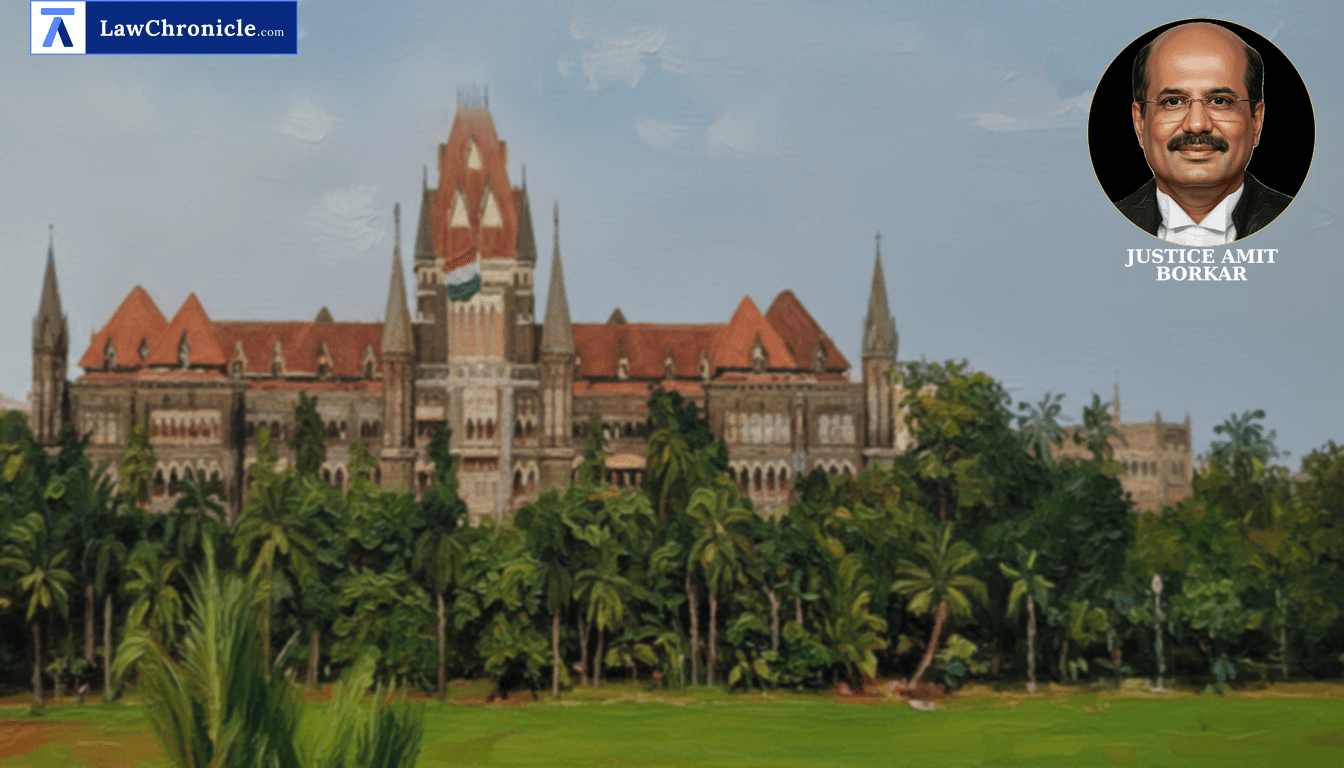
The Bombay High Court has delivered a decisive blow against the mechanical levy of stamp duty on subsequent conveyances, ruling that instruments executed to perfect title under decades-old agreements cannot be treated as independent fresh sales for ad valorem duty. In a significant clarification of the Maharashtra Stamp Act, 1958, the Court held that a long passage of time or the repeal of restrictive land laws does not sever the continuous nature of a single transaction completed through several instruments.
Justice Amit Borkar heard a batch of writ petitions filed under Articles 226 and 227 of the Constitution of India, 1950 challenging orders passed by the Deputy Controller of Stamps. The petitioners, including Atul Enterprises and Montal Investment, contested the State's demand for deficit stamp duty amounting to crores, which was calculated based on the market value of properties in 2012 despite underlying agreements dating back to 1985 and 1996.
Key Takeaways
Transaction Continuity Over Time
Section 4 of the [Maharashtra Stamp Act, 1958 applies to transactions completed through several instruments regardless of the gap in time between the initial agreement and final conveyance.
Substance Over Label
Taxing authorities must examine the real substance and legal effect of instruments rather than relying solely on the names or labels given to documents by parties.
Ready Reckoner Limitations
Ready Reckoner rates are merely guidelines for prima facie valuation and cannot replace the statutory duty of the Collector to determine true market value considering physical and legal restrictions.
Impact of Repealed Laws
Post-agreement changes in law, such as the repeal of the Urban Land Ceiling Act, do not convert a continuous transaction into a fresh independent sale for stamp duty purposes.
Legal Rationale on Section 4 Applicability
The Bombay High Court observed that the primary error committed by the Stamp Authorities was treating the 2012 Conveyances as fresh sales. The Bench emphasized that Section 4 is designed to cover situations where several instruments are employed for completing a single transaction of sale or development. The Bench further noted that the earlier agreements, possession-related documents, and Powers of Attorney clearly established a chain of rights leading to the final Conveyances.
Referring to the precedent in Kumar Housing Corporation vs. The State of Maharashtra & Ors., the Bombay High Court reiterated that the inquiry under Section 4 is not limited to finding whether all documents have the same title or were executed on the same date. The Bench observed that "Section 4 applies where 'several instruments are employed for completing the transaction'. Therefore, the enquiry is not limited only to finding whether all documents have the same title or whether they were executed on the same date. What is required to be seen is whether several instruments were in fact used for completing one transaction of sale, development agreement, lease, mortgage, or settlement."
Rejection of Independent Valuation Argument
The State argued that because the 2012 Conveyances lacked explicit recitals referencing the 1985 agreements and the Urban Land Ceiling (ULC) regime had since been repealed, the properties should be valued at 2012 market rates. The State relied on Praman Infrastructure P. Ltd. vs. The State of Maharashtra & Ors. to suggest that the authorities could not look beyond the four corners of the deed. However, the Court distinguished this, stating that while recitals affecting market value (like CRZ restrictions) should be in the deed, the determination of whether multiple instruments form one transaction requires looking at the entire chain of documents.
Regarding the valuation guidelines under the Maharashtra Stamp Act, 1958, the Bombay High Court followed the principle laid down in Prasadnagar Co-operative Housing Society Ltd. v. State of Maharashtra ( "2005 (2) Mh.L.J. 310": 2005 CaseBase(BOM) 584), noting that guideline values are not final. The Court held: “The guideline value fixed is not final but only a prima facie rate prevailing in an area. ... The authorities cannot regard the guideline valuation as the last word on the subject of market value.”
Ratio
Instruments executed to formally transfer title or perfect rights acquired under earlier agreements, where possession was delivered and consideration was paid, constitute 'several instruments' used for completing a single transaction under Section 4 of the Maharashtra Stamp Act, 1958. Such instruments cannot be treated as fresh independent sales for the purpose of applying current market values if they form part of a continuous legal arrangement.
Background
The dispute arose when the petitioners sought to register Conveyances in 2012 to satisfy requirements by the Slum Rehabilitation Authority (SRA) to establish clear title for redevelopment. The underlying property was Plot No. D-40 and other plots in Laxmi Industrial Estate, which were declared slums under the Maharashtra Slum Areas (Improvement, Clearance and Redevelopment) Act, 1971. While the Petitioners had entered into Development-cum-Sale Agreements in 1985 and paid stamp duty applicable then, the Revenue authorities issued show-cause notices in 2013, alleging a short-levy based on 2012 market rates exceeding Rs. 56 crores. The Bombay High Court previously remanded the matter in 2014, but the subsequent orders by the Collector and the Deputy Controller maintained the high valuation by applying a percentage of the Ready Reckoner rate despite the existence of mangroves, CRZ restrictions, and slum encroachments. The High Court ultimately quashed these demands, reinforcing the statutory protection for single-transaction continuity.
Case Details:
Case No.: WRIT PETITION NO.9358 OF 2016 WITH WP NO.9360 OF 2016 WITH WP NO.9361 OF 2026 WITH WP NO.9359 OF 2016
Case Title: Atul Enterprises vs. State of Maharashtra and Ors.
Appearances:
For the Petitioner(s): Mr. Aspi Chinoy, Senior Advocate with Mr. Vibhav Krishna i/by Juris Consillis
For the Respondent(s): Mr. Vineet B. Naik, Special Senior Advocate with Mr. Miheer S. Jayakar and Mr. S.H. Kankal, AGP with Mr. Y.D. Patil, AGP
Source: 2026 CaseBase(BOM) 6514
Similar Articles

 Breaking News


