State cannot cite Budget Constraints to deny parity In Fifth Pay Commission Benefits: Bombay HC
 Copy Link
 Share
Share Save
Save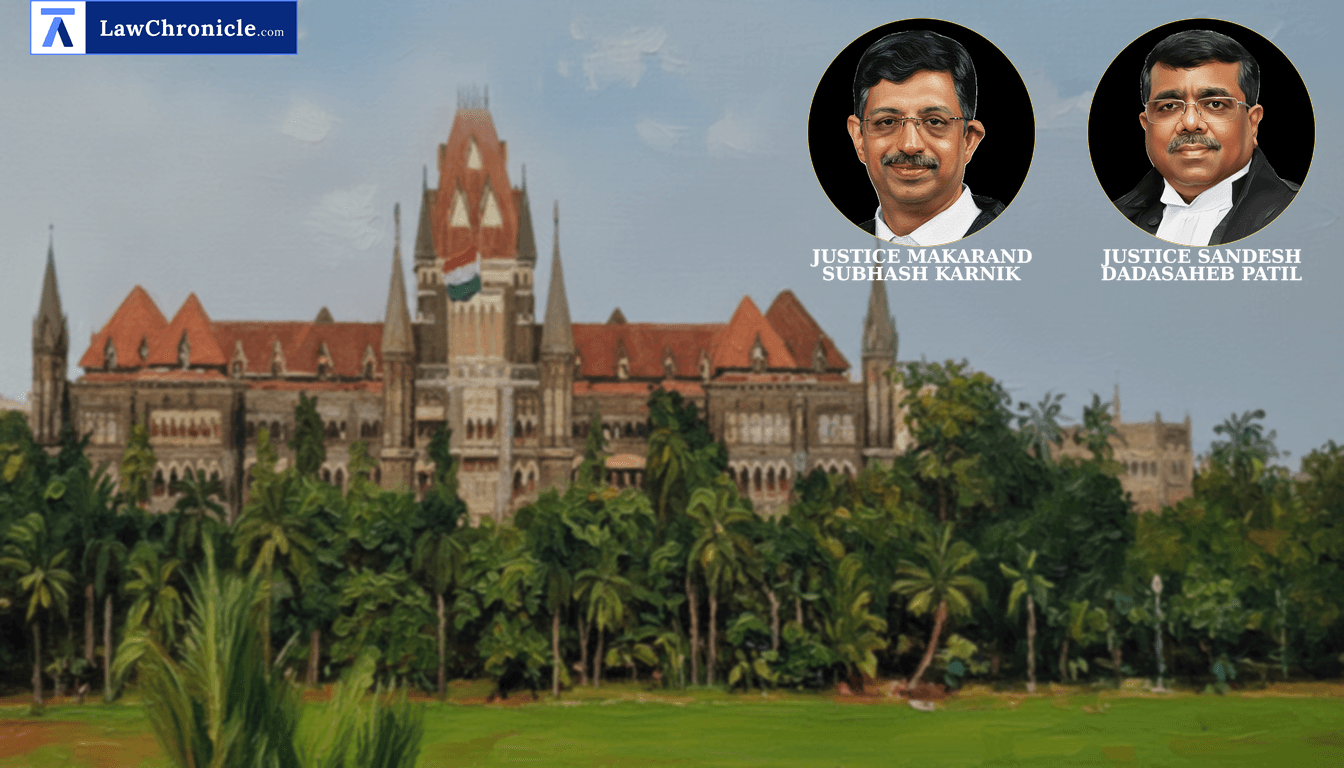
The Bombay High Court has mandated that the State Government cannot selectively deny retrospective Fifth Commission pay scale revisions to teachers while granting them to non-teaching staff under the guise of budgetary limitations.
The Bench, comprising Justice M. S. Karnik and Justice Sandesh D. Patil, ruled that the State's failure to grant Fifth Pay Commission benefits to Deemed University teachers from January 1, 1996, at par with non-teaching staff and other state universities, constituted an irrational exercise of discretion that militates against constitutional responsibilities in higher education.
Key Takeaways
Fiscal Constraints Not Absolute
Financial difficulties cannot be cited as a sole justification for discriminatory treatment between teaching and non-teaching staff regarding the date of pay scale implementation.
Constitutional Duty towards Education
The court emphasized that maintaining standards in higher education is a constitutional responsibility, and ensuring fair service conditions for teachers is central to this duty.
Binding Parity in Pay Commissions
Since the State had historically maintained parity between Deemed Universities and Non-Agricultural Universities up to the Fourth Pay Commission, it cannot arbitrarily break this uniformity for subsequent revisions.
Opportunity to Claim Central Aid
The court highlighted that the State's delay in implementation effectively forfeited 80% reimbursement from the Central Government, a self-inflicted fiscal loss that shouldn't penalize employees.
State's Discretion and Fifth Pay Commission
The Bombay High Court scrutinized the State's decision to implement the Fifth Pay Commission for Deemed University teachers only from 2000 or 2002, despite non-teaching staff receiving it from 1996. While the State argued that the status of Deemed Universities under the University Grants Commission Act, 1956 gave it discretion to set different dates, the Court held that such discretion is not unfettered.
The Bench expressed that "In our opinion, the discretion which was exercised by the State Government ought to have been based on settled principles of policy making... In case of applicability of pay scales to teachers, more so when the non-teaching staff has been given the benefit of pay scale with effect from 1st January 1996, the discretion exercised in applying different dates has to be based on well established principles of policy making."
Judicial Recognition of the Teacher’s Role
Referencing the significance of the teaching profession, the court relied on Avinash Nagra vs. Navodaya Vidyalaya Samiti and Others ( "(1997) 2 SCC 534": 1996 CaseBase(SC) 2004) to underscore that the success of the educational process depends on the teacher. The bench noted that the State's objective should be to attract and retain talent in the teaching profession rather than creating a feeling of discriminatory treatment.
The Bombay High Court issued the following directions:
"(i) It is declared that the date of applicability of the benefits of Fifth Pay Commission pay scales would be 1st January 1996 instead of 1st April 2000 / 1st April 2002 as granted by the State Government in respect of the eligible petitioners/non-teaching staff of the Deemed Universities.
(ii) The eligible teachers/non-teaching staff of the Deemed Universities are entitled to the consequential benefits pursuant to the grant of pay scales from 1st January 1996 instead of 1st April 2000 / 1st April 2002.
(iii) The arrears be paid within a period of eighteen months from today.
(iv) It is open for the State Government to apply to UGC to claim reimbursement as permissible.
(v) So far as Career Advancement Scheme, including financial burden on the State Government, appropriate decision be taken by the State Government expeditiously, if not already taken."
Ratio
When the State Government undertakes the financial liability of maintenance grants for Deemed Universities and maintains historical parity with Non-Agricultural Universities, it cannot exercise its discretion to implement pay scale revisions from a later date solely based on financial constraints, especially when such a decision creates an irrational distinction between teaching and non-teaching staff.
Background
The dispute arose when teachers from Deccan College, Tilak Maharashtra Vidyapeeth, and Gokhale Institute: all Deemed Universities, challenged Government Resolutions that granted them Fifth Pay Commission benefits from 2000 or 2002, while non-teaching staff in the same institutions received benefits from January 1, 1996. The petitioners argued that under the Fourth Pay Commission, everyone was treated equally from 1986.
The State Government contended that under Constitution of India, 1950 and directions from the Union Ministry of Human Resource Development, it had the discretion to choose implementation dates based on local conditions and budgetary resources. It argued that since the financial position was not sound, it could not implement the scales from 1996 for Deemed University teachers. However, the Bombay High Court found this justification insufficient, noting that the Central Government had offered to cover 80% of the expenditure for the period between 1996 and 2000, a benefit the State failed to utilize.
Case Details:
Case No.: WRIT PETITION NO. 3900 OF 2011 (and connected matters)
Neutral Citation: 2026:BHC-AS:37801-DB
Case Title: Kanishtha Mahavidyalayin Shikshan Annyay Nivaran Kruti Samitee & Ors. v. State of Maharashtra & Ors.
Appearances:
For the Petitioner(s): Mr. Anil Anturkar, Senior Advocate a/w. Mr. Amol Gatne i/b Mr. Sugandh Deshmukh
For the Respondent(s): Mr. Kedar B. Dighe, Addl. GP a/w. Mr. V. G. Badgujar, AGP; Mr. S. R. Nargolkar a/w. Mr. S. S. Nargolkar
Source: 2026 CaseBase(BOM) 5658
 Breaking News