


State Empowered to Set Stricter Qualifications for Laboratory Staff: Allahabad HC
 Copy Link
 Share
 Save
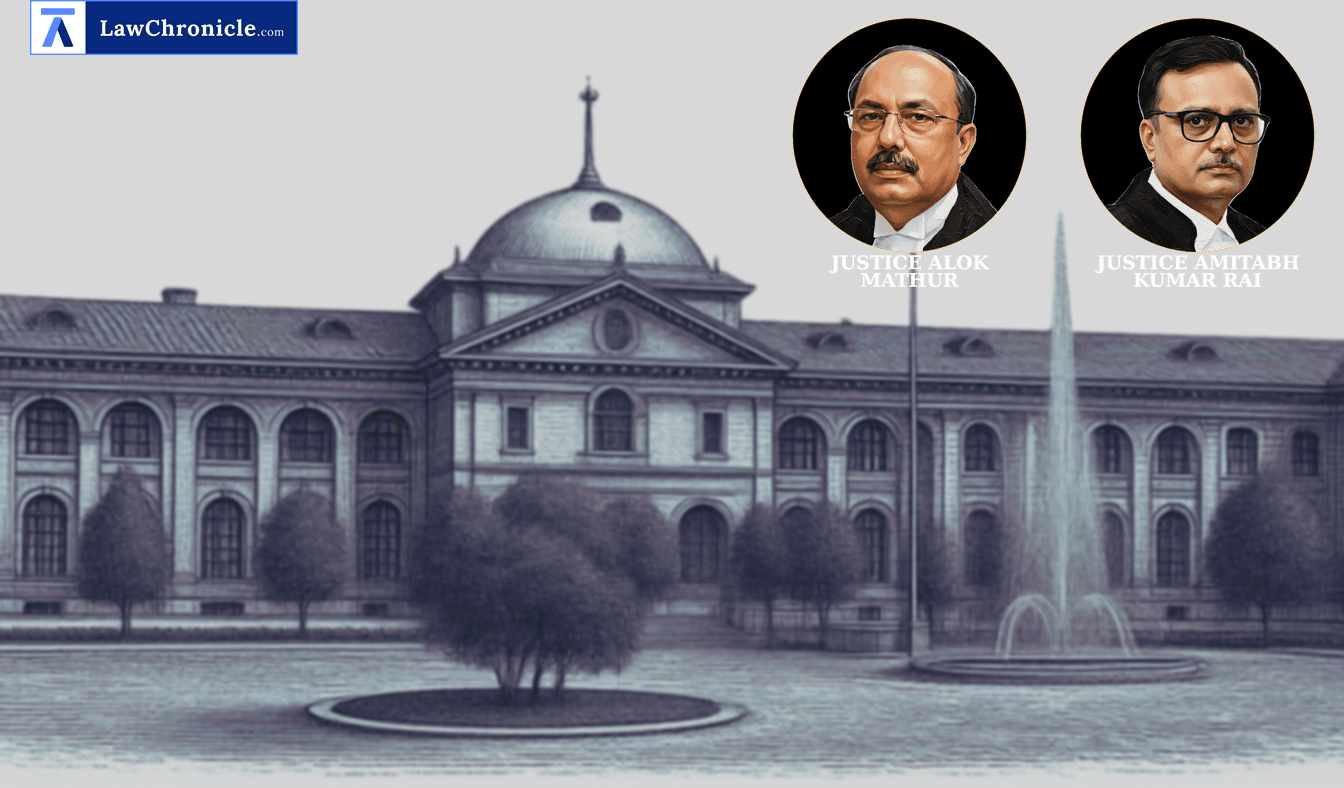
The Allahabad High Court has fortified the State Government's autonomy in public service recruitment, ruling that the power to prescribe qualifications for State cadre laboratory posts remains a constitutional prerogative independent of Central statutory standards for food analysts.
A bench comprising Justice Alok Mathur and Justice Amitabh Kumar Rai delivered this verdict while examining a challenge to the recruitment criteria for Junior Analysts (Food) in Uttar Pradesh. The petitioners, possessing Bachelor's degrees in technology, challenged their exclusion from the selection process, arguing that the State's insistence on a Master's degree conflicted with Central rules.
Key Takeaways
Constitutional Domain Preserved
The Court affirmed that State service rules framed under Article 309 of the Constitution of India, 1950 are independent of Central frameworks like the Food Safety and Standards Act, 2006, provided they do not directly conflict.
Distinct Post Categorization
The post of 'Junior Analyst' under State law is legally distinct from the 'Food Analyst' mentioned in Central law, allowing the State to set higher academic thresholds.
Limitations on Judicial Review
Courts cannot substitute their assessment of academic suitability for that of the employer; the inclusion or exclusion of technical degrees is a policy decision.
Principle of Acquiescence
Candidates who participate in a selection process without protest cannot challenge the eligibility criteria once they are found ineligible during document verification.
Harmonizing Central and State Frameworks
The Allahabad High Court clarified the intersection between State recruitment rules and Central food safety standards. The petitioners argued that since the Food Safety and Standards Rules, 2011 provided for Bachelor's degrees as a qualification for Food Analysts, the Uttar Pradesh Food Safety and Drug Administration Department Analysts (Food and Drug Laboratory) Service Rules, 2017 (as amended in 2020) could not restrict eligibility to Master's degrees. The Allahabad High Court reasoned that "Identity of the field cannot be inferred merely from a factual or functional overlap, the relevant enquiry is whether the provisions regulate the same legal relationship and impose commands which are incapable of simultaneous obedience. The provisions are required to be construed harmoniously so that full effect is given to both, instead of treating one as impliedly destructive of the other."
The Bench further noted that the State, as an employer, must determine suitability based on laboratory requirements. Relying on West U.P. Sugar Mills Association and Others v. State of Uttar Pradesh and Others ( "(2020) 9 SCC 548": 2020 CaseBase(SC) 504), the Allahabad High Court held that repugnancy under Article 254 of the Constitution of India, 1950 only arises when obedience to one law necessarily results in disobedience of the other.
Ratio
The State Government possesses the exclusive jurisdiction under Entry 41 of the State List to frame service rules for public services. A State cadre post is distinct from a statutory functionary created under Central law, and the State may adopt one of several alternative minimum qualifications prescribed by the Center without violating the mandate of Central legislation. There is no repugnancy under Article 254 if the State law and Central law operate in allied but distinct legal fields.
Background
The dispute arose following Advertisement No. 4/2024 issued by the U.P. Subordinate Services Selection Commission for 417 posts of Junior Analyst (Food). The petitioners, who held B.Tech degrees in Food Technology and allied disciplines, found themselves excluded by the 2020 Amendment to the Uttar Pradesh Food Safety and Drug Administration Department Analysts (Food and Drug Laboratory) Service Rules, 2017, which mandated a Master's degree. They contended that this was in variance with Rule 2.1.4 of the Food Safety and Standards Rules, 2011. The State argued that Junior Analyst is a separate cadre post that existed even before the Food Safety and Standards Act, 2006.
The Allahabad High Court examined several precedents including B. Sudharma and Others v. State of Kerala and Others and Md. Firoz Mansuri and Others v. State of Bihar and Others ( "2026 INSC 68": 2026 CaseBase(SC) 3) to determine if the State's criteria were arbitrary. The Bench concluded that since the State adopted one of the alternative qualifications (Master's degree) mentioned in the Central rules, it was in sufficient compliance. The Allahabad High Court also cited Tajvir Singh Sodhi and Others v. State of Jammu and Kashmir and Others ( "2023 INSC 309": 2023 CaseBase(SC) 884) to emphasize that candidates who willingly take part in a selection process cannot later challenge the Recast criteria.
Case Details:
Case No.: WRIT - A No. - 3307 of 2026
Case Title: Pankaj Kumar and 9 others Versus State of U.P. Thru. Prin./ Addl.Chief Secy. Deptt. of Food Safety Drug Administration and Ors.
Appearances:
For the Petitioner(s): Mayankar Singh, Advocate
For the Respondent(s): Rajesh Tiwari (Addl. Chief Standing Counsel), Utsav Mishra (Counsel for respondent No. 3), Alok Mishra (Counsel for intervenors)
Source: 2026 CaseBase(ALL) 1197
Similar Articles



 Breaking News


