


Statutory Authority Cannot Be Judge in Own Cause Despite Doctrine of Necessity: Madhya Pradesh HC
 Copy Link
 Share
 Save
The Madhya Pradesh High Court has reinforced the bedrock principle of 'nemo judet in causa sua', ruling that a statutory authority cannot shield itself behind the doctrine of necessity to adjudicate disciplinary proceedings where personal bias is evident. In a significant victory for employee rights, the Court held that the availability of alternative administrative routes, such as the constitution of special committees or seeking Central Government guidance, precludes the unilateral exercise of power by an interested superior official.
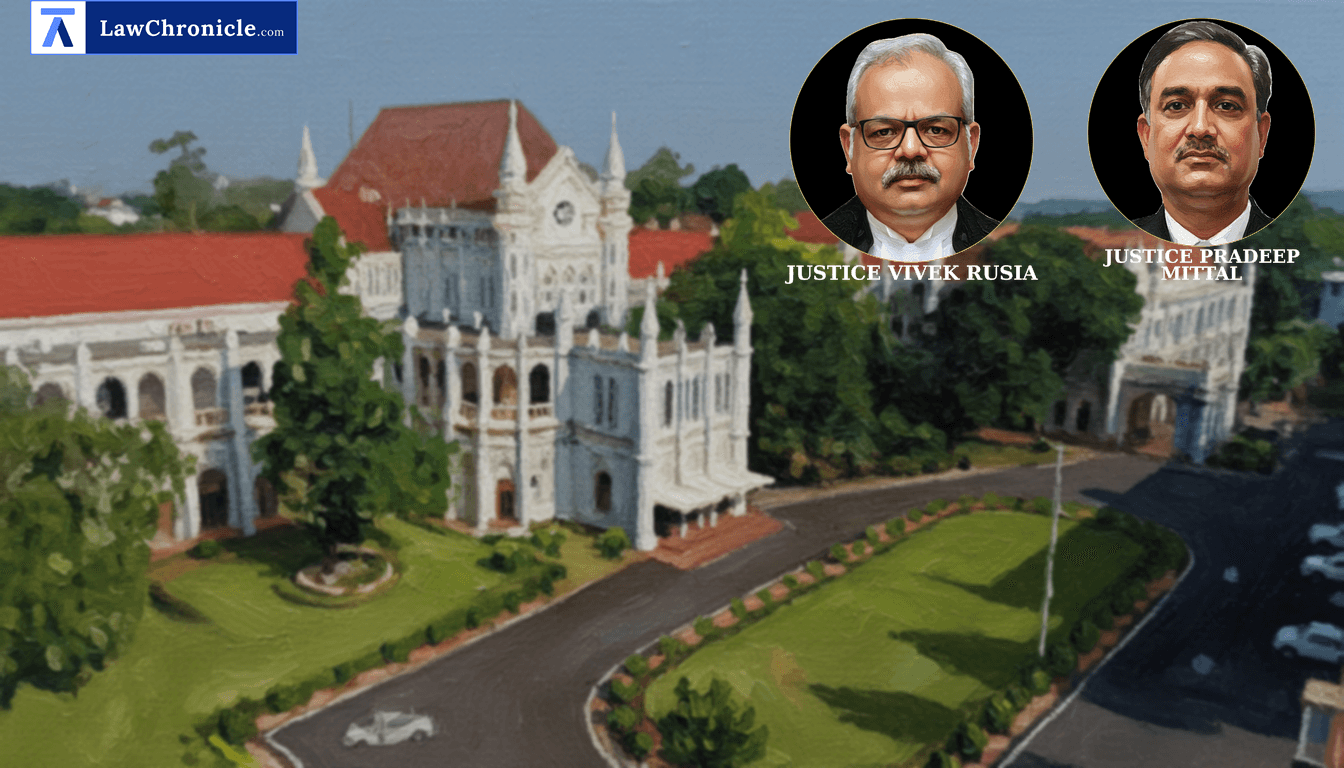
A division bench of Justice Vivek Rusia and Justice Pradeep Mittal heard the challenge against a Single Judge order which had quashed the removal of a Branch Manager. The Court examined whether the Chairman of a Regional Rural Bank could validly act as the Disciplinary Authority when the delinquent employee had previously lodged a criminal complaint against him.
Key Takeaways
Primacy of Natural Justice
Personal bias of a Disciplinary Authority vitiates the entire inquiry process, making the final order of punishment legally unsustainable.
Limitations on Doctrine of Necessity
The doctrine of necessity cannot be invoked as a shield for illegalities when alternative statutory mechanisms for delegation or committee formation exist.
Mandatory Exploration of Alternatives
Statutory heads must explore administrative solutions, such as seeking government guidance or delegating powers, to maintain the impartiality of disciplinary proceedings.
Consequence of Litigation Delay
Lengthy delays in litigation (such as a 14-year stay) may render the remand for a de novo inquiry impractical, especially if the employee has reached superannuation.
Invalidation of the Disciplinary Process
The Court observed that while the Chairman is the designated authority under the Regional Rural Banks Act, 1976 and the Bundelkhand Kshetriya Gramin Bank (Officers and Employees) Service Regulations, 2001, his dual role as a complainant and a witness created a terminal conflict of interest. The bench emphasized that the "doctrine of necessity should have been applied or invoked in favour of the petitioner rather than the employer to meet the ends of justice."
The Court, in its reasoning, observed: "The Chairman happens to be a Disciplinary Authority under the applicable Act and Rules, coupled with the fact that he was the complainant and witness, the writ court has rightly held that he should not have passed the order of punishment. He did not explore any other ways and possibilities to keep himself away from the disciplinary proceedings against the petitioner... the doctrine of necessity cannot be taken as a shield to justify illegalities."
Directions Issued to the Bank
The Court has following directions:
"In view of the above discussion, we do not find any ground or reason to interfere with the he order dated 26.09.2012 passed by the learned Single Judge in W.P. No. 5823 of 2006 (S) ; hence, this Writ Appeal is dismissed... These writ petitions [the other 10 pending petitions] be listed for adjudication on merits before the Single Bench as per roster."
Ratio
The doctrine of necessity is inapplicable in disciplinary proceedings where the statutory framework (such as Section 15, 24, or 31 of the Regional Rural Banks Act, 1976) provides alternative mechanisms like the constitution of committees or seeking external directions to replace a biased Disciplinary Authority. A person who is a witness or has a personal grievance against the delinquent cannot act as the judge of their own cause.
Background
The dispute originated when respondent Raj Bahaddur Khare, an Officer at Madhya Bharat Gramin Bank, was issued two charge-sheets in 2004 alleging acts of indiscipline and unparliamentary language. Crucially, Charge No. 1 related to an FIR the respondent had filed against the then Chairman, Shri S.K. Jain. Despite the personal friction, Shri Jain issued the show-cause notice and participated in the process, eventually leading to the respondent's removal from service in 2005.
The respondent challenged this before the High Court, arguing personal bias. The learned Single Judge quashed the removal, prompting the Bank to appeal. The Bank relied on State of Uttar Pradesh v. Sheo Shanker Lal Srivastava ( "(2006) 3 SCC 276": 2006 CaseBase(SC) 183) to argue the doctrine of necessity. However, the Division Bench distinguished the precedent, noting that the Bank could have constituted a committee under Section 15 or sought guidance under Sections 24 and 31 of Regional Rural Banks Act, 1976. Citing Amar Nath Choudhari Vs Braithwaite and Co. Ltd. and Nandkishore Vs Commissioner, Jabalpur Division, the Court upheld the Single Judge's decision, noting that after 14 years of stay during which the respondent likely reached superannuation, a fresh inquiry was no longer useful.
Case Details:
Case No.: WRIT APPEAL No. 1277 of 2012
Neutral Citation: 2026:MPHC-JBP:86295
Case Title: Madhya Bharat Gramin Bank And Anr Versus Raj Bahaddur Khare And Anr
Appearances:
For the Petitioner(s): Shri Rajesh Maindiretta - Learned Counsel with Ms. Udita Maindiretta, Shri Dev Kumar Ramchandani and Shri Yuvraj Jain - Advocates
For the Respondent(s): Shri Shobha Menon - Senior Advocate with Shri Rahul Choubey - Advocate
Source: 2026 CaseBase(MP) 36532
 Breaking News


