


Strangers Cannot Challenge Consent Decrees via Separate Suits: Gujarat HC
 Copy Link
 Share
 Save
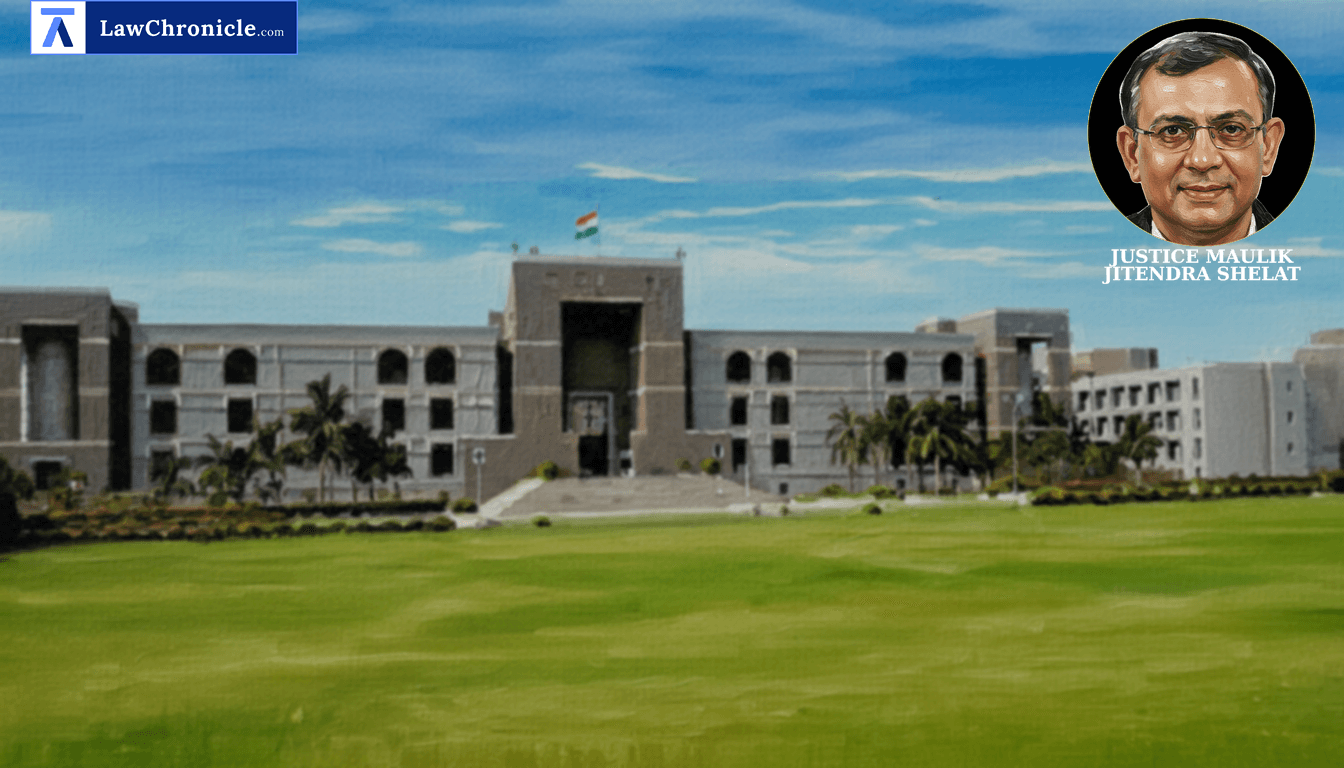
In a decisive reinforcement of procedural finality, the Gujarat High Court has ruled that third parties are strictly barred under Order XXIII Rule 3A of the Code of Civil Procedure, 1908 from instituting separate suits to challenge consent decrees. The Court further clarified that a grandson holds no birthright in property inherited by his father from a grandfather who died intestate after 1956, as such property assumes the character of self-acquired assets.
A Single Judge bench of Justice Maulik J. Shelat delivered this significant ruling while hearing a revision application filed by a defendant challenging a trial court’s refusal to reject a partition suit at the threshold. The litigation, initiated by a minor through his mother, sought to set aside a 1996 consent decree and demand partition of properties he claimed were ancestral.
Key Takeaways
Procedural Bar to Fresh Suits
Affirms that even strangers to a compromise cannot bypass the bar under Order XXIII Rule 3A by filing fresh suits, necessitating the use of specific procedural recourses like review or leave to appeal.
Clarification on Hindu Succession
Reinforces that under Section 8 of the Hindu Succession Act, 1956, property inherited by a son from his father becomes self-acquired, preventing any automatic coparcenary rights for the grandson by birth.
Mandatory Pleading Requirements
Establishes that courts cannot presume a property is HUF or coparcenary in the absence of specific, foundational pleadings, regardless of the documents produced.
Rejection of Vexatious Litigation
Highlights that suits failing to disclose a valid cause of action or those expressly barred by law must be rejected under Order VII Rule 11 to prevent abuse of the judicial process.
The Statutory Bar Under Order XXIII Rule 3A
The Court examined whether a non-party to a compromise could maintain a separate suit to set it aside. Relying on the precedent in Triloki Nath Singh vs. Anirudh Singh (D.) Thr. Lrs. & Ors. ( "(2020) 6 SCC 629": 2020 CaseBase(SC) 520), the Court noted that the Code of Civil Procedure, 1908 prohibits any suit to set aside a decree on the ground that the compromise was not lawful. The bench observed that the provision is "party agnostic" and applies to strangers as well.
The Court, in its reasoning, observed: "A plain reading of the aforesaid provision of the CPC clearly suggests that no suit is maintainable which questions the consent decree. It is nowhere stated in Rule 3A that a suit is barred challenging the consent decree at the instance of parties to the consent decree, otherwise not. Prima facie, the aforesaid provision of law would preclude any party, including a third party who was not a party to the consent decree, to maintain the suit."
Recourse for Aggrieved Third Parties
While the suit was held barred, the Court reiterated the findings of the Full Bench in Sakina Sultanali Sunesara (Momin) & Ors. Vs. Shia Imami Ismaili Momin Jamat Samaj & Ors. ( "2020 (1) GLR 586": 2019 CaseBase(GUJ) 627), noting that an aggrieved third party is not left remediless. Such parties may file an appeal under Section 96(1) of the Code of Civil Procedure, 1908 with the leave of the court or prefer a review application before the court that passed the decree.
Nature of Property Inherited Post-1956
The plaintiff’s claim rested on the assertion that he acquired a right by birth in his grandfather's property. However, the Court noted that the grandfather died in 1981, well after the commencement of the Hindu Succession Act, 1956. Citing Commissioner of Wealth Tax, Kanpur and others vs. Chander Sen and others and Yudhishter vs. Ashok Kumar ( "1987 (1) SCC 204": 1986 CaseBase(SC) 602), the Court held that once succession opens under Section 8, the property in the hands of the son is individual property.
The Court has following directions:
"In view of the foregoing conclusions, the impugned order dated 12/12/2012 passed by the 7th Additional Senior Civil Judge, Ahmedabad (Rural), Mirzapur, below Exhibit 13 in Regular Civil Suit No.215 of 2012, is quashed and set aside. Accordingly, the impugned application filed under Order VII Rule 11 of the CPC by defendant No.1 below Exhibit 13 in the aforesaid Regular Civil Suit is hereby allowed. Consequently, the plaint in question is hereby rejected."
Ratio
A stranger to a consent decree is barred by Order XXIII Rule 3A of the Code of Civil Procedure, 1908 from filing a separate suit to challenge the legality of the compromise; the appropriate remedy lies in a review application or a leave to appeal. Furthermore, under the Hindu Succession Act, 1956, property inherited by a male Hindu from his father who died intestate after 1956 is treated as self-acquired property, and his son (the grandson) does not acquire any interest in it by birth unless a prior coparcenary is explicitly pleaded and proven.
Background
The dispute involved properties originally belonging to Premaji Lumbaji, who died in 1981. A registered partition had occurred in 1979, and a subsequent family settlement in 1993. In 1996, a consent decree was passed in a suit between the defendants. The plaintiff, born in 1995, filed the present suit in 2012 (Regular Civil Suit No. 215 of 2012) through his mother, claiming the consent decree was void and seeking partition.
The defendants filed an application under Order VII Rule 11 of the Code of Civil Procedure, 1908, arguing the suit was barred by law and disclosed no cause of action. The trial court rejected this application, terming the issues as "triable." The High Court, however, found that the suit properties were already partitioned before the plaintiff's birth and had lost their HUF character. Following the principles in Manjunath Tirakappa Malagi and another vs. Gurusiddappa Tirakappa Malagi (Dead through Lrs) ( "2025 SCC OnLine SC 835": 2025 CaseBase(SC) 806), Shri Mukund Bhavan Trust and Ors. v. Srimanth Chhatrapati Udyan Raje Pratasinh Maharaj Bhonsle and another ( "2024 15 SCC 675": 2024 CaseBase(SC) 876), and Angadi Chandranna Vs. Shankar and Others ( "2025 SCC OnLine SC 877": 2025 CaseBase(SC) 502), the High Court set aside the trial court's order and rejected the plaint.
Case Details:
Case No.: R/CIVIL REVISION APPLICATION NO. 314 of 2012
Neutral Citation: 2026:GUJHC:59479
Case Title: Sharadbhai Premaji Rami Versus Abhishek Son Of Subhashbhai Premji Bhati & Ors.
Appearances:
For the Petitioner(s): Mr Anshin Desai, Senior Advocate With Mr Dipum S Rami And Mr Jinesh H Kapadia
For the Respondent(s): Mr Mehul S Shah, Senior Advocate & Mr Unmesh Shukla, Senior Advocate With Mr D K Trivedi; Mr Rashesh Sanjanwala, Senior Counsel With Mr Prerak P Oza; Mr Devarshi C Shah
Source: 2026 CaseBase(GUJ) 23836
Similar Articles
 Breaking News


