Strangers To Consent Decree Can Appeal Upon Proving Prejudice: Supreme Court
 Copy Link
 Share
 Save
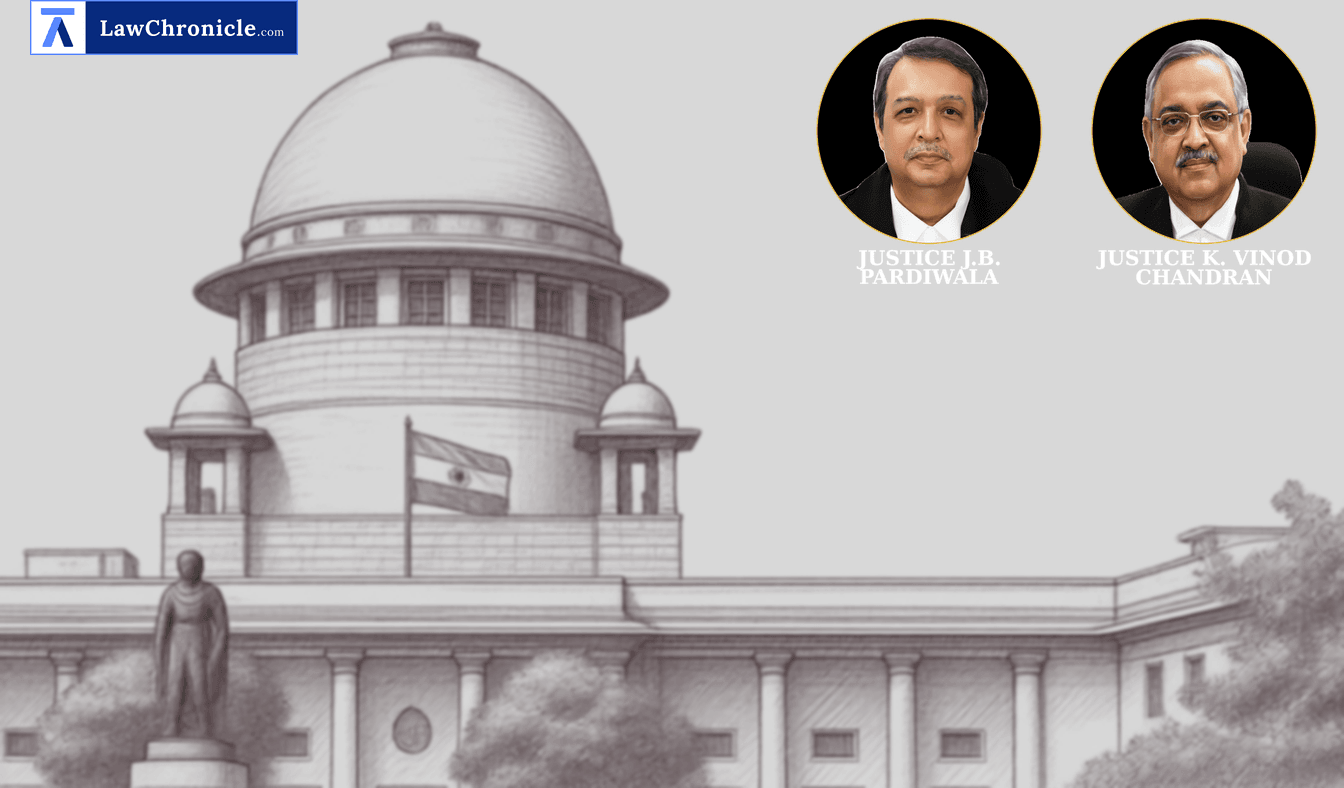
Opening the doors for third parties adversely impacted by collusive compromise orders, the Supreme Court ruled that strangers to a consent decree are not barred from challenging it through an appeal if they demonstrate a legally cognisable interest that is prejudicially affected. A Division Bench comprising Justice J.B. Pardiwala and Justice K. Vinod Chandran upheld a Gujarat High Court judgment that condoned an 11-year delay and granted leave to appeal to non-parties alleging that a consent decree had been fraudulently obtained to usurp family property.
Key Takeaways
No Absolute Bar Under Section 96(3)
Section 96(3) of the Code of Civil Procedure, 1908 applies strictly to consenting parties, allowing genuine third-party strangers to challenge fraudulent compromise decrees.
Interim Relief to Prevent Alienation
Appellate courts possess the power to issue interim protection to protect the suit property even while applications for leave to appeal and condonation of delay remain pending.
Locus Standi Test for Non-Parties
Leave to appeal must be granted if an applicant establishes that their legal rights or interests are directly and prejudicially jeopardised by the decree.
Court Observations and Directions
The Supreme Court affirmed that statutory bars under Section 96(3) read with Order XXIII Rule 3 and Rule 3A of the Code of Civil Procedure, 1908 were designed to prevent consenting parties from resiling from lawful agreements, not to stifle strangers whose independent rights are compromised.
The Bench reasoned to observe that “A person who was neither a party to the original proceedings nor a party to the compromise cannot, merely by virtue of the decree having been passed with the consent of others, be deemed to have consented to it or be precluded from asserting an independent right allegedly prejudiced thereby. A stranger to a compromise decree cannot be said to be barred under Section 96(3) read Order XXIII Rule 3 & Rule 3A of the Code of Civil Procedure, 1908, since the scope and import of these provisions are limited to the parties to the compromise and act as an estoppel only with respect to them.” The Apex Court further noted that the High Court was well within its powers to grant interim protection to preserve the subject land before formally deciding leave applications.
Ratio
The statutory bar on appealing a consent decree under Section 96(3) of the Code of Civil Procedure, 1908 operates exclusively against the parties to the compromise agreement. A stranger who was not a party to the consent decree or the original suit is entitled to seek leave to appeal under Section 96 of the Code of Civil Procedure, 1908 upon demonstrating a legally cognisable interest that has been prejudicially or adversely affected by the decree.
Background
The dispute pertained to land sold in 1975, which eventually came to be mutated in the name of the Punjabhai Mohanbhai HUF in 1997. However, in 2012, a suit for specific performance was instituted by Respondent No. 10 (Geetagram Society) against the heirs of the original seller based on a 1996 agreement to sell. The suit was swiftly settled via a compromise pursis in April 2013. Years later, in execution proceedings, the court commissioner executed a sale deed in favour of the appellant, who had acted as the power-of-attorney holder for the defendants and was also closely associated with the plaintiff society.
Upon discovering the revenue alterations in 2023, the members of the HUF filed an appeal before the High Court along with applications seeking leave to appeal, condonation of an 11-year delay, and ad-interim injunction. The High Court granted ex-parte interim relief on April 2, 2024, and later confirmed the injunction, condoned the delay, and granted leave to appeal vide judgment dated August 14, 2024.
Before the Supreme Court, the appellant cited Triloki Nath Singh v. Anirudh Sing (Dead) through legal heirs and representatives, Pushpa Devi Bhagat v. Rajinder Singh, and R. Janakiammal v. S.K. Kumarasamy to contend that consent decrees cannot be appealed and relied on Acqua Borewell Pvt. Ltd. v. Swayam Prabha & Others ( "2022 (15) SCC 511": 2021 CaseBase(SC) 329) and Kishorsinh Ratansinh Jadeja v. Maruti Corporation & others ( "2009 (11) SCC 229": 2009 CaseBase(SC) 280) to challenge the interim injunction. On delay condonation, the appellant cited Union of India v. Jahangir Byramji Jeejeebhoy (D) through his LR ( "2024 SCC OnLine SC 489": 2024 CaseBase(SC) 39), Postmaster General v. Living Media Limited, Oriental Aroma Chemical Industries Ltd. v. GIDC, Lanka Venkateswarlu by Lrs v. State of Andhra Pradesh ( "2011 (4) SCC 363": 2011 CaseBase(SC) 345), and Pundlik Jalam Patil by Lrs v. Executive Engineer, Jalgaon Medium Project and another. Conversely, the respondents relied on H. Anjanappa and others v. A. Prabhakar ( "2025 SCC OnLine SC 183": 2025 CaseBase(SC) 247) to establish their locus standi as aggrieved persons.
Analyzing the statutory landscape alongside decisions in Banwari Lal v. Chando Devi, R. Rajanna v. S.R. Venkataswamy and Other ( "2014 (15) SCC 471": 2014 CaseBase(SC) 785), V.N. Krishna Murthy and Another v. Ravikumar and others ( "(2020) 9 SCC 501": 2020 CaseBase(SC) 1025), Jatan Kumar Golcha v. Golcha Properties (P) Ltd., State of Punjab v. Amar Singh, Baldev Singh v. Surinder Mohan Sharma ( "(2003) 1 SCC 34": 2002 CaseBase(SC) 1057), A. Subash Babu v. State of A.P. ( "(2011) 7 SCC 616": 2011 CaseBase(SC) 439), Shanti Kumar R. Canji v. Home Insurance Co. of New York ( "(1974) 2 SCC 387": 1974 CaseBase(SC) 117), State of Rajasthan v. Union of India ( "(1977) 3 SCC 592": 1977 CaseBase(SC) 194), and K. Ponnalagu Ammani v. State of Madras, as well as provisions under the Indian Contract Act, 1872 and Gujarat Tenancy and Agricultural Lands Act, 1948, the Supreme Court held that the HUF members showed sufficient legal prejudice to maintain the appeal and dismissed the civil appeals.
Case Details:
Case No.: Civil Appeal Nos. 14017-14018 of 2026
Neutral Citation: 2026 INSC 1177
Case Title: Girishbhai Natwarlal Patel v. Gautam Punjabhai Palkhiwala (Dead) By Lrs & Ors.
Appearances:
For the Petitioner(s): Mr. Anshin H. Desai, Senior Advocate
For the Respondent(s): Mr. Mihir J. Thakore, Senior Advocate; Ms. Megha Jani, Senior Advocate
Source: 2026 CaseBase(SC) 9515
 Breaking News