


Study Break Not Counted Towards MBBS First-Year Time Limit: Andhra Pradesh HC
 Copy Link
 Share
 Save
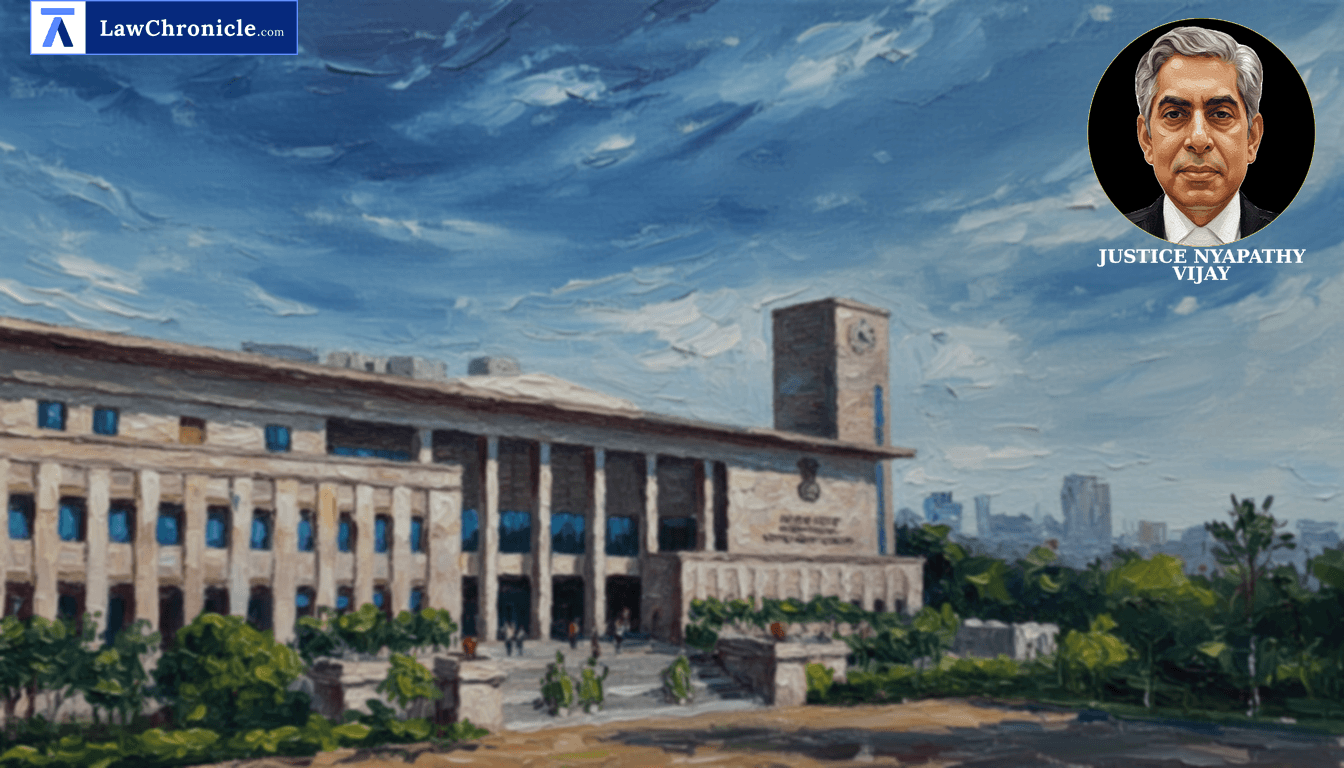
The Andhra Pradesh High Court has held that the four-year limit for completing the First Professional MBBS examination must be construed rationally, excluding periods of study interruption caused by compelling circumstances such as financial distress.
The single-judge bench of Justice Nyapathy Vijay adjudicated upon a petition where a student was declared ineligible to continue her medical education despite re-joining the course with university approval. The Court emphasized that statutory regulations should not be applied so literally as to produce absurd or unjust results that frustrate the ends of justice.
Interpretation of Graduate Medical Education Regulations
The core controversy revolved around the interpretation of Regulation 7.7 and 11.2.7(a) of the Graduate Medical Education Regulations. These provisions stipulate that a candidate is allowed a maximum of four attempts and a total period of four years to successfully complete the first professional course. The university had contended that the petitioner's daughter, who joined in 2020 but took a two-year break due to financial stringencies, had exceeded the four-year limit by December 2024.
However, the Court observed that the student had already passed her first-year exams with good scores following an interim order. The Court, in its reasoning, observed: "In the opinion of this Court, the break period in such genuine cases should not be counted for calculating four (04) years period as the break period has nothing to do with the ability or the competency of the student and the purport of the Regulations. After all, no student in normal circumstances would take a break from M.B.B.S., Course after securing admission going through gruelling preparation for NEET-UG entrance examination."
Avoiding Irrationality in Statutory Mandates
Justice Vijay highlighted that while the regulations aim to ensure competent medical graduates, they should not be used to disqualify students who face unavoidable life challenges. Relying on the principles laid down in K.P. Varghese Vs Income Tax Commissioner and Narcotics Control Bureau v. Kashif ( "(2024) 11 SCC 372": 2024 CaseBase(SC) 891), the Court held that a condition bringing rationale and sensibility must be read into the law even if not expressly stated.
The Court noted that the student had paid significant fees upon rejoining and that denying her the opportunity to become a doctor at this stage would be "unfair" to both the individual and society. The Court has the following directions:
"The Writ Petition is allowed and the daughter of the Petitioner is declared to be entitled to pursue M.B.B.S., Course at Respondent No.5-College."
Background:
The petitioner’s daughter, Ms. Vineetha Kappalla, enrolled in the MBBS course for the academic year 2020-21 at GSL Medical College. After failing her initial exams in early 2022 and facing financial difficulties, she took a break of over two years. She re-joined in November 2024 with the University's approval but was subsequently flagged as ineligible under the 2019 amendment to the Graduate Medical Education Regulations, which limits the first-year completion to a four-year window.
The Constitution of India and the Indian Medical Council Act, 1956 were also noted as the underlying legal framework for these educational standards. The High Court ultimately found that the "literalness" of the regulation must be eschewed to avoid a "manifestly absurd and unjust result."
Case Details:
Case No.: WRIT PETITION NO: 22689/2025
NeutralCitation: 2026:APHC:23402
Case Title: KAPPALA JOSEPH PAUL v. THE STATE OF ANDHRA PRADESH AND OTHERS
Appearances:
For the Petitioner(s): SINGULURI SESHAGIRI RAO
For the Respondent(s): T V SRI DEVI, VIVEK CHANDRA SEKHAR S, GP FOR MEDICAL HEALTH FW, Tata Venkata Sridevi (Standing Counsel)
Source: 2026 CaseBase(AP) 188

 Breaking News


