


Suo Moto Revision Power Cannot Be Dictated By Political Complaints: Madhya Pradesh HC
 Copy Link
 Share
 Save
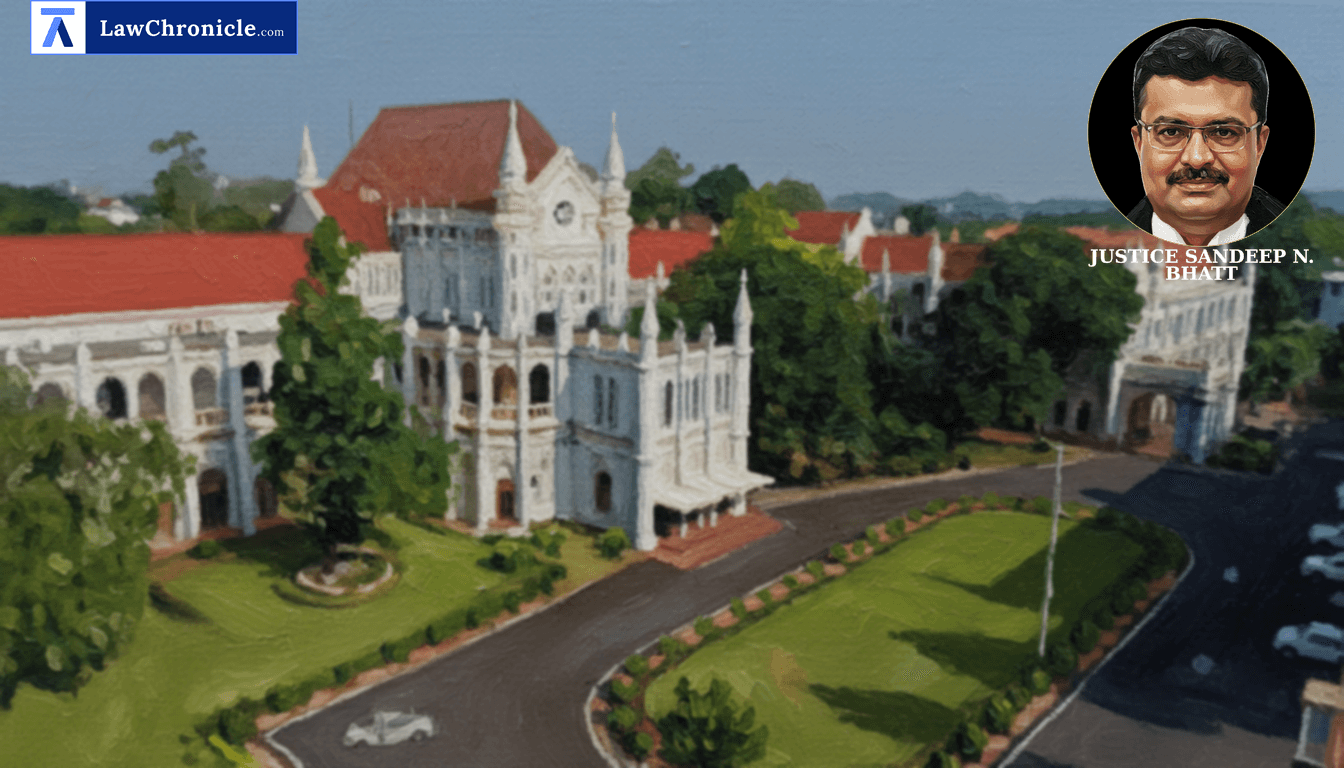
The High Court of Madhya Pradesh has fortified the boundaries of administrative discretion, ruling that the State cannot bypass final appellate orders through belated suo moto revisions triggered by external political complaints. This judgment reaffirms that once a revenue order attains finality without being challenged in a timely appeal, it cannot be resurrected and reversed under the guise of supervisory jurisdiction.
A Single Judge bench of Justice Sandeep N. Bhatt delivered this verdict while dismissing a writ petition filed by the State against an order of the Board of Revenue. The Court scrutinized whether the State could exercise suo moto powers under Madhya Pradesh Land Revenue Code, 1959 to set aside orders that were never challenged through regular appellate channels.
Key Takeaways
Finality of Orders
Orders passed by appellate or revisional authorities that are not challenged within the limitation period attain finality and cannot be bypassed via suo moto powers.
Independent Opinion Mandatory
Suo moto revisional powers must be exercised on the independent formation of an opinion by the authority and not under administrative or political dictation.
Reasonable Time Limits
Revisional jurisdiction must be invoked within a reasonable period; a delay of one and a half years without justification is generally impermissible.
Title vs Revenue Entry
Revenue records only serve fiscal purposes and do not confer ownership, which remains the exclusive domain of Civil Courts.
Invalidity of Dictated Suo Moto Proceedings
The Court observed that the State's attempt to reverse earlier orders through a suo moto revision initiated in 2007 years after the Sub Divisional Officer and Collector had ruled in favor of the respondents in 2003 was legally unsustainable. The bench emphasized that the revision was not based on the independent findings of the authority but was prompted by a complaint routed through political channels.
The Court, in its reasoning, observed: "The Board of Revenue has considered the title of the parties after considering the material available on record and has come to the conclusion that the order passed by way of suo moto inquiry in absence of filing any appeal or revision by challenging the impugned order passed by appellate Authority is not maintainable in eye of law more particularly under Section 50 of the MP Land Revenue Code. This finding is absolutely correct and in accordance with law."
Limits of Revisional Jurisdiction
Applying principles from Shalini Shyam Shetty Vs. Rajendra Shankar Patil ( "(2010) 8 SCC 329": 2010 CaseBase(SC) 817), the Court noted that the power of superintendence under the Constitution of India, 1950 is not a license to correct every error of law or fact but must be exercised sparingly to keep subordinate tribunals within their bounds. The Court further referenced Suraj Bhan Vs. Financial Commissioner to reiterate that revenue entries are for fiscal purposes and do not constitute a declaration of title.
Ratio
Suo moto revisional power under Section 50 of the Madhya Pradesh Land Revenue Code, 1959 cannot be invoked to overturn orders that have attained finality due to the State's failure to file a timely appeal. Furthermore, such power must be exercised on the basis of an independent formation of opinion by the competent authority and cannot be triggered by external administrative or political dictation.
Background
The dispute concerned 6.78 hectares of land in Sarangi village. The State contended that the land belonged to the Shri Laxmi Narayan Temple (Deity) and that the respondents were mere encroachers. While the Naib Tehsildar originally ordered the deletion of the respondents' names under Section 115 of Madhya Pradesh Land Revenue Code, 1959, these orders were set aside by the Sub Divisional Officer and Additional Collector in 2003, who found that the respondents' ancestors were recorded as cultivators as far back as 1920 in a separate account (Khata No. 105/2).
The State failed to appeal these 2003 orders. However, following a political complaint, the Divisional Commissioner directed an enquiry, leading the Additional Commissioner to exercise suo moto revision in 2007 to restore the Temple's name. The Board of Revenue eventually quashed this revision, leading the State to approach the High Court. The High Court upheld the Board's decision, citing a lack of jurisdictional authority to conduct such a belated and dictated revision.
Case Details:
Case No.: WRIT PETITION NO. 5204 of 2012
Neutral Citation: 2026:MPHC-IND:27805
Case Title: STATE OF M.P. Versus BHERA & OTHERS
Appearances:
For the Petitioner(s): Shri Shrey Raj Saxena, Deputy Advocate General
For the Respondent(s): Shri Ajay Bagadia, Senior Advocate with Shri Aman Khan, Advocate
Source: 2026 CaseBase(MP) 26542
Similar Articles
 Breaking News


