Supreme Court Allows Appeals, Sets Aside Convictions in Night‑time Mob Murders; Acquits Eleven After Reappraising Evidence
 Copy Link
 Share
Share Save
Save
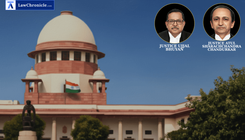
A bench of Justices Abhay S. Oka and Ujjal Bhuyan heard appeals under Article 136 challenging concurrent convictions by the Trial Court and the Madras High Court for offences including murder (Sections 302, 307 and related provisions) and convictions under the Tamil Nadu Prevention of Damage to Public Property Act. The appellants, eleven of twenty-one originally charged, had been sentenced to life imprisonment by the Trial Court and their convictions were affirmed by the High Court on 21 March 2019.
The Court allowed the appeals and set aside the judgments of the High Court and Trial Court, concluding that the prosecution had not proved guilt beyond reasonable doubt. The Court summarized that while Article 136 was not a forum for routine reappraisal of fact, it retained power to reexamine evidence where concurrent findings were vitiated by error or where “striking features” had been overlooked. The Court, in its reasoning, observed: “None of these decisions prevent this Court from reappreciating evidence in a criminal appeal arising out of Article 136 of the Constitution against an order of conviction. Without appreciating the evidence, this Court cannot decide whether the case is within the parameters laid down in the aforesaid decisions. These decisions only lay down the self‑imposed constraints on interference with the concurrent findings of the fact recorded by the Trial Court and the High Court.” The judgment further stated that “the guilt of the accused has not been proved beyond a reasonable doubt,” and directed immediate release of the appellants if they were not required in any other case.
Background The prosecution case arose from an FIR registered on 14 November 2012 after a night‑time attack on a Scorpio car near Sivagangai in which three occupants — Kathiresan, his son Prasanna and the driver Boominathan — died and a minor (PW‑9) suffered serious injuries. The informant PW‑1 and eyewitnesses PW‑2 and PW‑9 implicated a group that arrived by truck and motorcycles, alleged to be politically motivated given local panchayat election rivalry. The investigation named thirty-six persons; fifteen were later dropped and a chargesheet proceeded against twenty‑one accused. The Trial Court convicted Accused Nos.1–11 and sentenced them to life; Accused Nos.12–21 were acquitted. The High Court affirmed the convictions.
On appeal before the Supreme Court, the appellants challenged the reliability of the three material witnesses and the corroborative forensic and recovery evidence. The Court found multiple infirmities: material contradictions and exaggerations in PW‑1’s testimony; long unexplained delay and non‑examination of an alleged co‑witness Abdul Rehman related to PW‑2; and procedural defects in recording the testimony of PW‑9, a then‑minor, because the requisite preliminary voir dire was not conducted, making her evidence “vulnerable to tutoring.” The Court also noted absence of mahazar/Panchnama at critical stages: no mazhar when fingerprints on the car were photographed or when specimen fingerprints were taken; the fingerprint photographs were not produced in evidence; and recoveries of weapons were shown to have inconsistent timings and locations. Applying precedents including Pappu v. State of U.P. and Mst Dalbir Kaur v. State of Punjab on the limits of Article 136, the Court held that the Trial Court and High Court had “misread the evidence” and had overlooked striking features that demolished the prosecution’s case. The Court allowed the appeals, set aside the convictions and ordered that the appellants be acquitted and released forthwith if not wanted in other matters; it recorded that the appellants had already undergone imprisonment for over nine years.
Case Details: Case No.: Criminal Appeal Nos. 1686‑1688 of 2023 (2025 INSC 774) Case Title: Agniraj & Ors. v. State through Deputy Superintendent of Police CB‑CID Appearances: For the Petitioner(s): [Not indicated in judgment] For the Respondent(s): [Not indicated in judgment]
 Breaking News