Supreme Court allows challenge to State religious endowment laws to proceed before respective High Courts, reserves liberty to petitioners
 Copy Link
 Share
Share Save
Save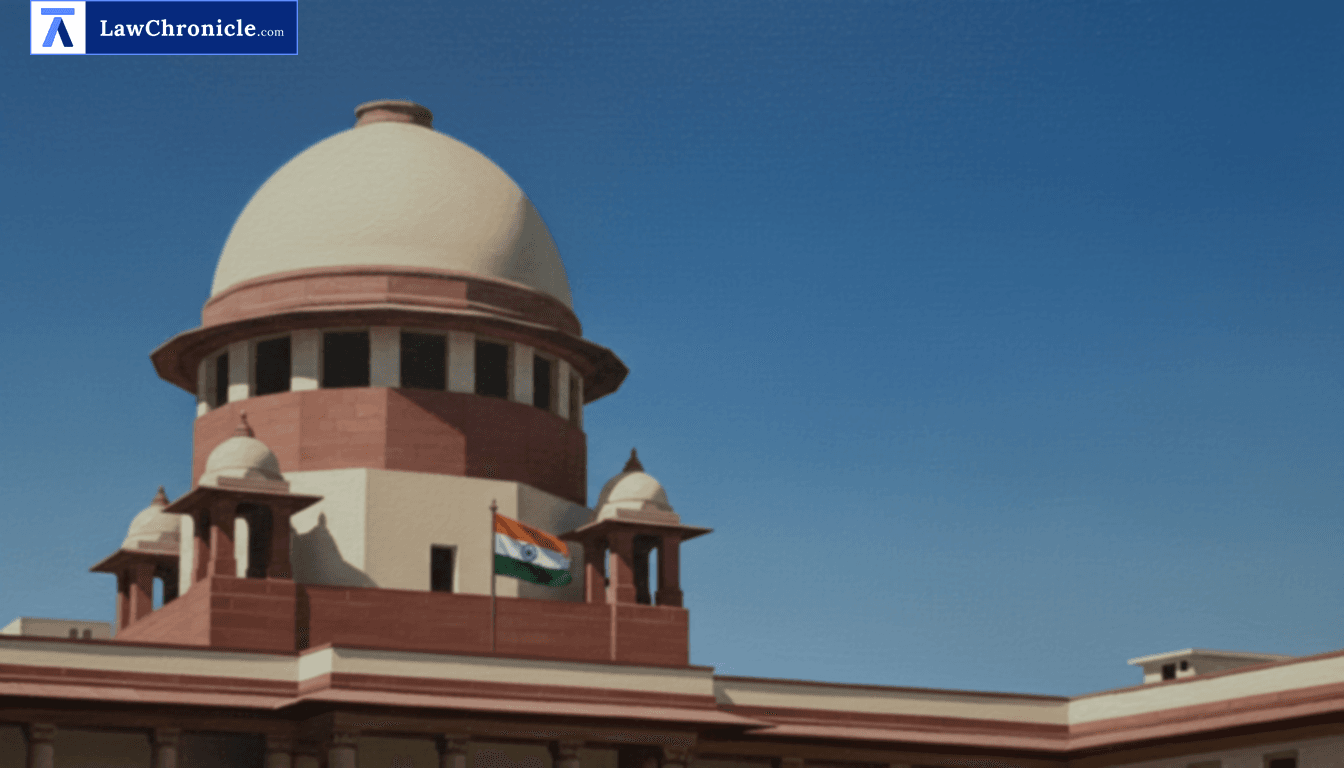
A bench of Justices B.V. Nagarathna and Satish Chandra Sharma heard multiple writ petitions under Article 32 that challenged large swathes of State Hindu Religious and Charitable Endowments legislation and attendant rules, including provisions of the Tamil Nadu Hindu Religious and Charitable Endowments Act, 1959, the Andhra Pradesh Charitable and Hindu Religious Institutions and Endowments Act, 1987, the Pondicherry Hindu Religious Institutions Act, 1972 and related Telangana enactments, and sought declarations of unconstitutionality and interim reliefs.
The Court disposed of the petitions by permitting the petitioners to approach the respective High Courts, holding that the scheme of the State enactments differed and that the High Courts were better placed to appreciate the "dimensions of challenge" to those provisions. The bench stated that a more effective remedy was to have the issues ventilated in the jurisdictional High Courts and accordingly "reserved liberty to the petitioners herein to file their writ petitions before the respective High Courts." The Court, in its reasoning, observed: "We find that a more effective manner of ventilating the grievances by the petitioners herein is to assail the provisions of the respective Acts before the respective jurisdictional High Courts so as to enable the High Courts to better appreciate the dimensions of challenge of the provisions of the respective Acts." The Court further noted that "The High Courts are also free to constitute an Expert Committee so as to have assistance of the recommendations said Committee for the purpose of deciding the cases, if they so think fit." The bench also recorded that "All pending application(s) including the application(s) for intervention/impleadment shall stand disposed of."
Background The petitions, led initially by writ petition (C) No.476/2012 (Sh. Dayananda Saraswati Swamiji (dead) & Ors.) with connected matters W.P.(C) No.1432/2019, W.P.(C) No.1147/2021 and W.P.(C) No.148/2024, assailed scores of statutory provisions ranging from powers of Commissioners, appointment and removal of trustees and executive officers, entry and inspection powers, fixation of dittam and lease rents, utilization of surplus funds, bar of suits and non-justiciability of notifications, to rules framed under those Acts. The petitions prayed for declarations of invalidity of specified sections, quashing of government orders and rules (including rules on utilization of surplus funds and appointment conditions), external audits, and directions for investigation in certain temple administrations. Dr. Subramanian Swamy appeared as petitioner‑in‑person; the Union of India and Union Territory of Puducherry were represented by the Additional Solicitor General K.M. Nataraj; learned senior and other counsel appeared for the States of Tamil Nadu, Andhra Pradesh and Telangana and for other intervenors. After hearing detailed submissions, the Supreme Court recorded that given the distinct schemes of the State enactments and the "socio‑economic, cultural and religious aspects" involved — many of which were historical in nature — the more appropriate course was to remit the matters to the respective High Courts. The Court disposed of the petitions without adjudicating the constitutional challenges on merits, granted liberty to file fresh writ petitions in the High Courts, observed that High Courts may, if considered necessary, constitute expert committees to assist them, and disposed of all pending applications including intervention applications.
Case Details: Case No.: Writ Petition (C) No.476/2012 (with W.P.(C) Nos.1432/2019, 1147/2021 and 148/2024); 2025 INSC 465 Case Title: Sh. Dayananda Saraswati Swamiji (Dead) & Ors. v. The State of Tamil Nadu & Ors. Appearances: For the Petitioner(s): Dr. Subramanian Swamy (appeared as petitioner‑in‑person); other senior counsel and counsel for various petitioners (as per record) For the Respondent(s): Shri K.M. Nataraj, Additional Solicitor General (for Union of India and Union Territory of Puducherry); learned senior counsel and counsel for the States of Tamil Nadu, Andhra Pradesh and Telangana (as per record)
 Breaking News