


Supreme Court Allows Divorce on Ground of Irretrievable Breakdown, Enhances Maintenance to Rs.15,000
 Copy Link
 Share
 Save
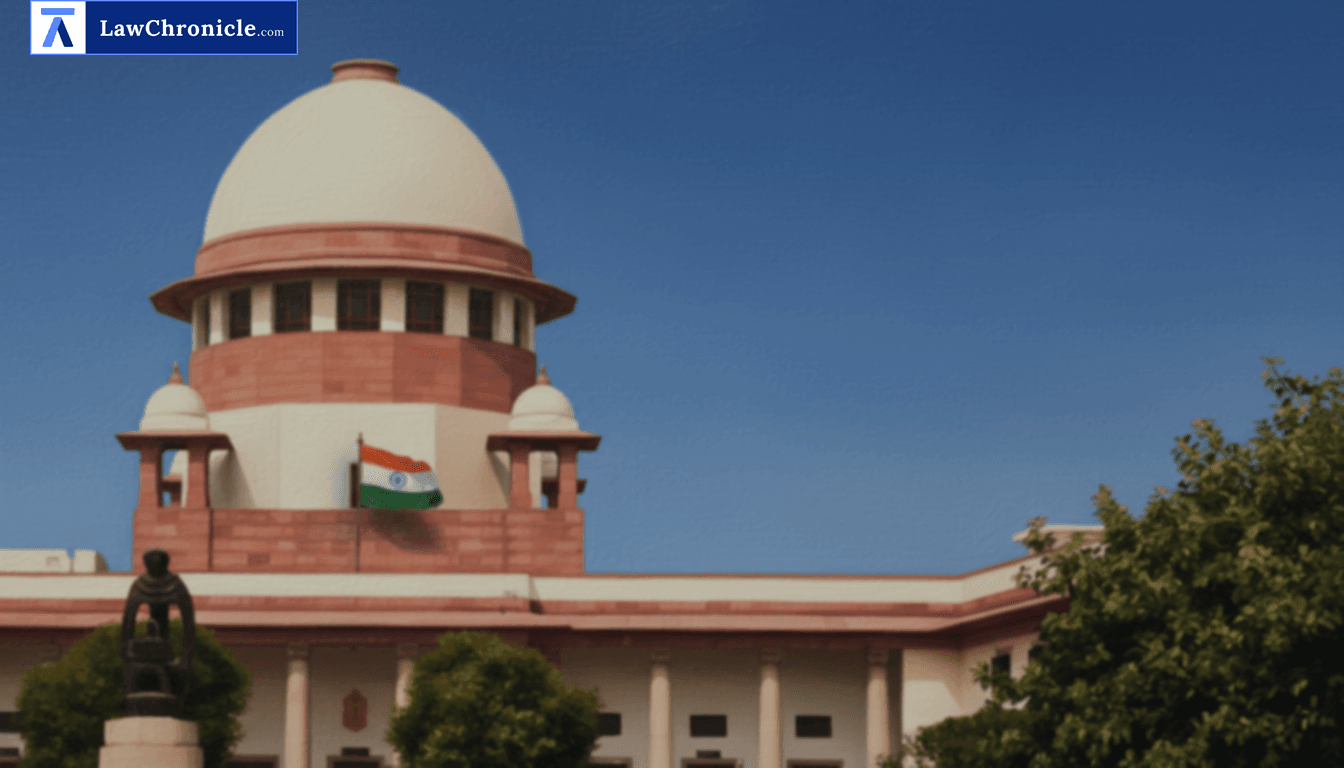
A bench of Justices Vikram Nath and Sandeep Mehta heard an appeal by the husband challenging the Delhi High Court's dismissal of his petition for divorce and refusal to grant relief under the Hindu Marriage Act, 1955. The appeal concerned whether a marriage that had effectively ceased for over a decade and a half could be dissolved on the basis of irretrievable breakdown and whether the Court could exercise its power under Article 142 to grant a decree of divorce.
The Supreme Court allowed the appeal, set aside the High Court judgment dated 26.02.2019 and granted a decree of divorce under Article 142 of the Constitution on the ground of irretrievable breakdown of the marriage. The Court noted the parties had lived separately since October 2009, there had been a "complete cessation of cohabitation and consortium" and mediation efforts had failed. The Court also took into account the appellant's acquittal in criminal proceedings, holding that continuation of the legal bond served no beneficial purpose and would perpetuate suffering. The Court, in its reasoning, observed: "Therefore, we are of the belief that it is in the best interest of both the parties and their minor child that they be allowed to lead their lives independently and peacefully, free from the shadow of prolonged and futile legal battles. This Court finds it a fit case to exercise its power under Article 142 of the Constitution and grant the relief of divorce to the parties on the ground of irretrievable breakdown of marriage." The Court further found that "the continuance of marriage shall only fuel animosity and litigation between the parties."
Background The marriage was solemnised on 07.05.2008 and a male child was born on 25.03.2009. The parties separated in October 2009 and had not cohabited since. The husband filed a petition under Section 13(1)(a) HMA seeking divorce on the ground of cruelty, alleging physical and mental abuse of himself and his ailing mother, and asserting the wife sought his mother's property. The wife contested the petition, denied the allegations and counter-claimed that the husband had abandoned her and the minor child and had failed to provide financial support. During proceedings, the Family Court dismissed the husband's petition by order dated 23.11.2017, finding his case "uninspiring and unworthy of acceptance" and holding that allegations of cruelty and demands for property transfer remained unsubstantiated. The Family Court had earlier directed monthly maintenance (an application by the respondent had resulted in an order for Rs.4,500 per month and Rs.5,000 towards litigation expenses) and had made other maintenance-related orders during the proceedings.
The husband appealed to the Delhi High Court, which affirmed the Family Court on 26.02.2019, observing that granting divorce on the blended ground of cruelty and irretrievable breakdown would be "equivalent to rewarding the husband for leaving his wife and minor son." The appellant then moved the Supreme Court. The Supreme Court had referred the parties to the Supreme Court Mediation Centre; mediation did not succeed. The Court noted two material considerations: the long period of separation (approximately sixteen years) and the appellant's acquittal in criminal proceedings under Sections 498A/406/34 IPC by trial court judgment dated 05.07.2019. The Supreme Court relied on earlier authorities including Shilpa Sailesh v. Varun Sreenivasan and Amutha v. A.R. Subramaniam in recognizing the power to dissolve marriages where the matrimonial relationship had irretrievably broken down. Concluding that continuation of the marriage would be futile and harmful to the parties' dignity, the Court exercised Article 142 to grant divorce. The Court also enhanced composite monthly maintenance to Rs.15,000 in favour of the respondent and the minor child, noting the appellant's employment as a clerk and the respondent's status as a homemaker. The appeal was allowed and no costs were imposed; interlocutory applications were disposed of and the Registry was directed to draw the decree accordingly.
Case Details: Case No.: SLP (CIVIL) NO. 18430 OF 2019 Case Title: Pradeep Bhardwaj v. Priya Appearances: For the Petitioner(s): [Not indicated in the judgment] For the Respondent(s): [Not indicated in the judgment]
Similar Articles

 Breaking News


