Supreme Court Confirms Acquittal in Dowry-Death Case, Holds Presumption Under S.113B Not Attracted
 Copy Link
 Share
Share Save
Save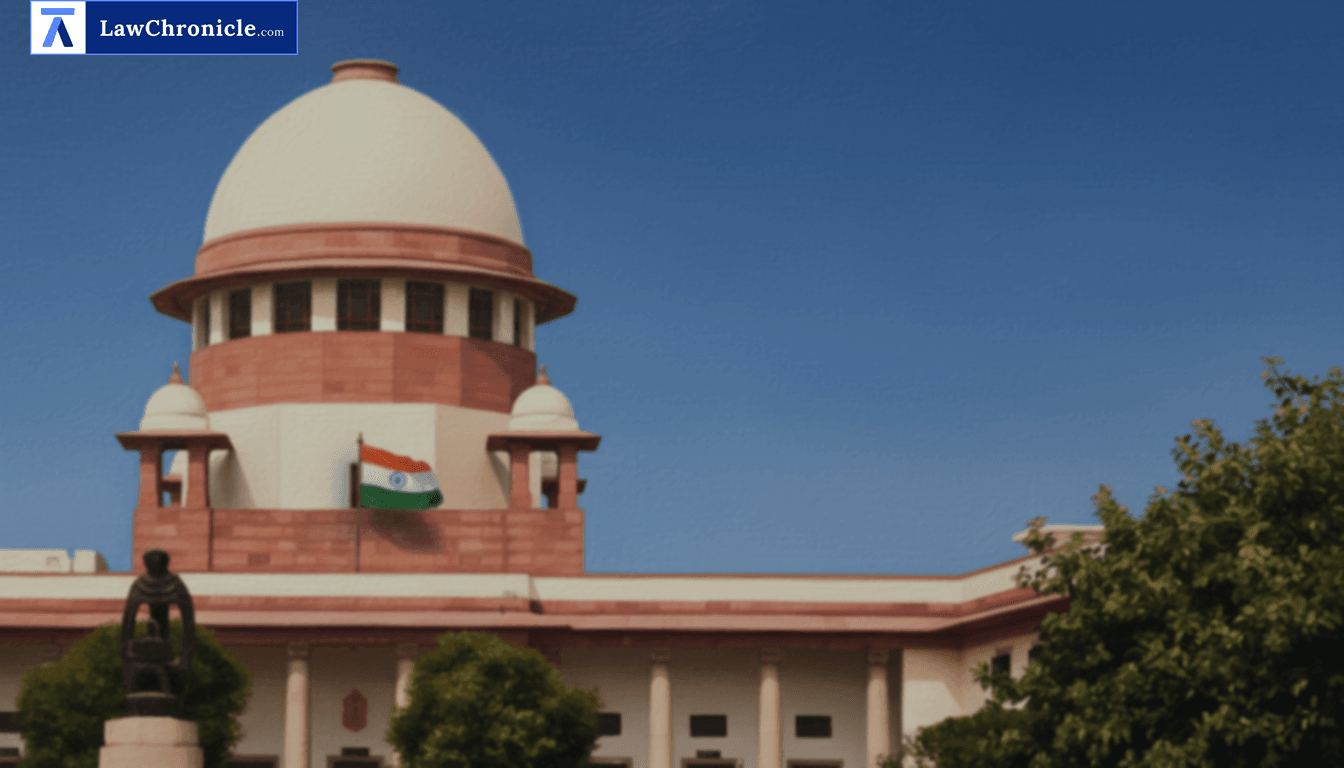
A Bench of Justices B.R. Gavai and K. Vinod Chandran heard an appeal by the State of Uttarakhand challenging the High Court's acquittal of a husband convicted by the trial court for an offence under Section 304B IPC in relation to the death of his wife within seven months of marriage. The appeal criticised the High Court's finding that the prosecution had failed to prove demand of dowry and that the statutory presumption under Section 113B of the Evidence Act did not arise.
The Court dismissed the State's appeal and confirmed the High Court's order of acquittal. It held that the prosecution did not establish the essential ingredient of a demand of dowry and that material omissions in statements under Section 161 CrPC undermined the case. The Court reiterated that "Appellate Courts will be slow to reverse an order of acquittal" and emphasised that a statutory presumption under Section 113B could operate only when all ingredients of Section 304B were proved. The Court, in its reasoning, observed: "Section 304B of the I.P.C. presupposes several factors for its applicability, which are; (i) the death of a woman caused by burns or bodily injury or otherwise than under normal circumstances; (ii) such death having occurred within seven years from the date of the marriage; (iii) soon before her death, the woman having been subjected to cruelty or harassment by her husband or any relative of her husband and (iv) such cruelty or harassment being in connection with the demand of dowry. It was, categorically held that if one of the ingredients is absent, the presumption under Section 113B of the Evidence Act would not be available to the prosecution and the onus of proof would not shift to the defense."
Background
The dispute arose after a young bride, within six months of marriage, was found hanging in the couple's rented room. Her father and brother reached the matrimonial home, discovered the body and lodged an FIR. The trial court examined nine prosecution witnesses, acquitted the husband’s relatives for lack of proof of their presence and convicted the husband under Section 304B IPC, relying in part on the presence of scratch injuries which the trial court treated as inconsistent with hanging and as evidence of cruelty connected to dowry demand; it sentenced him to seven years' rigorous imprisonment.
On appeal, the High Court re-examined the evidence and held that the prosecution had failed to prove the alleged demand of ₹4,00,000 and a plot for construction. The Supreme Court analysed the medical and testimonial material. The medical witness produced the wound certificate and opined that the cause of death was "suffocation due to hanging, prior to death" and noted a separate 2x1 cm scratch mark. The Court found that the doctor did not attribute the scratch to ante-mortem torture in a manner that would link it to dowry-related harassment.
The Court placed weight on omissions in the Section 161 CrPC statements of key witnesses — notably the father and brother of the deceased — who did not mention the alleged dowry demand or earlier physical violence before trial, and on the failure to examine several potentially relevant neighbours and occupants. The landlord turned hostile and denied knowledge of any dowry demand or visits by the husband's relatives. The Court relied on established precedent that improved or new facts surfaced for the first time at trial could not be safely acted upon, citing Darshan Singh and other authorities. Applying the settled principle that interference with an acquittal is warranted only where the acquittal is perverse or no two reasonable views were possible, the Court found the acquittal sustainable and dismissed the appeal. It directed that parties bear their own costs and disposed of pending applications.
Case Details: Case No.: Criminal Appeal No. 112/2014 (2025 INSC 187) Case Title: The State of Uttarakhand v. Sanjay Ram Tamta @ Sanju @ Prem Prakash Appearances: For the Petitioner(s): Ms. Sakshi Rawat, Advocate For the Respondent(s): Ms. E.R. Sumathy, Advocate
 Breaking News