Supreme Court Holds 30‑Day Condonable Period Under Section 34(3) Is Not Saved by Section 4 of Limitation Act When It Expires on Court Holiday
 Copy Link
 Share
Share Save
Save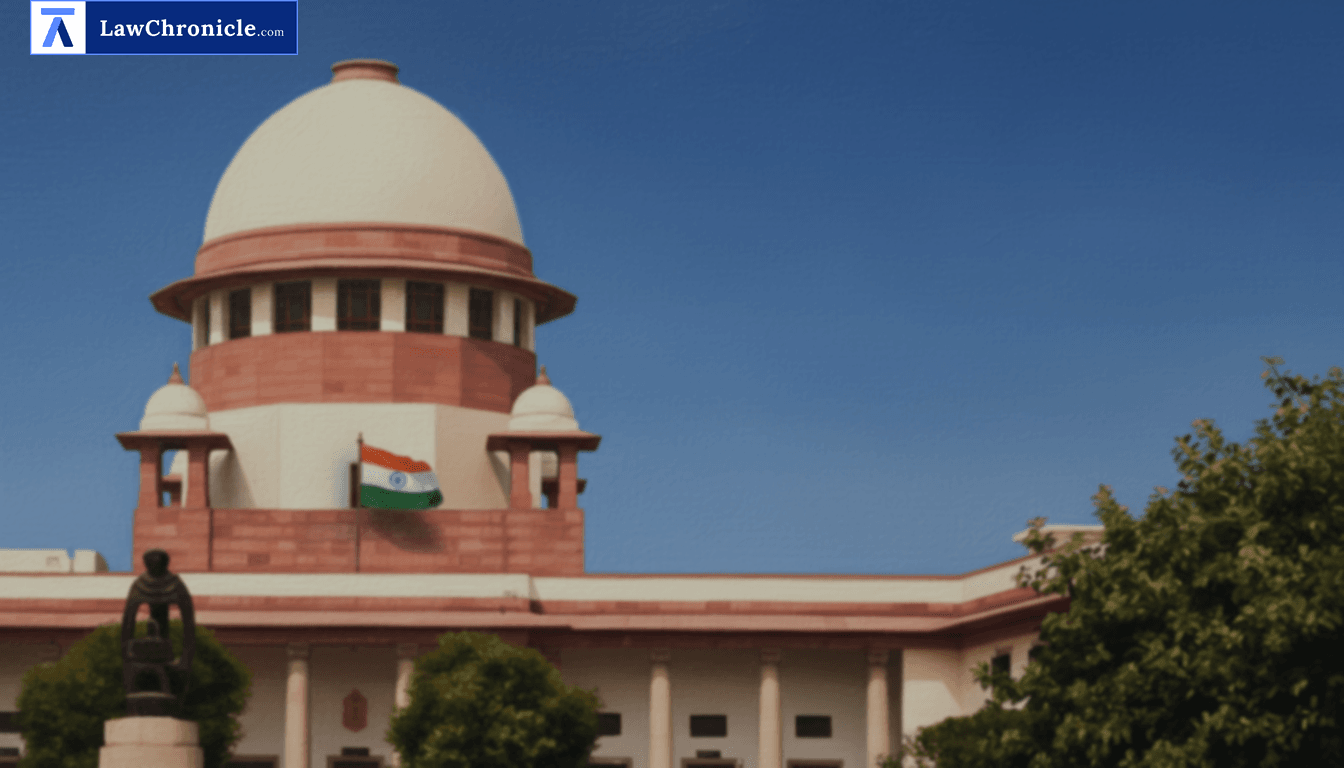
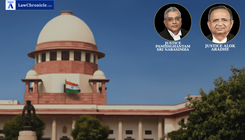
A bench of Justices Pamidighantam Sri Narasimha and Pankaj Mithal heard an appeal challenging the dismissal of a Section 34 petition as time‑barred. The limited question before the Court was whether the additional 30‑day condonable period in proviso to Section 34(3) of the Arbitration and Conciliation Act, 1996 could be treated as extending when that 30‑day period expired during court vacation, by application of Section 4 of the Limitation Act or, alternatively, by Section 10 of the General Clauses Act.
The Court held that the Section 34 petition was barred by limitation and dismissed the appeal, affirming the High Court. The judges summarised that the Limitation Act applied to arbitration proceedings but that its provisions were not wholly displaced by Section 34(3). Crucially, they limited the operation of Section 4 of the Limitation Act to cases where the “prescribed period” (the primary three‑month period) expired on a day when the court was closed and held that the 30‑day condonable period did not attract Section 4 when it lapsed during vacation. The Court, in its reasoning, observed: “There is no wholesale exclusion of Sections 4 to 24 of the Limitation Act when calculating the limitation period under Section 34(3) of the ACA. Section 4 of the Limitation Act applies to Section 34(3) of the ACA only to the extent when the 3‑month period expires on a court holiday. It does not aid the applicant when the 30‑day condonable period expires on a court holiday. In view of the applicability of Section 4 of the Limitation Act to Section 34 proceedings, Section 10 of the GCA does not apply and will not benefit the applicant when the 30‑day condonable period expires on a court holiday.” The Court added that “the Section 34 application preferred by the appellant is barred by limitation” and warned that “the remedy under Section 34 is precious,” though it left any legislative remedy to Parliament.
Background The dispute arose from lease agreements and reference to arbitration, following which an arbitral award dated 04.02.2022 was rendered in favour of the respondent. A signed hard copy reached the appellants on 14.02.2022. Accounting for this receipt date and an earlier COVID‑related extension of limitation, the three‑month limitation for filing under Section 34(3) expired on 29.05.2022; the statutory 30‑day condonable period thus ended on 28.06.2022. That date fell within the High Court’s summer vacation (04.06.2022–03.07.2022). The appellants filed the Section 34 petition together with a delay‑condonation application on the day the court reopened, 04.07.2022.
The Single Judge dismissed the Section 34 petition as time‑barred and a Division Bench dismissed the appeal under Section 37. The appellants argued that Section 4 of the Limitation Act or Section 10 of the General Clauses Act should permit filing on the day the court reopened; they relied on precedents including Sridevi Datla. The respondent relied on this Court’s precedents in Assam Urban, Bhimashankar Sahakari Sakkare Karkhane Niyamita and related authorities, which, the Court said, collectively supported the limited application of Section 4 to the three‑month “prescribed period” and excluded Section 10 of the GCA where the Limitation Act applied.
The Court analysed Sections 34(3) and 43(1) of the Arbitration Act, Sections 4 and 29(2) of the Limitation Act and Section 10 of the General Clauses Act, and concluded that the Section 34 petition was filed beyond the condonable period and therefore barred. The appeal was dismissed and the High Court order affirmed. There was no order as to costs; earlier stay and deposit directions had been complied with.
Case Details: Case No.: CIVIL APPEAL NO. 336 OF 2025 (Arising out of SLP (C) No. 9996 OF 2024) Case Title: MY PREFERRED TRANSFORMATION & HOSPITALITY PVT. LTD. & ANR. v. M/S FARIDABAD IMPLEMENTS PVT. LTD. Appearances: For the Petitioner(s): Mr. Neeraj Kishan Kaul, Senior Counsel For the Respondent(s): Mr. Simran Mehta, Advocate
 Breaking News