Supreme Court holds delay in complying with payment order not wilful but awards compensation to deceased employee's family
 Copy Link
 Share
Share Save
Save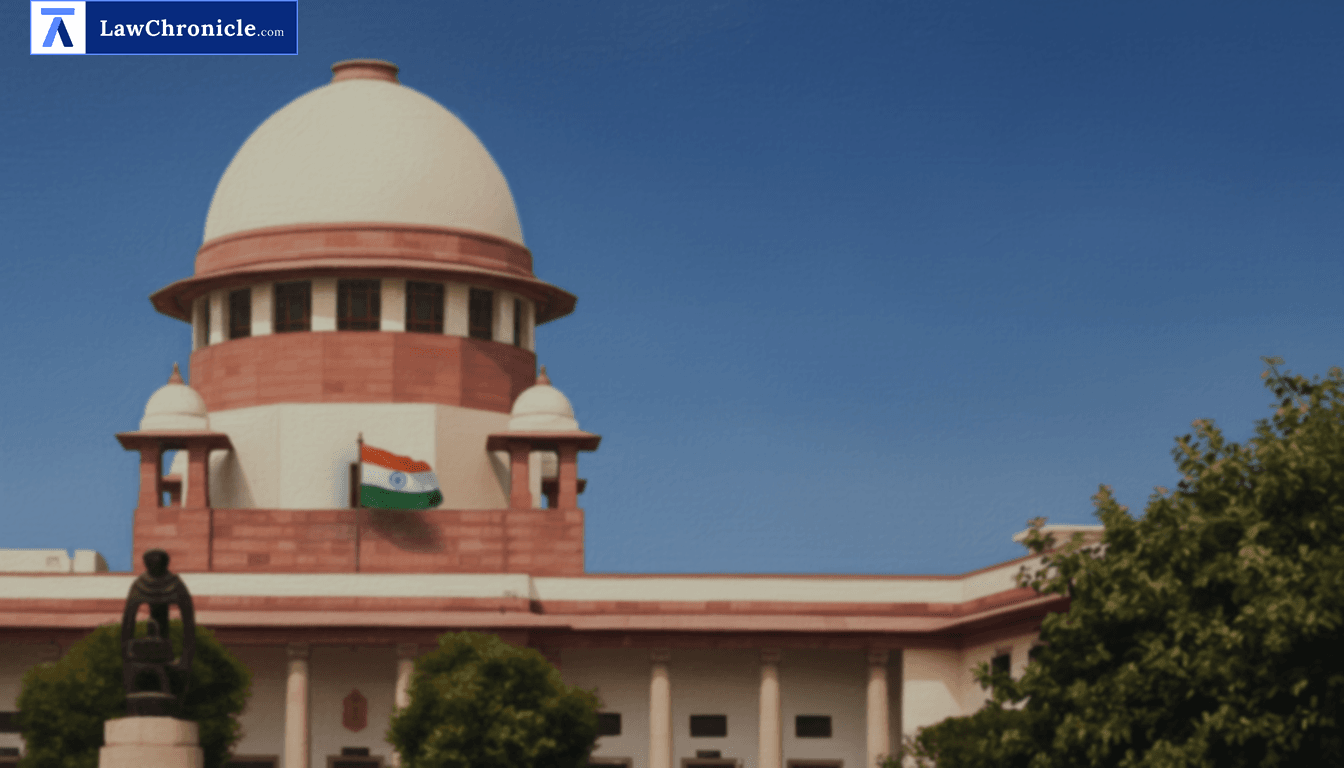
A bench of Chief Justice B.R. Gavai and Justice Augustine George Masih heard contempt petitions alleging non‑compliance of this Court’s order dated 17.01.2018 in Civil Appeal Nos. 6732–6733 of 2009, which had directed that the “outstanding amount be paid within a period of three months.” The petitions, filed by the legal representatives of late A.K. Jayaprakash, challenged the respondent‑Bank’s failure to obey that direction and sought contempt proceedings as well as payment of pensionary benefits.
The Court held that although the bank did not comply within the stipulated three months, the material on record did not establish wilful or contumacious disobedience necessary to make out civil contempt. The Court therefore discharged the rule in the contempt petitions but directed a compensatory payment to bring finality to protracted litigation. The Court, in its reasoning, observed: “Tested on the anvil of the above principles, we find that although the Bank did not effect payment within the time permitted by this Court, the material placed on record do not demonstrate that the delay in compliance was borne out of any wilful or contumacious intent. The explanation tendered refers to administrative hurdles post‑merger and retrieval of records dating back over three decades. While such circumstances cannot justify laxity in complying with orders of this Court, the element of mens rea, essential for sustaining a charge of civil contempt, cannot be inferred merely from the factum of delay.” The Court further recorded that “the outstanding amount be paid within a period of three months” was the operative direction in the earlier order.
Background The dispute arose from the dismissal of A.K. Jayaprakash, then a Manager of Nedungadi Bank Ltd., in 1985 for alleged irregularities in loan and credit transactions. The Deputy Commissioner of Labour (Tirunelveli) set aside the dismissal and reinstated Jayaprakash. The Bank challenged that order before the Madras High Court, which upheld reinstatement but limited back wages to 60%. Nedungadi Bank later merged with Punjab National Bank (PNB), and PNB’s appeals to this Court were dismissed on 17.01.2018 with the clear direction that the outstanding amount be paid within three months.
The petitioner’s representatives alleged non‑compliance of that direction and sought contempt. The Bank responded that amounts due were not paid within three months because of administrative difficulties following the merger and the non‑availability of legacy records, but contended that the substantive arrears (60% back wages, gratuity and provident fund dues) were ultimately disbursed. Records attached to the reply showed payments of arrears of salary (60% back wages), gratuity and provident fund between March 2019 and June 2023. The petitioner died during the pendency of the contempt petitions and his widow and legal representatives were substituted.
Relying on precedents that civil contempt required deliberate breach and mens rea (Ashok Paper Kamgar Union v. Dharam Godha; Rama Narang v. Ramesh Narang), the Court found that delay alone did not establish wilful disobedience. The Court reiterated that contempt proceedings were not a vehicle for asserting fresh substantive claims that were not earlier pleaded or adjudicated (Jhareswar Prasad Paul v. Tarak Nath Ganguly). Accordingly, the prayer for pensionary benefits was rejected as those claims were not part of earlier adjudication. To acknowledge the prolonged non‑disbursal and to preclude further litigation, the Court directed payment of Rs. 3,00,000 to the deceased petitioner’s widow (or other legal representatives) within eight weeks, failing which interest at 8% would accrue. The contempt petitions were disposed of and the rule discharged qua the respondents; no further proceedings on the subject matter would be entertained on compliance of the compensation direction.
Case Details: Case No.: Contempt Petition (CIVIL) Nos.1002‑1003 of 2023 in C.A. Nos.6732‑6733 of 2009 (2025 INSC 1003) Case Title: A.K. Jayaprakash (Dead) through LRs v. S.S. Mallikarjuna Rao and Another Appearances: For the Petitioner(s): Not recorded in the judgment For the Respondent(s): Not recorded in the judgment
 Breaking News