Supreme Court holds ‘London Pride’ not prima facie deceptively similar to rival whisky brands; interim injunction refused
 Copy Link
 Share
Share Save
Save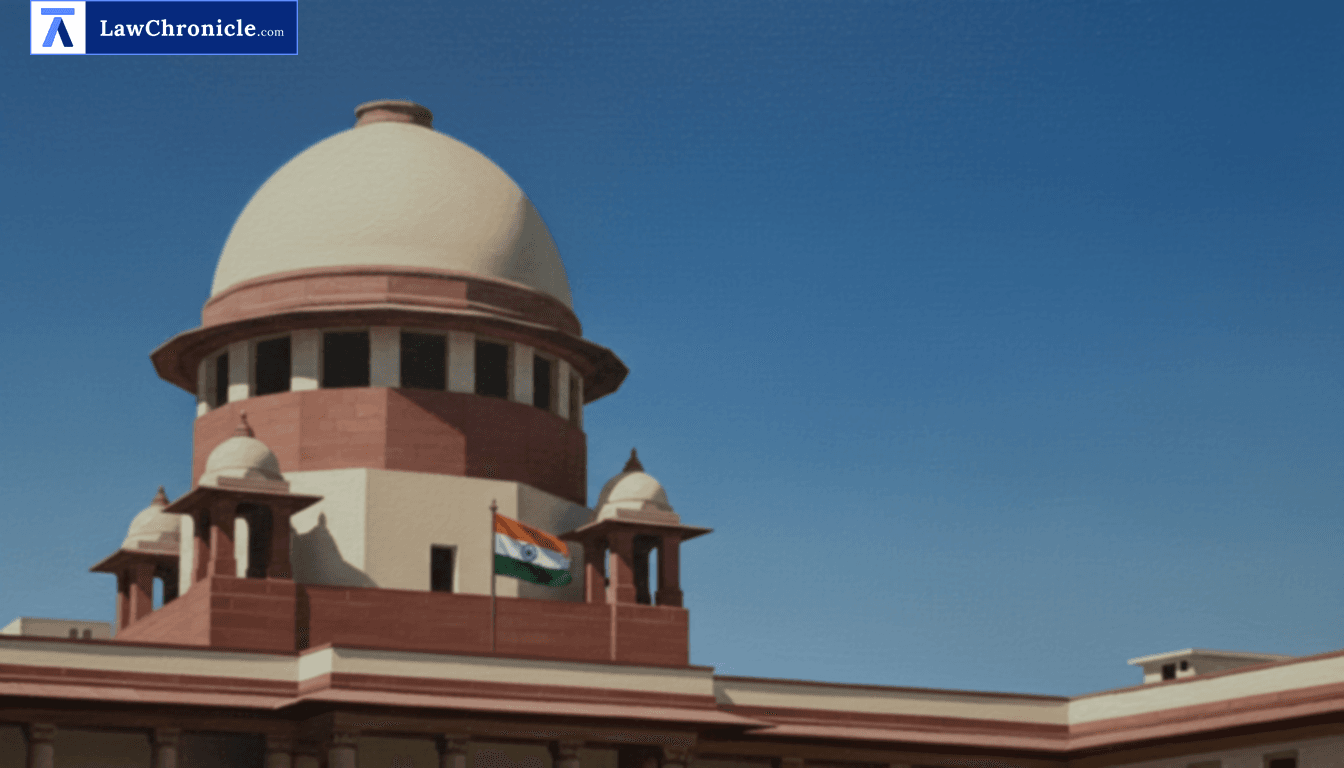
A bench of Justices R. Mahadevan and J.B. Pardiwala heard an appeal by Pernod Ricard India Private Limited and another challenging concurrent orders of the Commercial Court, Indore and the High Court of Madhya Pradesh that had refused an interim injunction against the respondent’s use of the mark “LONDON PRIDE”. The appellants contended that the respondent’s trade name, label and packaging deceptively imitated their registered marks — BLENDERS PRIDE, IMPERIAL BLUE and SEAGRAM’S — and sought interlocutory relief restraining manufacture, sale and advertising of LONDON PRIDE whisky.
The Court summarised that the question at the interlocutory stage was whether the appellants had made out a prima facie case of infringement or passing off and whether the balance of convenience and risk of irreparable harm favoured interim relief. It affirmed that trademarks must be compared in their entirety and that the “average consumer with imperfect recollection” remained the touchstone. The Court, in its reasoning, observed: “While comparing rival marks, Courts must assess the marks in their entirety, rather than dissecting composite trademarks into isolated components. The dominant feature of a mark may assist in crossing the preliminary threshold of analysis, but the ultimate inquiry must focus on the overall impression created by the mark – especially in the context of the relevant goods, trade channels, and target consumers. The proper test is not to place the two marks side by side to identify dissimilarities, but to determine whether the impugned mark, when viewed independently, is likely to create an impression of association or common origin in the mind of the average consumer. Even if a particular component of a mark lacks inherent distinctiveness, its imitation may still amount to infringement if it constitutes an essential and distinctive feature of the composite mark as a whole.” The bench concluded that on a holistic prima facie assessment no deceptive similarity existed and dismissed the appeal, directing expeditious trial of the suit.
Background The dispute arose after Pernod Ricard (appellants) alleged in 2019 that Karanveer Singh Chhabra (respondent) marketed whisky as LONDON PRIDE with label, colour scheme and bottle get-up that imitated BLENDERS PRIDE and IMPERIAL BLUE; they also alleged misuse of SEAGRAM’S embossed bottles. The appellants, owners of registered marks (including BLENDERS PRIDE since 1994 and IMPERIAL BLUE device registrations in 2016), filed Civil Suit No. 3 of 2020 before the Commercial Court, Indore and sought an interim injunction under Order XXXIX Rules 1 & 2 CPC. The Commercial Court rejected the interim application on 26.11.2020; the High Court dismissed the appellants’ Misc. Appeal No. 232 of 2021 on 03.11.2023. The present appeal arose from that dismissal.
Appellants contended that (i) the composite mark LONDON PRIDE adopted the essential, dominant element “PRIDE” used in BLENDERS PRIDE; (ii) the respondent copied colour combination (dark blue, light blue, gold), dome-shaped label device and overall trade dress; (iii) they enjoyed long-standing reputation and turnover and need protection without proving actual deception. Respondent maintained that LONDON PRIDE was visually and phonetically distinct, that “PRIDE” was a laudatory, commonly used word in the trade and not protectable in isolation, and that packaging and cartons were materially different.
The Supreme Court reviewed statutory provisions (notably Sections 2, 9, 11, 17, 27, 28 and 29 of the Trade Marks Act, 1999) and binding precedents on anti-dissection, dominant feature and average-consumer tests. The Court noted earlier parallel litigation where similar claims regarding the standalone word “PRIDE” had failed and observed that the appellants had not established that “PRIDE” had acquired secondary meaning in their favour. The bench accepted the view of the courts below that the competing marks produced distinct overall impressions — ‘BLENDERS’ and ‘LONDON’ served as differing dominant elements — and that shared use of laudatory words or common colour themes in the liquor industry did not, without more, establish a likelihood of confusion. The Court therefore found no prima facie case warranting interlocutory relief and dismissed the appeal, while directing the Commercial Court to try and decide the suit on merits within four months of certified copy of this judgment. The Court recorded that no order as to costs would be made.
Case Details: Case No.: CIVIL APPEAL NO. 10638 OF 2025 (Arising out of SLP (C) No. 28489 OF 2023) Case Title: PERNOD RICARD INDIA PRIVATE LIMITED & ANOTHER v. KARANVEER SINGH CHHABRA Appearances: For the Petitioner(s): [Names not specified in the judgment] For the Respondent(s): [Names not specified in the judgment]
 Breaking News