Supreme Court Holds Maternity Leave Available After Remarriage Where Earlier Children Were Not in Mother's Custody
 Copy Link
 Share
Share Save
Save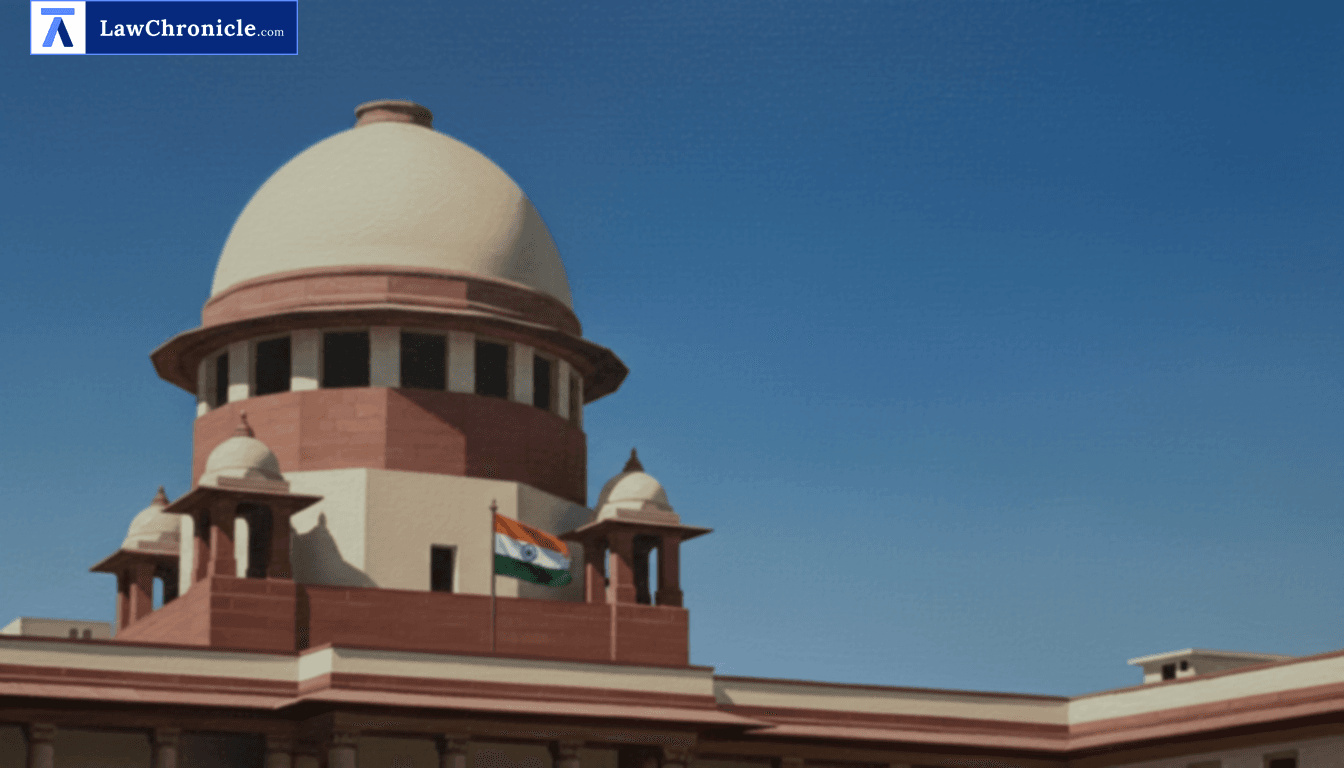
A bench of Justices Abhay S. Oka and Ujjal Bhuyan heard an appeal against a Division Bench judgment of the Madras High Court that had reversed a Single Judge's direction to the State of Tamil Nadu to grant maternity leave to a female government teacher. The core issue was whether a woman who had two children from a prior marriage but did not have their custody could claim maternity leave for a child conceived in a subsequent marriage under Fundamental Rule 101(a).
The Court allowed the appeal, set aside the Division Bench order dated 14.09.2022 and directed that the appellant be granted maternity leave under FR 101(a), with all admissible benefits to be released within two months. The Court emphasised a purposive construction of leave provisions and the constitutional context of reproductive rights and maternity relief. The Court, in its reasoning, observed: "…The fact that the appellant’s spouse had two biological children from his first marriage would not impinge upon the entitlement of the appellant to avail maternity leave for her sole biological child……" The judgment reiterated that Article 21 protected facets of reproductive rights and invoked Directive Principle Article 42 on maternity relief; it noted that maternity benefits must be construed so as to further their social-objective purpose rather than defeat it.
Background
The appellant, K. Umadevi, entered Tamil Nadu government service in December 2012 as an English teacher. She had two children from a first marriage (born 2007 and 2011) who were in the custody of their father after a 2017 divorce. She remarried in September 2018 and, following conception, applied for maternity leave for the period 17.08.2021 to 13.05.2022. The District Chief Educational Officer rejected the request on 28.08.2021, relying on FR 101(a) which, by its proviso, permitted maternity leave to a married woman “with less than two surviving children,” and thus denied the appellant relief on the ground that she already had two children.
A Single Judge of the Madras High Court allowed the appellant’s writ petition on 25.03.2022, relying on a purposive reading of maternity provisions and treating “surviving children” as referring to children in the mother’s lawful custody; the Single Judge directed sanction of leave in terms of G.O.Ms. No.84 (FR-III) dated 23.08.2021. The Division Bench reversed that order on 14.09.2022, upholding the State’s policy limiting maternity benefits in service rules and distinguishing applicability of precedents. The appellant obtained special leave to appeal to the Supreme Court, which granted leave on 11.02.2025.
The Supreme Court analysed FR 101(a), the Maternity Benefit Act, 1961 (as persuasive guidance), and constitutional provisions and international norms on maternity protection. The Court noted that the Maternity Benefit Act did not categorically bar benefits on account of number of children but limited the duration for women with two or more surviving children; it relied on precedent including Deepika Singh v. CAT and earlier authorities recognising reproductive choice as a facet of Article 21. The Court concluded that the State’s two‑child cap could not be mechanically applied to deny maternity leave where the earlier children were not in the woman’s custody and where a purposive interpretation promoted the object of maternity relief. The ultimate result: the appeal was allowed, the Division Bench order was set aside and the appellant was to receive maternity leave and benefits under FR 101(a); the Court directed release of admissible benefits within two months and made no order as to costs.
Case No.: CIVIL APPEAL NO. 2526 OF 2025 (ARISING OUT OF SLP (CIVIL) NO. 20178 OF 2022) Case Title: K. Umadevi v. Government of Tamil Nadu & Ors. Appearances: For the Petitioner(s): [Advocates not specified in the judgment] For the Respondent(s): [Advocates not specified in the judgment]
 Breaking News