Supreme Court Holds Menstrual Hygiene Management Part of Right To Dignity And Education; Directs Free Pads, Toilets, Disposal And Awareness In All Schools
 Copy Link
 Share
 Save
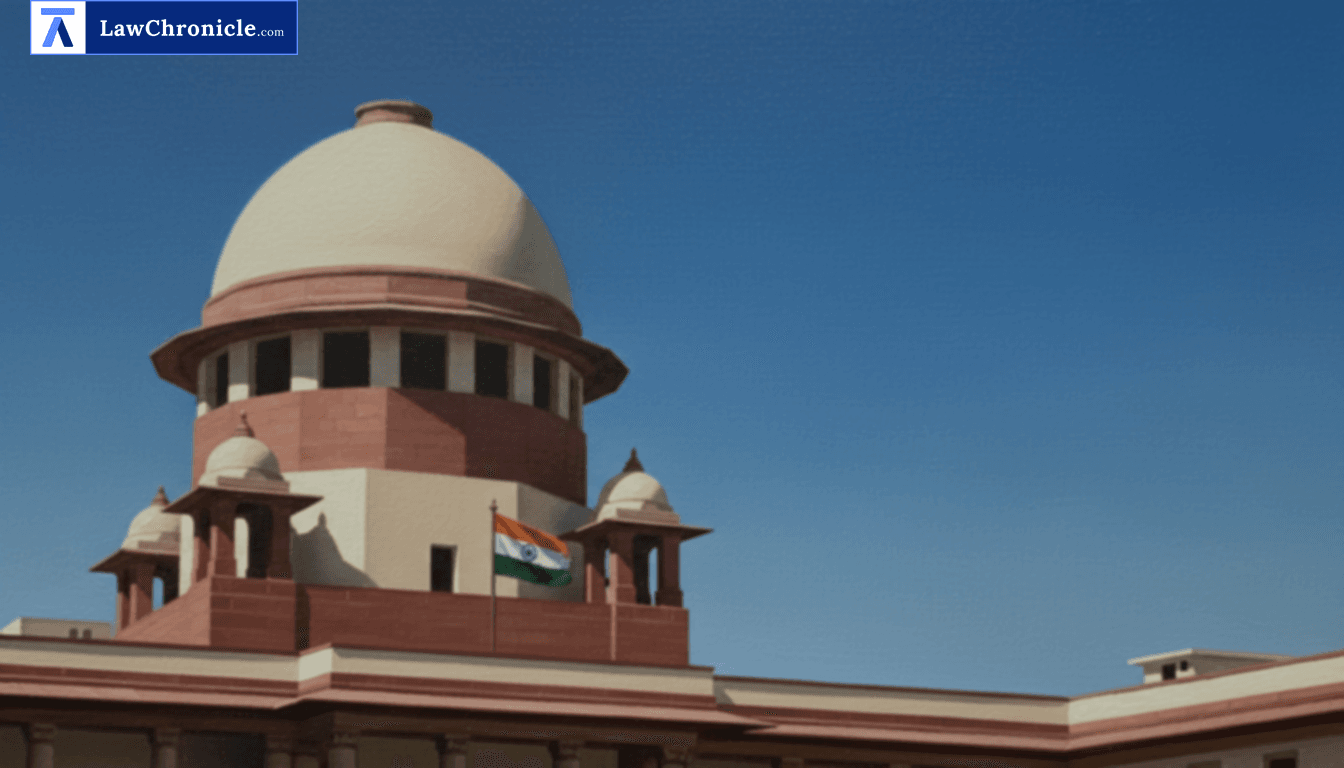
A bench of Justice J.B. Pardiwala and Justice R. Mahadevan heard a public interest writ petition filed by social worker Dr. Jaya Thakur challenging systemic gaps in menstrual hygiene management (MHM) in schools and seeking directions to the Union and States to provide free sanitary pads to girls (classes VI–XII), separate toilets, maintenance staff and awareness programmes.
The Court summarised that absence of MHM measures impeded the substantive right to equality, the right to a dignified life and the fundamental right to education. It held that MHM measures formed part of the constitutional guarantees under Articles 14, 21 and 21A and that the RTE Act’s promise of “free and compulsory education” would be hollow if gender-specific barriers persisted. The Court, in its reasoning, observed: “In our considered view, MHM measures are inseparable from the right to live with dignity under Article 21. We say so because dignity cannot be reduced to an abstract ideal, it must find expression in conditions that enable individuals to live without humiliation, exclusion, or avoidable suffering. For menstruating girl children, the inaccessibility of MHM measures subjects them to stigma, stereotyping, and humiliation.” The Court also echoed the judgment’s opening formulation that “A period should end a sentence – not a girl’s education.”
On this basis the Court issued detailed directions. It directed that all States and Union Territories ensure every school — government and private — provided functional, gender‑segregated toilets with usable water and hand‑washing facilities; free oxo‑biodegradable sanitary napkins (complying with ASTM D‑6954) made readily accessible, preferably through vending machines; establishment of Menstrual Hygiene Management (MHM) corners stocked with spare uniforms and disposal bags; safe, environmentally compliant disposal mechanisms and covered waste bins; gender‑responsive curriculum and teacher sensitisation by NCERT/SCERT on menstruation and related health issues; periodic annual inspections by the District Education Officer (DEO) with mandatory anonymous student feedback; and oversight by the NCPCR/SCPCR. The Union and States were given three months to comply and the Court issued a continuing mandamus for monitoring and reports.
Background: The petition under Article 32 sought mandamus to ensure free sanitary pads to girl children in classes VI–XII, separate girls’ toilets in government, aided and residential schools, at least one cleaner for toilet maintenance, and a three‑stage awareness programme (spread awareness, provide products and sanitation, ensure sanitary waste disposal). The Union and many States filed affidavits describing policies and schemes (Jan Aushadhi, Samagra Shiksha initiatives, State‑level pad distribution, vending machines, incinerators and awareness drives) but acknowledged inconsistent implementation.
The Court reviewed international norms and domestic precedents recognising education as a “multiplier right” and part of the right to life (citing UDHR, ICESCR, Unni Krishnan, Mohini Jain and others). It relied on RTE Act provisions, especially Section 3(2) that “no child shall be liable to pay any kind of fee or charges or expenses which may prevent him or her from pursuing and completing the elementary education,” and Section 19 and the Schedule prescribing norms including “separate toilets for boys and girls” and “barrier‑free access.” The Court recorded empirical studies and reports showing menstruation‑linked absenteeism and drop‑out, and noted intersectional vulnerability of girls with disabilities. It held that lack of MHM constituted a gender‑specific financial and structural barrier to meaningful participation and equality of opportunity.
Final result: The petition resulted in directions as above; the Court required States/UTs and the Union to comply within three months, mandated annual DEO inspections with student feedback, tasked NCPCR/SCPCR with oversight and preserved continuing jurisdiction for compliance reporting.
Case Details: Case No.: WRIT PETITION (C) NO. 1000 of 2022; 2026 INSC 97 Case Title: Dr. Jaya Thakur v. Government of India & Ors. Appearances: For the Petitioner(s): Dr. Jaya Thakur (Petitioner) For the Respondent(s): Government of India & Ors. (Respondents; affidavits placed by Ministries including Health & Family Welfare, Education, Jal Shakti and various State Governments/UTs)
 Breaking News