


Supreme Court Holds Officiating Service (1990–2005) Counts For Seniority; High Court Order Quashing Revised G.O.M. Set Aside
 Copy Link
 Share
 Save
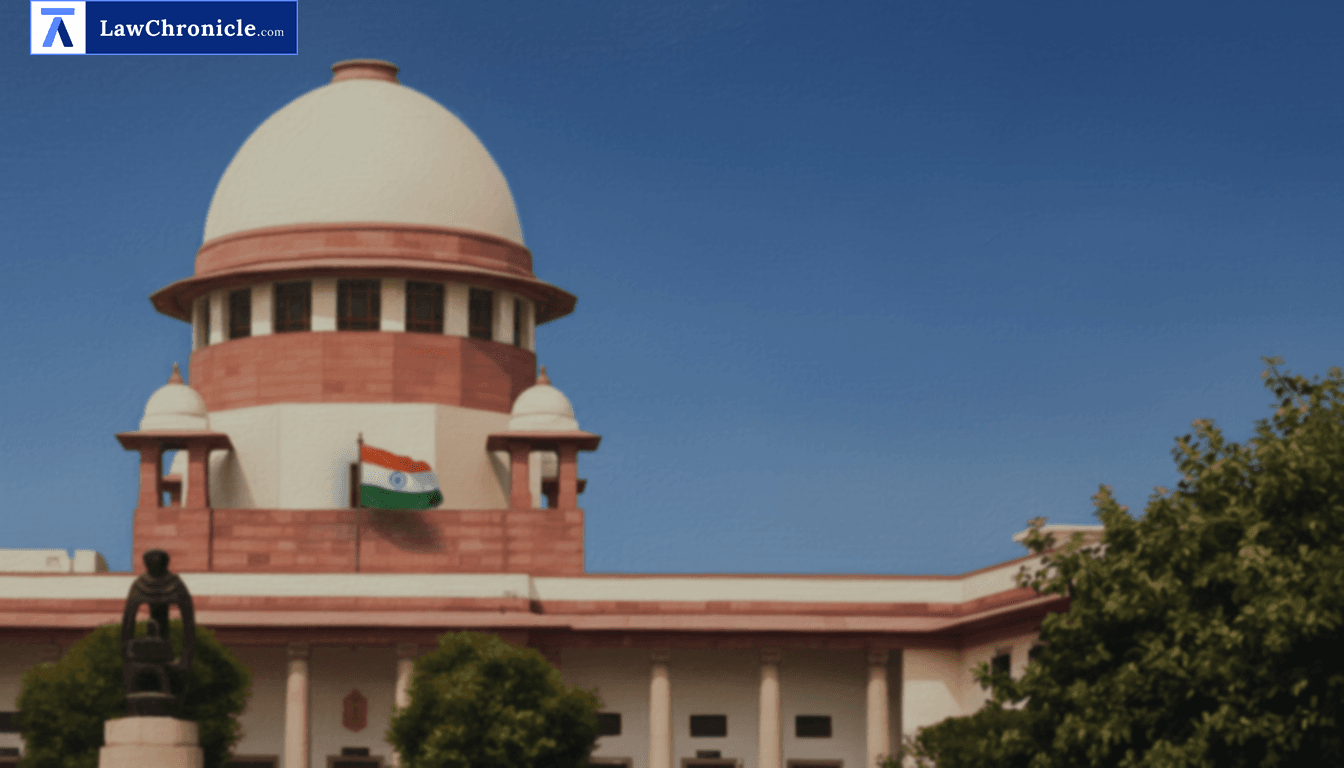
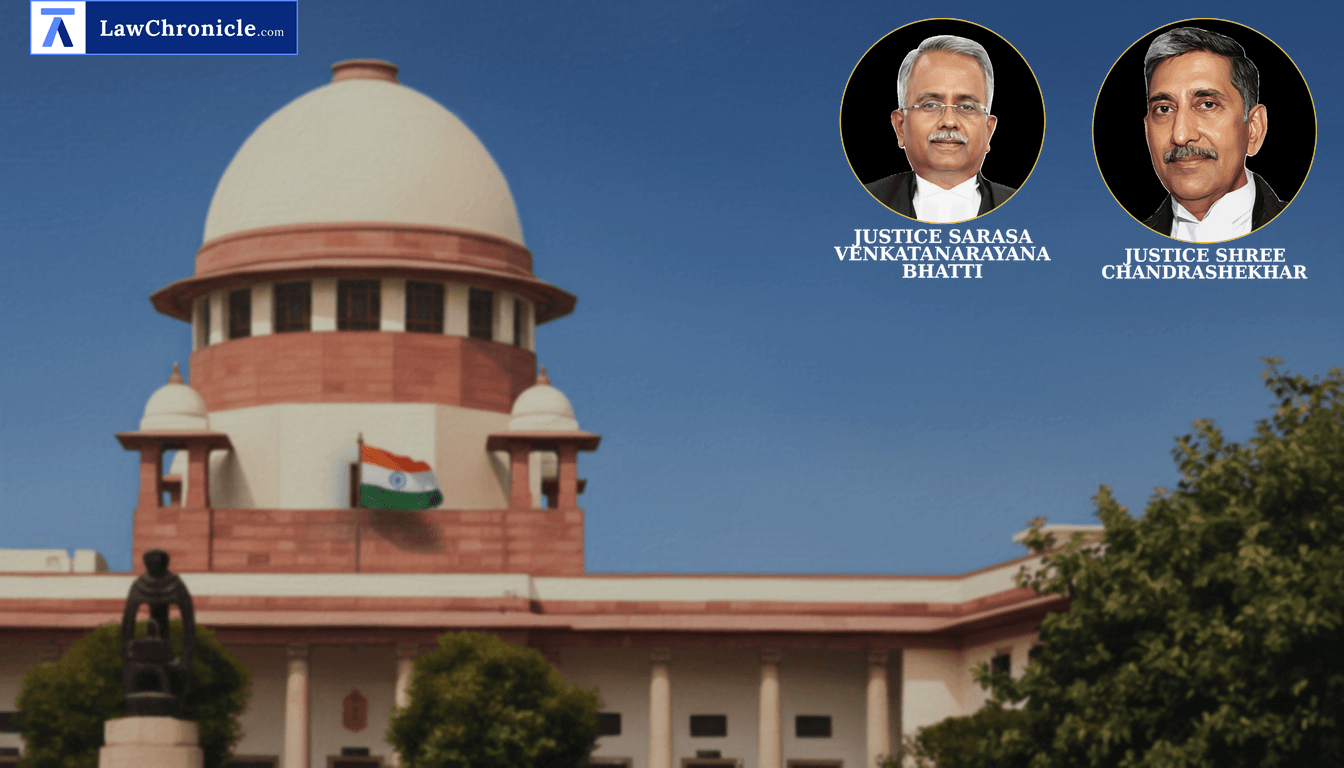
A bench of Justices Pamidighantam Sri Narasimha and Sandeep Mehta (Justice Mehta authoring the judgment) heard appeals challenging a Division Bench order of the Telangana High Court that had quashed Government Office Memorandum (G.O.M.) No. 262 dated 17 June 2006. The appeals arose from disputes over seniority between temporary Assistant Executive Engineers (AEEs) appointed during 1990–1995 and candidates regularly selected through the Andhra Pradesh Public Service Commission (APPSC) and raised the question whether periods of officiating service before regularisation must be counted for seniority.
The Court allowed the appeals, set aside the High Court judgment dated 21 September 2023 and upheld the State’s decision to count the period of officiating service of AEEs appointed between 1990–1992 for seniority. The Court held that the temporary appointments under the Cyclone Emergency Reconstruction Project were made under the State’s subordinate service rules and were not inherently ad hoc stop-gap appointments; their uninterrupted service until regularisation brought them within the principle that officiating service must be counted where regularisation subsequently occurred. The Court rejected the High Court’s view that the State became functus officio after G.O.M. No. 234 (27 June 2005) and further held that the State was not required, as a matter of law, to afford prior hearing before issuing the revised policy G.O.M. The Court, in its reasoning, observed: “47. To sum up, we hold that: (A) Once an incumbent is appointed to a post according to rule, his seniority has to be counted from the date of his appointment and not according to the date of his confirmation. The corollary of the above rule is that where the initial appointment is only ad hoc and not according to rules and made as a stop-gap arrangement, the officiation in such post cannot be taken into account for considering the seniority. (B) If the initial appointment is not made by following the procedure laid down by the rules but the appointee continues in the post uninterruptedly till the regularisation of his service in accordance with the rules, the period of officiating service will be counted.”
Background The dispute arose after the State sanctioned AEEs for project work under the Cyclone Emergency Reconstruction Project (CERP) in 1990 and temporarily appointed qualified Work Inspectors as AEEs in 1992 under Rule 10(a)(i) of the Andhra Pradesh Subordinate Service Rules. Those appointees served continuously and the State regularised temporary AEEs by G.O.M. No. 234 dated 27 June 2005, but placed them “below the last regularly selected candidate of AEEs” for seniority. Aggrieved, certain AEEs appointed between 1990–1992 sought separate treatment; the State issued revised G.O.M. No. 262 dated 17 June 2006 directing that AEEs appointed during 1990–92 be regularised “below the last regular Assistant Executive Engineer appointed through Andhra Pradesh Public Service Commission prior to the promulgation of Act, 2/94.” Regular recruits from APPSC (1997 batch) challenged G.O.M. No. 262 before the Administrative Tribunal and the High Court; the High Court quashed G.O.M. No. 262 on grounds including alleged denial of hearing and that G.O.M. No. 234 had rendered the government functus officio. The Supreme Court examined the applicable precedents (including the Constitution Bench formulation in Direct Recruit Class II Engg. Officers’ Association) and subsequent authorities, analysed the nature of the appointments and the State’s rule-making power, and concluded that the appellants’ case fell under Proposition (B) — officiating service must be counted where uninterrupted service continued till regularisation. The Court held that the rule-making power of the State could not be fettered by a blanket application of functus officio or an absolute requirement of prior hearing in policy decisions, and that the revised G.O.M. No. 262 was sustainable. The High Court order was quashed and the appeals were allowed; no order as to costs.
Case Details: Case No.: 2025 INSC 212; Civil Appeals arising out of SLP(Civil) Nos. 4036-4038 of 2024 and 4596-4597 of 2024 (Diary No. 27613/2024) Case Title: P. Rammohan Rao v. K. Srinivas & Ors. Appearances: For the Petitioner(s): [Not specified in the judgment] For the Respondent(s): [Not specified in the judgment]
Similar Articles
 Breaking News


