Supreme Court holds proximate act and mens rea required to establish abetment to suicide; upholds quashing of FIR
 Copy Link
 Share
Share Save
Save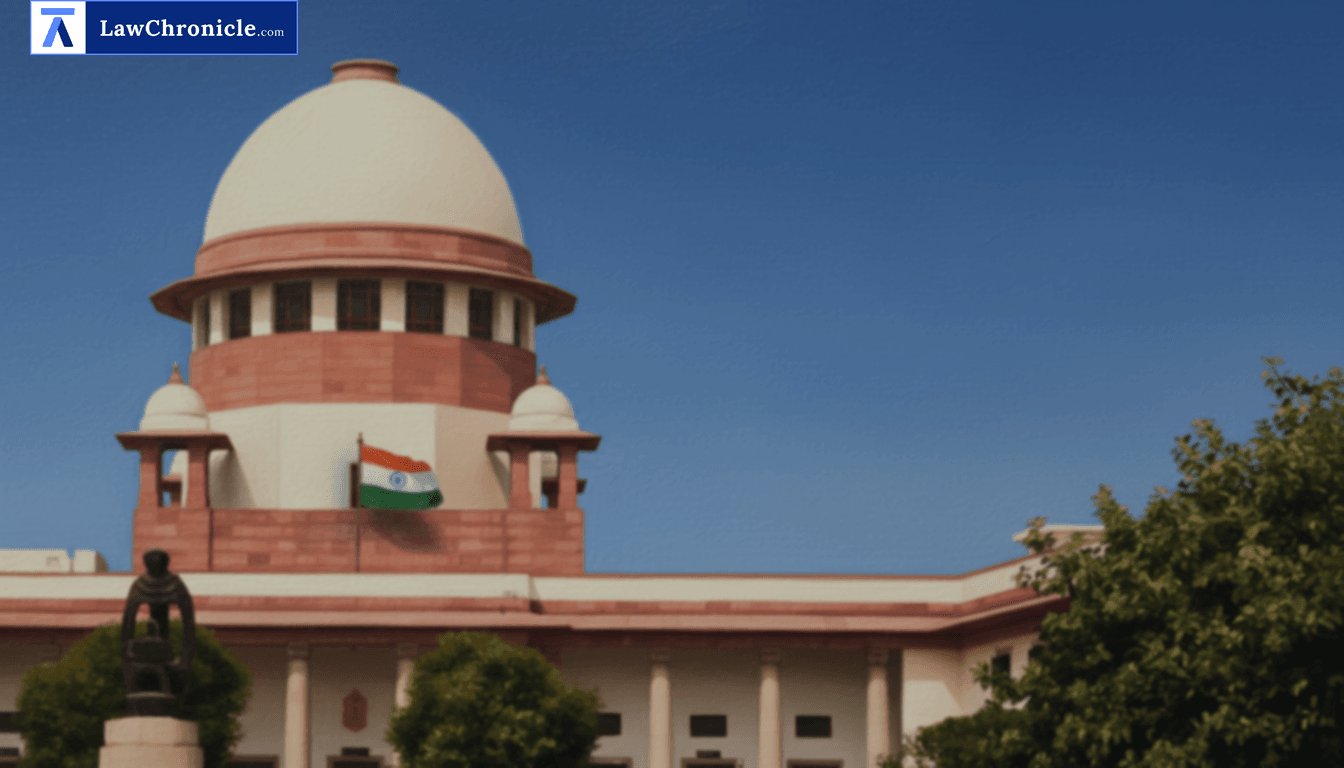
A bench of Chief Justice B.R. Gavai and Justice K. Vinod Chandran heard appeals challenging a common High Court order quashing FIRs that had accused several public officials and others of abetting the suicide of a seven‑time Member of Parliament. The appeals raised the question whether prolonged insults, rebukes or continuous acts of harassment — and allegations in a suicide note — sufficed to attract liability under Section 306 IPC read with Section 107 IPC (now Sections 108 & 45 BNS).
The Court held that to sustain a charge of abetment to suicide there must be mens rea and a positive act or instigation that was proximate to the death; mere continuous harassment or insults over time did not automatically amount to abetment. The Court emphasised that whether an accused had “a conscious deliberate intention, mens rea, to drive another person to suicidal death” depended on the facts of each case and could not be inferred solely from what the victim felt. The Court, in its reasoning, observed: "What comes out essentially from the various decisions herein before cited is that, even if there is allegation of constant harassment, continued over a long period; to bring in the ingredients of Section 306 read with Section 107, still there has to be a proximate prior act to clearly find that the suicide was the direct consequence of such continuous harassment, the last proximate incident having finally driven the subject to the extreme act of taking one’s life." The judgment also noted that "even a rebuke to 'go, kill yourself'; often a rustic expression against distasteful conduct, cannot by itself be found to have the ingredients to charge an offence of abetment to suicide."
Background The dispute arose after the MP committed suicide on 22.02.2021 and left a suicide note naming several officials, including the Administrator of Dadra and Nagar Haveli, police officers and a private individual. The deceased had earlier raised complaints about alleged disrespect and maladministration before the Lok Sabha Committee of Privileges. On the basis of statements and the suicide note, FIRs were registered; the accused moved to quash those FIRs under Section 482 Cr.P.C., and the High Court allowed the quashing by a common order. The appellant (son and first informant) contended that the cumulative acts, the Committee minutes and the suicide note warranted trial and that proximate causation was not necessary in every case. The State and other respondents countered that many allegations (notably extortion and takeover of a trust) first appeared only in the suicide note and that the record did not disclose a proximate act with mens rea.
The Supreme Court reviewed precedent (including Surinder Kumar, Dammu Sreenu, Munshiram, Ude Singh, Pawan Kumar and its recent articulation in Prakash v. State of Maharashtra) and reiterated that jurisprudence required either proximate instigation or a positive act intended to push the victim to suicide. The Court found the suicide note suspect because key allegations did not appear in earlier complaints or the Privileges Committee proceedings, the note was not contemporaneously seized at the inquest, handwriting verification was absent, and there was an unexplained delay in lodging the FIR. Considering the totality of evidence, the Court concluded that the record did not disclose mens rea or the proximate triggering act necessary to sustain charges under Section 306 IPC and affirmed the High Court’s quashing order. The Criminal Appeals were dismissed and pending applications were disposed of.
Case Details: Case No.: Criminal Appeal Nos. 2177-2185 of 2024 Case Title: Abhinav Mohan Delkar v. The State of Maharashtra & Ors. Appearances: For the Petitioner(s): Ms. Meenakshi Arora, Senior Counsel For the Respondent(s): Shri Tushar Mehta, Senior Counsel (for State); Shri Mahesh Jethmalani, Senior Counsel (for an accused)
 Breaking News