


Supreme Court Holds Section 32(2) Is Sole Source For Termination Orders; Remands Matter For Appointment Of Substitute Arbitrator
 Copy Link
 Share
 Save
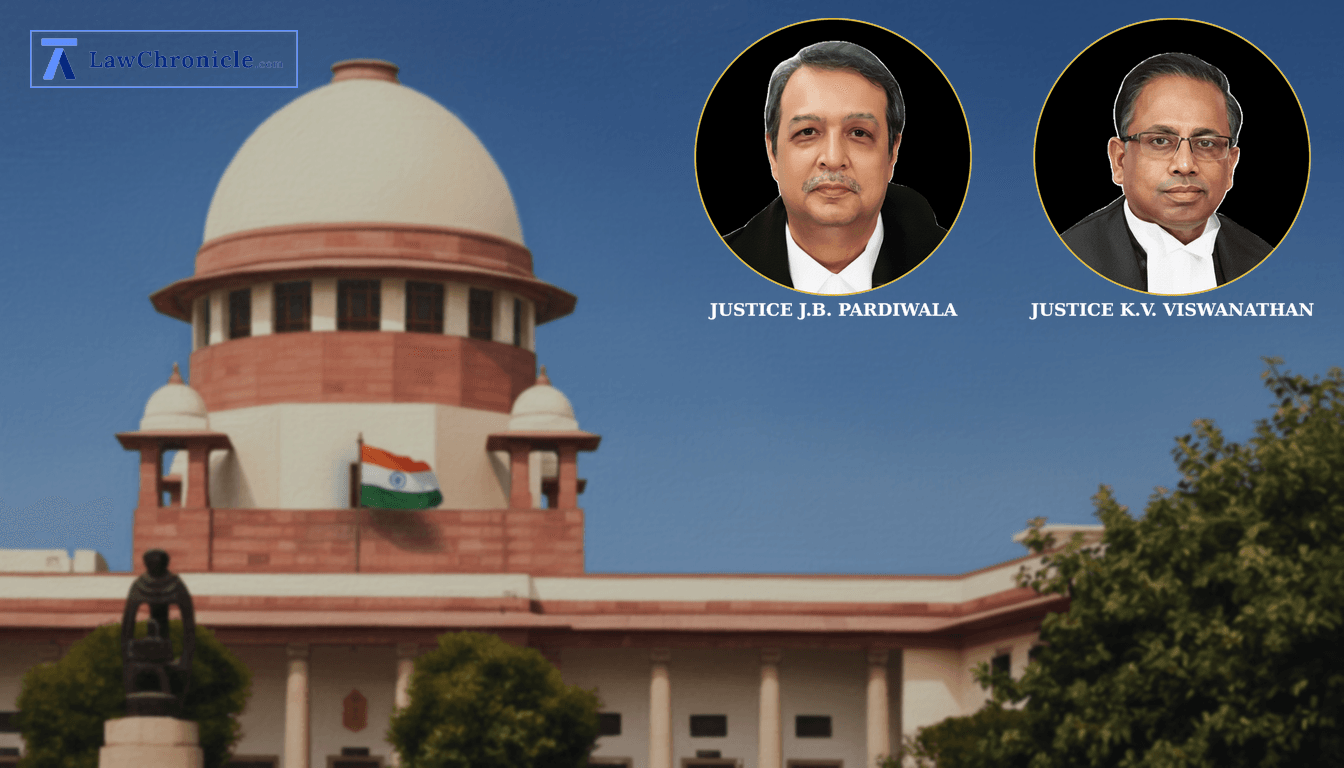
A bench of Justice J.B. Pardiwala and Justice R. Mahadevan heard an appeal by Harshbir Singh Pannu and another challenging the Punjab & Haryana High Court’s refusal to appoint a fresh arbitrator and seeking relief against termination of arbitral proceedings. The appeal arose from a petition under Sections 11(5) and (6) of the Arbitration and Conciliation Act, 1996 after a sole arbitrator had terminated arbitration for non-payment of fees under Section 38. The respondent did not appear before this Court.
The Court summarised that, under the Act, termination of arbitral proceedings could occur only in two ways — by a final award or by an order of the arbitral tribunal under Section 32(2) — and that other provisions (Sections 25, 30 and 38) merely identified circumstances that could lead the tribunal to invoke Section 32(2). The judgment emphasised party autonomy and the need to minimise judicial interference in arbitration, observing at the outset that “the true advantage of arbitration lies in its freedom and flexibility, with party autonomy as the cornerstone of the arbitral process.” The Court, in its reasoning, observed: “Section 32 of the Act, 1996 is exhaustive and covers all cases of termination of arbitral proceedings under the Act, 1996. The power of the arbitral tribunal to pass an order to terminate the proceedings under the scheme of the Act, 1996 lies only in Section 32(2).” The Court held that the mandate of an arbitral tribunal terminated with termination of the proceedings and explained the available remedies: first, an application to recall the termination before the arbitral tribunal itself; failing that, a challenge under Section 14(2) to the court to decide whether the mandate stood legally terminated; and, in appropriate cases, appointment of a substitute arbitrator under Section 15. Applying these principles, the Court partly allowed the appeal and remanded the matter for appointment of a substitute arbitrator, directing the High Court to complete that exercise within two weeks.
Background The dispute arose out of a partnership carrying on hospital operations in Amritsar. The partnership deed contained an exclusive arbitration clause. Appellants served a notice invoking arbitration in 2018 and, after no mutual appointment, the Punjab & Haryana High Court appointed a sole arbitrator in March 2020 and directed proceedings be completed within the statutory timeline and fees be fixed either by agreement or under the Fourth Schedule. The claimant initially sought Rs. 13.65 crore; the respondent filed a counter-claim of Rs. 82.78 crore and the sole arbitrator, applying the Fourth Schedule, revised fees. Objections to fee revision and payment difficulties followed; hearings were adjourned repeatedly and parties failed to make deposits. The sole arbitrator treated the impasse under Section 38(2) as authorising suspension or termination and on 28.03.2022 terminated the proceedings for non-payment of deposits.
The appellants moved the High Court under Article 227 and then under Section 11 to secure appointment of a fresh arbitrator; the High Court dismissed the Section 11 petition as not maintainable, accepting the view that termination under Section 38 did not amount to termination of mandate for purposes of substitution and that remedies lay in recall or in challenging termination under Section 14(2). The appellants challenged that order before the Supreme Court, contending that (i) termination on non-payment of fees had to be traced to Section 32(2)(c), (ii) the arbitrator could not unilaterally fix or revise fees without party consent (relying on this Court’s Afcons decision), and (iii) a fresh Section 11 petition was maintainable for appointment of a substitute arbitrator. The Supreme Court analysed the statute and UNCITRAL travaux, reconciled competing High Court and Supreme Court precedents, held Section 32(2) to be the exclusive source of termination orders, clarified remedies and procedural route, and remitted the matter for fresh appointment of an arbitrator to conclude proceedings de novo if parties so agreed.
Case No.: CIVIL APPEAL NO. 14630 OF 2025 (Arising out of Special Leave Petition (Civil) No. 10389 of 2025) (2025 INSC 1400) Case Title: Harshbir Singh Pannu & Anr. v. Jaswinder Singh Appearances: For the Petitioner(s): Mr. Nakul Dewan, Senior Advocate; Mr. Samarth Sagar, Advocate For the Respondent(s): No appearance / not represented before Supreme Court
Similar Articles

 Breaking News


