Supreme Court Orders FIR Registration in IIT-Delhi Student Deaths, Constitutes National Task Force on Student Mental Health
 Copy Link
 Share
Share Save
Save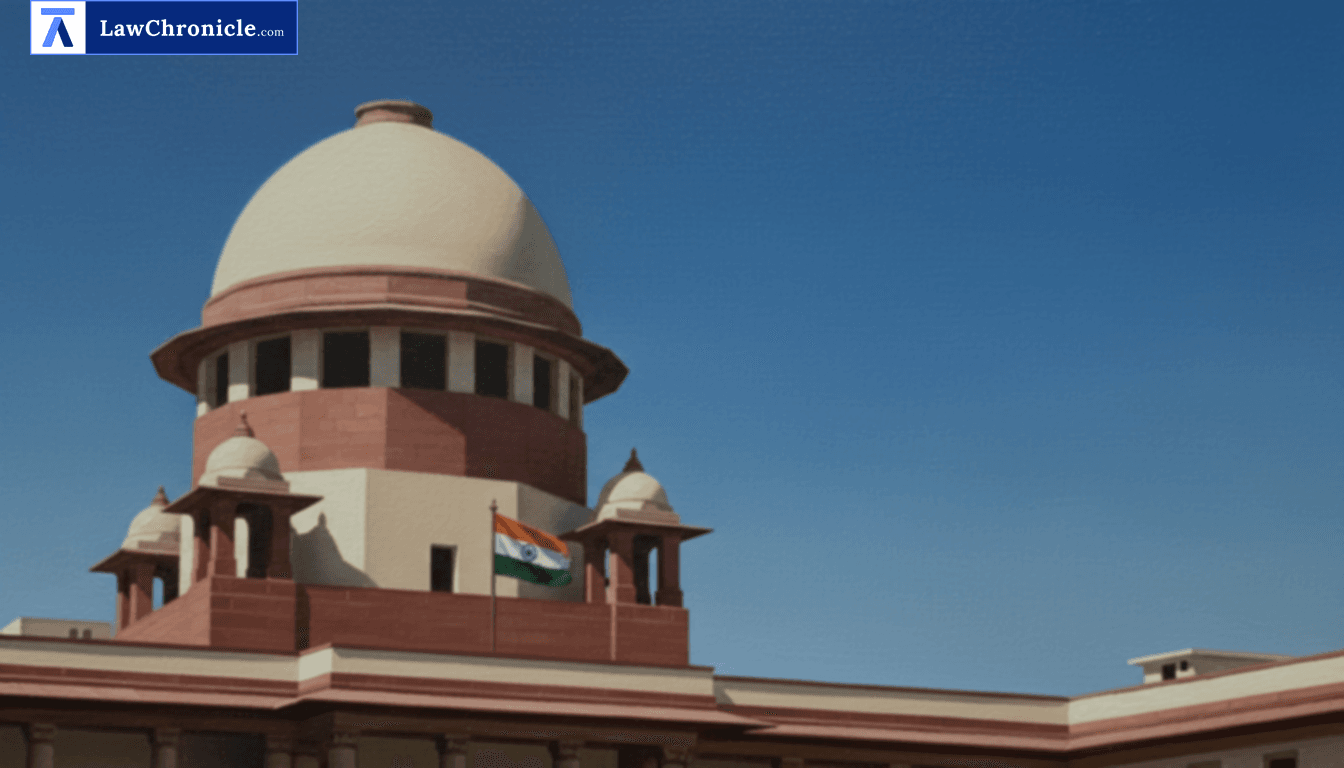
A bench of Justices J.B. Pardiwala and R. Mahadevan heard an appeal against the Delhi High Court’s refusal to direct police to register First Information Reports in respect of the deaths of two IIT Delhi students. The petitioners challenged the police decision to close the matters after inquest proceedings under Section 174 CrPC and sought a writ of mandamus for registration of FIRs and a broader inquiry into alleged caste-based atrocities.
The Court held that when information disclosed the commission of a cognizable offence the police must register an FIR and could not substitute Section 174 inquest proceedings for a criminal investigation. The Court directed the DCP (South‑West, New Delhi) to register FIRs in accordance with the written complaints lodged by the kin of the deceased and to depute an officer not below the rank of Assistant Commissioner of Police to investigate. The Court also constituted a National Task Force to address student mental‑health concerns and to recommend measures to prevent suicides in higher education institutions. The Court, in its reasoning, observed: “The foregoing discussion leads us to the inevitable conclusion that when an informant approaches the police with information regarding the commission of a cognizable offence, the police owes a duty to promptly register an F.I.R. and initiate investigation in accordance with Section 154 of the CrPC.” The judgment further noted that “registration of an F.I.R. is mandatory under Section 154 of the Code, if the information discloses commission of a cognizable offence and no preliminary inquiry is permissible in such a situation.”
Background Two undergraduate students of IIT Delhi — Ayush Ashna, found dead on 08.07.2023 in Udaigiri Hostel, and Anil Kumar, found dead on 01.09.2023 in Vindhyachal Hostel — were discovered hanging in their hostel rooms. Relatives lodged written complaints alleging murder, conspiracy and caste‑based discrimination by faculty and others; the families asserted the deaths were not suicides. The Delhi Police conducted inquest enquiries under Section 174 CrPC, obtained post‑mortem reports recording death due to asphyxia by ligature, recorded statements of relatives and peers and concluded the deaths were suicides attributable to academic stress. No FIRs were registered.
The petitioners filed a writ petition in the Delhi High Court seeking mandamus to compel registration and investigation; the High Court dismissed the petition observing that allegations could not be corroborated and that “a mandamus cannot be issued in a routine manner merely on the basis of sympathy or sentiments.” The petitioners approached the Supreme Court by special leave.
The Supreme Court reviewed the legal distinctions between Section 174 inquest inquiries and the FIR/Section 154 CrPC regime. The Court reiterated established precedent that registration of FIR is mandatory where information discloses a cognizable offence and that preliminary inquiries cannot be used to avoid or delay FIR registration (citing Lalita Kumari and related authorities). The Court noted the SC/ST (Prevention of Atrocities) Act provision that, inter alia, required no preliminary enquiry before FIR registration and emphasised statutory and executive advisories underscoring compulsory FIR registration when cognizable offences were reported.
Concluding that the complaints lodged by the families prima facie disclosed cognizable offences and that the police should not have closed the matters following only Section 174 inquests, the Court directed immediate registration of FIRs in line with the written complaints and ordered that the investigation be conducted by an officer of at least ACP rank. The Court declined to determine guilt or innocence and stressed that registration and investigation did not foreclose lawful closure reports where no offence was made out after full investigation.
Beyond the dispute, the Court recorded concern at rising student suicides in higher educational institutions and constituted a National Task Force chaired by Justice S. Ravindra Bhat (former Supreme Court judge) with multidisciplinary members (psychiatrists, academics, civil society and an amicus). The Task Force was mandated to identify causes, assess existing regulations and recommend reforms; it was empowered to inspect institutions, consult stakeholders and submit an interim report within four months and a final report preferably within eight months. The Court directed the Union to deposit Rs. 20 lakhs for initial operations and specified administrative support and timelines for the Task Force.
Case Details: Case No.: CRIMINAL APPEAL NO. 1425 OF 2025 (@SLP (CRL) NO. 13324 OF 2024) Case Title: Amit Kumar & Ors. v. Union of India & Ors. Appearances: For the Petitioner(s): (Advocates not specified in the judgment text) For the Respondent(s): Additional Solicitor General (designation referenced); counsel for IIT Delhi and other respondents (names not specified in the judgment text)
 Breaking News