


Supreme Court Quashes Bail In POCSO Case Citing Heinousness And Victim Trauma
 Copy Link
 Share
 Save
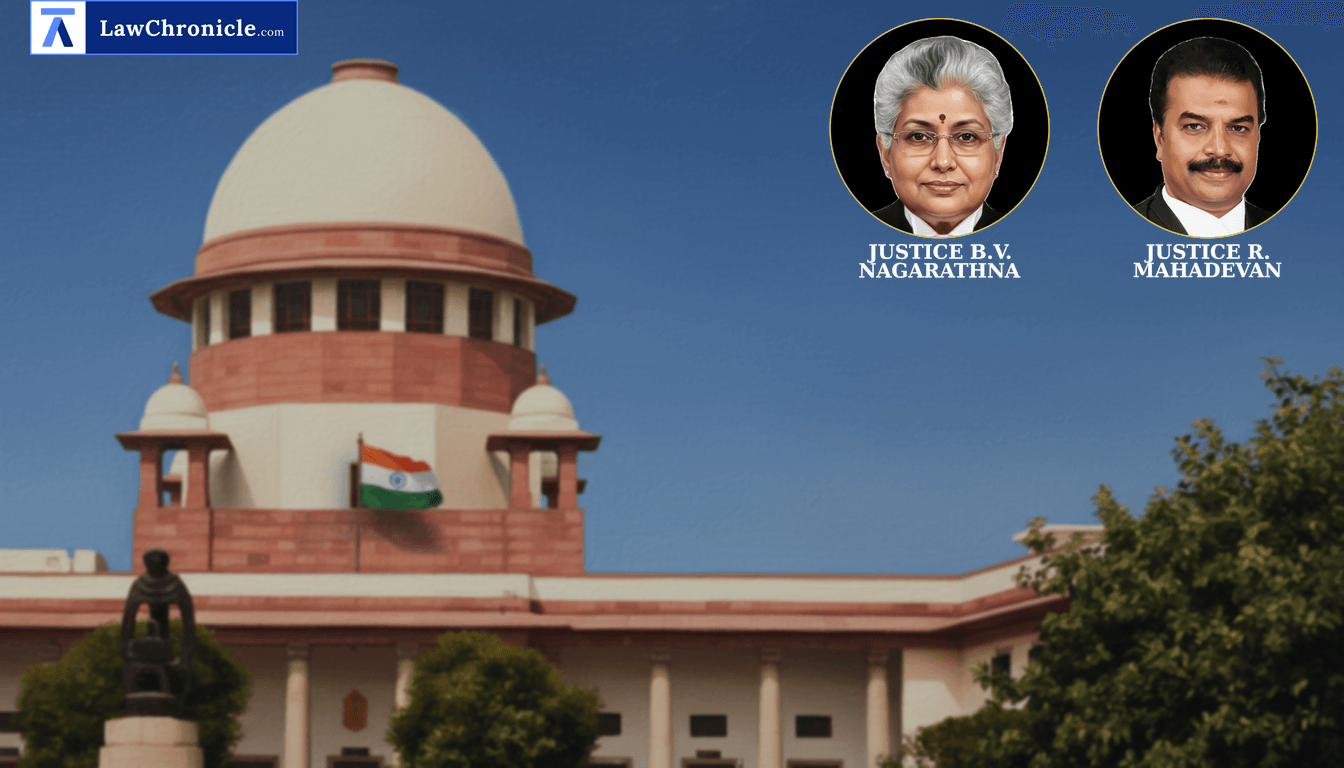
In a decisive intervention to protect the integrity of criminal justice in sexual offences against minors, the Supreme Court has set aside a High Court order granting bail to a gang-rape accused, ruling that mechanical reliance on precedents without considering the gravity of the offence and potential for witness intimidation results in a manifest miscarriage of justice. The bench, comprising Justice B.V. Nagarathna and Justice R. Mahadevan, emphasized that the collective conscience of society is shaken by heinous crimes involving the armed intimidation and blackmail of a child.
The Court was hearing an appeal against an order passed by the Allahabad High Court which had enlarged the accused on bail in a case involving allegations of repeated sexual assault under the Bharatiya Nagarik Suraksha Sanhita, 2023 and Protection of Children from Sexual Offences Act, 2012. The bench noted that the High Court had ignored prima facie material, including the victim's statement and medical reports, while granting relief.
Judicial Scrutiny of Statutory Rigours
The Court, in its reasoning, observed: "The High Court, while granting bail to Respondent No. 2 - accused, failed to take into account the nature and gravity of the offences and the statutory rigour under the provisions of the POCSO Act. The omission to notice that the chargesheet had already been filed, coupled with the prima facie material emerging from the victim’s statements renders the exercise of discretion by the High Court manifestly erroneous."
Tracing the principles of bail cancellation, the bench relied on Bhagwan Singh v. Dilip Kumar @ Deepu @ Depak and another ( "(2023) 13 SCC 549": 2023 CaseBase(SC) 284) to reiterate that while bail should not be cancelled mechanically, the superior courts must step in when an accused is allowed to move freely despite prima facie evidence of heinous crimes. The Court further observed that the High Court's reliance on Satender Kumar Antil v. Central Bureau of Investigation ( "(2022) 10 SCC 51": 2022 CaseBase(SC) 640) and Manish Sisodia v. Directorate of Enforcement ( "2024 INSC 595": 2024 CaseBase(SC) 665) was misplaced, as those cases turned on their specific facts of prolonged incarceration, whereas the present accused had only been in custody for a few months.
Protection of the Victim and Trial Purity
Concern Over Witness Intimidation
The Court highlighted the specific vulnerability of the victim, who resides in the same locality as the accused. Citing State of Bihar v. Rajballav Prasad @ Rajballav Pd. Yadav @ Rajballabh Yadav ( "(2017) 2 SCC 178": 2016 CaseBase(SC) 1091), the bench noted that the safety of the victim and the preservation of the trial's purity are paramount. The bench took serious note of allegations that the accused had been stalking and intimidating the victim with a firearm post-release, leading to her withdrawal from school.
The Court has the following directions:
"The impugned judgment dated 09.04.2025 passed by the High Court cannot be sustained in law and is accordingly set aside. Consequently, the bail granted to Respondent No. 2 - accused is cancelled. Respondent No. 2 - accused is directed to surrender before the jurisdictional Court within a period of two weeks from today. In the event of his failure to do so, the trial Court shall take appropriate steps in accordance with law to secure his custody. ... the trial Court is directed to give priority to the present case, conclude the trial and pass appropriate orders on its own merits and in accordance with law, as expeditiously as possible."
Background:
The dispute originated from an FIR lodged on December 2, 2024, alleging that the accused and his friends had repeatedly sexually assaulted a 14-year-old girl over six months, recorded the acts for blackmail, and abducted her. While the police initially delayed registration, a chargesheet was eventually filed under Sections 65(1), 74, 137(2), and 352 of the Bharatiya Nagarik Suraksha Sanhita, 2023 and various sections of the Protection of Children from Sexual Offences Act, 2012. The accused argued that the relationship was consensual and that the FIR was a result of personal animosity; however, the Supreme Court rejected these contentions, noting that consent is legally irrelevant in POCSO cases involving minors.
Key Takeaways:
Statutory Presumption Overrides Consent
The Court reaffirmed that in cases involving the Protection of Children from Sexual Offences Act, 2012, the minority of the victim makes any plea of 'consensual relationship' legally untenable.
Bail Not a Matter of Course in Heinous Crimes
The judgment clarifies that the mere filing of a chargesheet does not automatically entitle an accused to bail, especially when the nature of the crime has a devastating impact on society.
Precedents Must Match Factual Matrix
Courts cannot mechanically apply bail guidelines from cases like Satender Kumar Antil v. Central Bureau of Investigation ( "(2022) 10 SCC 51": 2022 CaseBase(SC) 640) without checking for factual correlation, particularly regarding the length of incarceration.
Ratio Decidendi:
An order granting bail is vitiated and liable to be set aside if the court fails to consider the nature and gravity of the offence, ignores relevant material collected during investigation (such as statements under Section 183 of the Bharatiya Nagarik Suraksha Sanhita, 2023), or overlooks the imminent risk of witness intimidation in heinous crimes involving children.
Case Details:
Case No.: CRIMINAL APPEAL NO. 164 OF 2026
NeutralCitation: 2026 INSC 44
Case Title: X v. THE STATE OF UTTAR PRADESH & ANOTHER
Source: 2026 CaseBase(SC) 605
Similar Articles


 Breaking News


