


Supreme Court Quashes Conviction Where Victim Turns Hostile and Forensic and Panch Evidence Are Unreliable
 Copy Link
 Share
 Save
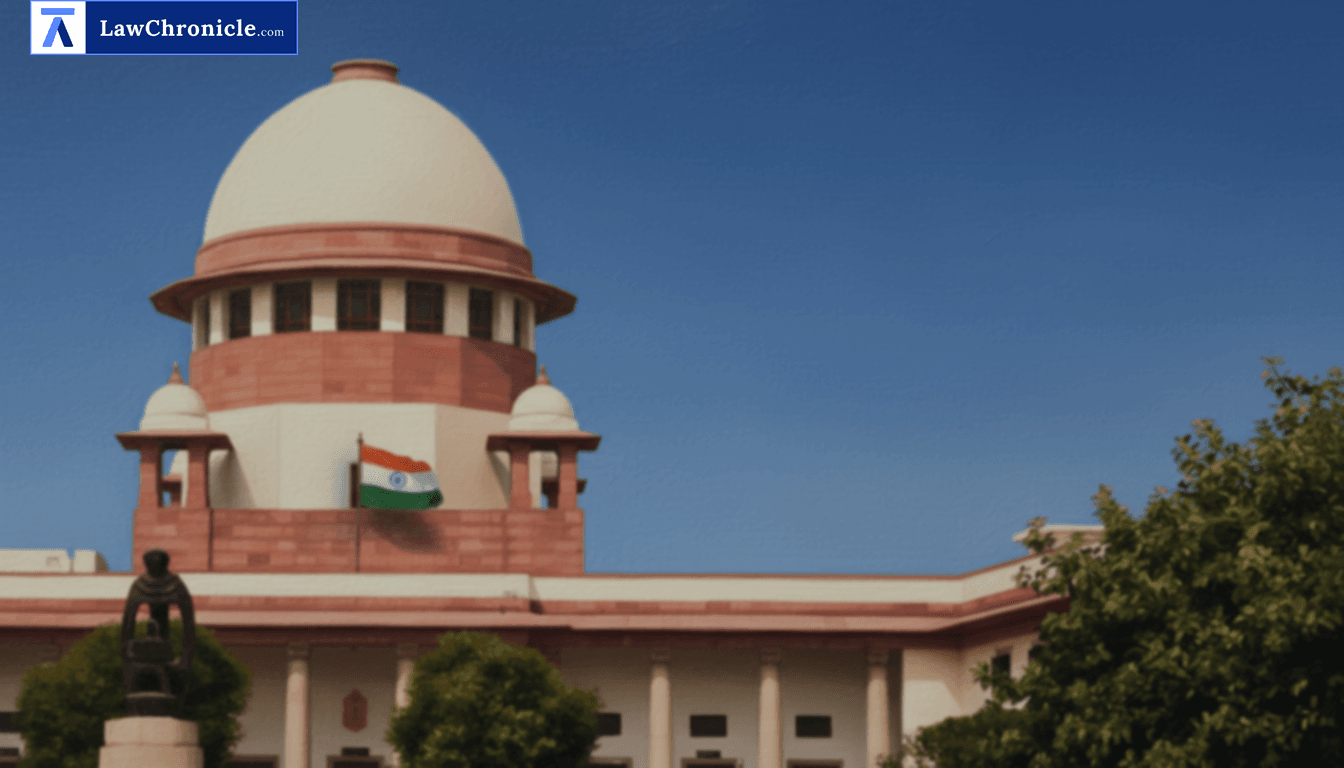
A bench of Justices Sanjay Karol and Vipul M. Pancholi heard appeals against a common Gujarat High Court judgment that had affirmed conviction under Section 376(2)(d) IPC and enhanced the sentence to ten years. The appellant challenged both conviction and the High Court’s reliance on investigative and forensic material after the principal witnesses were declared hostile.
The Court allowed the appeals, set aside the trial and High Court judgments and acquitted the accused, holding that the prosecution failed to prove the charge beyond reasonable doubt. The Court observed that where the principal witnesses had been declared hostile their testimony "should be slow to act on" and required corroboration. As the Court, in its reasoning, observed: "Furthermore, it is also relevant to observe that three independent witnesses who were present at the place of occurrence, i.e. in the hospital/clinic of the appellant-accused, though cited as prosecution witnesses in the chargesheet, were not examined by the prosecution. Furthermore, the medical evidence also does not support the version of the prosecution. Merely because the victim has levelled allegations against the appellant-accused in the FIR and the investigating officer has deposed before the Court with regard to the contents of the said FIR, it cannot be presumed that the allegations levelled in the FIR are true and correct unless the same is proved during the course of trial by leading cogent evidence." The Court further quoted precedent to note that "the court should be slow to act on the testimony of such a witness and, normally, it should look for corroboration to his evidence."
Background
The prosecution alleged that the accused, a practicing doctor in Himmatnagar, had taken the victim into his chamber on 08.05.2001, examined her in a screening room and thereafter in an operation room, and forcibly committed intercourse, leaving scratches and bruises on her neck. An FIR was filed, the police conducted investigation, prepared panchnamas, recovered clothes and sent samples for FSL testing. The trial court convicted the accused under Section 376(2)(d) IPC and sentenced him to six years; the State appealed for enhancement and the High Court increased the sentence to ten years while dismissing the accused’s appeal.
At trial the prosecution examined nine witnesses. The victim (PW‑1) initially narrated the incident in her examination‑in‑chief but, after adjournments, turned hostile along with her husband (PW‑2). Several panch witnesses of recovery (PW‑3, PW‑4 etc.) later deposed that their signatures had been obtained at the instance of the police and that they had not gone through the panchnamas. Medical evidence (PW‑7) recorded only abrasions on the neck and found no signs of recent intercourse, semen or internal injuries; one doctor (PW‑6) reported inability to draw a semen sample from the accused. The High Court had placed reliance on the investigating officer’s testimony, the panchnamas and an FSL report noting group 'B' stains on garments. The Supreme Court found these supports insufficient in the absence of reliable witness testimony and successful examination of independent witnesses and therefore held that conviction could not stand. The Court applied its authorities on hostile witnesses (including State of Rajasthan v. Bhawani and Paramjeet Singh v. State of Uttarakhand) and emphasised that allegations in an FIR cannot be treated as conclusive proof without cogent trial evidence. The appeals were allowed, the conviction and sentences recorded by the Sessions Court and the Gujarat High Court were set aside, and bail bonds of the accused, who was on bail, were discharged.
Case No.: CRIMINAL APPEAL NO. 890-891 OF 2017 (REPORTABLE 2025 INSC 1443) Case Title: JAYANTIBHAI CHATURBHAI PATEL …APPELLANT Versus STATE OF GUJARAT …RESPONDENT Appearances: For the Petitioner(s): [Not indicated in judgment] For the Respondent(s): [Not indicated in judgment]
Similar Articles
 Breaking News


