Supreme Court quashes FIR in alleged promise-to-marry rape case, holds matter an abuse of process
 Copy Link
 Share
Share Save
Save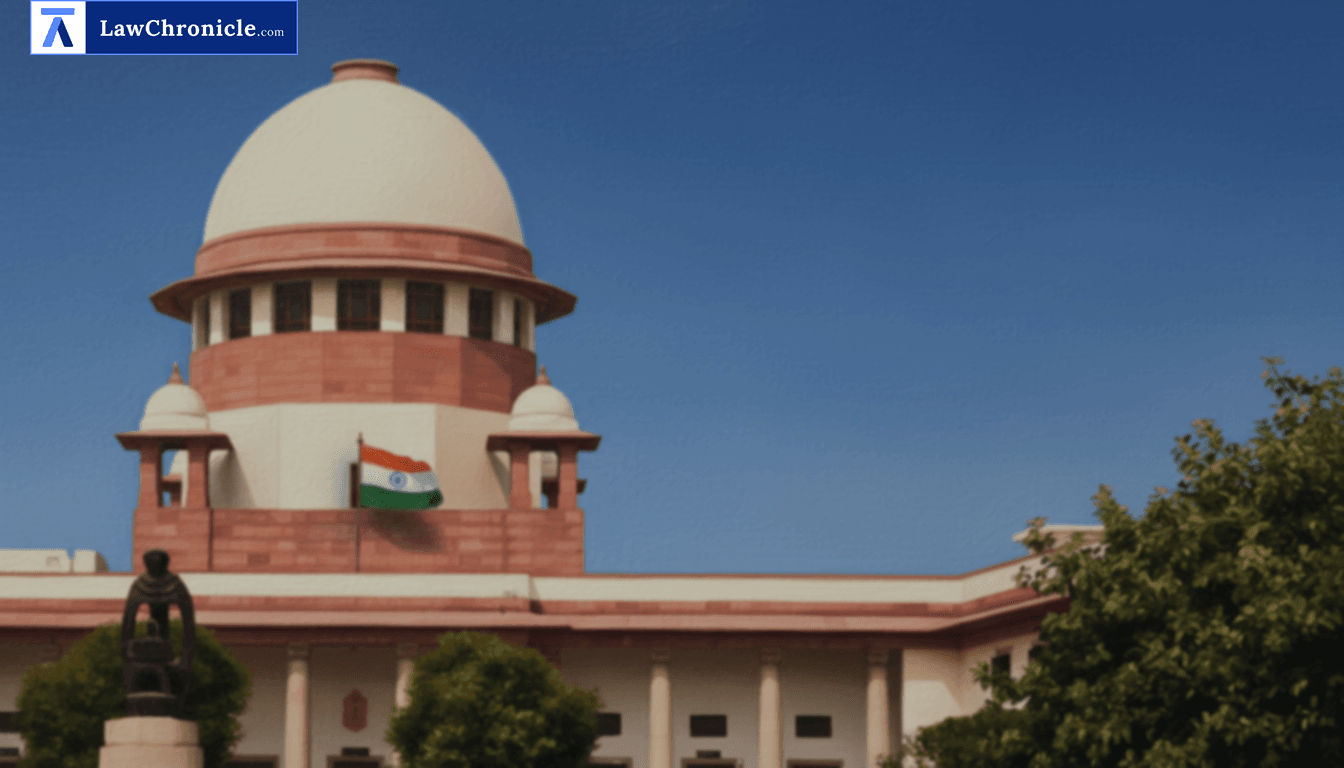
A bench of Justices B.V. Nagarathna and Satish Chandra Sharma heard an appeal against the Bombay High Court’s refusal to quash a First Information Report and related criminal proceedings registered at Karad Taluka Police Station, Satara, which alleged offences under Sections 376, 376(2)(n), 377, 504 and 506 IPC arising from an alleged promise to marry and subsequent sexual relations.
The Supreme Court allowed the appeal, set aside the High Court order dated 28.06.2024, quashed C.R. No. 490/2023 dated 31.07.2023 and all proceedings in RCC No. 378/2023 before the Additional Sessions Judge, Karad, and discharged the appellant. The Court found that the material on record did not establish the ingredients of offences under Sections 376(2)(n) or 506 IPC and held that the criminal process in the present case constituted an abuse of process falling within the categories identified in State of Haryana v. Bhajan Lal. The Court, in its reasoning, observed: “(5) Where the allegations made in the FIR or complaint are so absurd and inherently improbable on the basis of which no prudent person can ever reach a just conclusion that there is sufficient ground for proceeding against the accused. … (7) Where a criminal proceeding is manifestly attended with mala fide and/or where the proceeding is maliciously instituted with an ulterior motive for wreaking vengeance on the accused and with a view to spite him due to private and personal grudge.” The Court further noted that “this Court has time and again warned against the misuse of the provisions, and has termed it a folly to treat each breach of promise to marry as a false promise and prosecute a person for an offence under section 376 IPC.”
Background
The FIR was lodged on 31.07.2023 by the complainant who alleged that between 08.06.2022 and 08.07.2023 the appellant forcibly had sexual intercourse with her and committed unnatural sex after assuring marriage. The complainant was a previously married woman who had obtained a Khulanama and lived with her young son at her parental home; the appellant was a 23-year-old college student and tenant in the same village. The FIR narrated multiple episodes of sexual intercourse allegedly obtained on the promise of marriage, visits to lodges and use of the complainant’s car, and later an incident in the appellant’s native village where the complainant was allegedly assaulted by the appellant’s relatives.
The appellant denied the allegations and produced a police complaint by his father alleging harassment and threats by the complainant; a Non-Cognizable Report was also recorded. The Additional Sessions Judge, Karad, granted anticipatory bail to the appellant, observing among other things that the complainant was a major and that sustained consensual relations would undermine a charge of rape. The appellant thereafter moved the Bombay High Court under Section 482 CrPC to quash the criminal proceedings; the High Court dismissed the petition.
On appeal, the Supreme Court reviewed the record and the parties’ conduct and concluded that even accepting the FIR’s allegations at face value, the complainant’s behaviour — continued association, visits to lodges and the timing of the Khulanama — did not corroborate a claim of lack of consent obtained by inducement or fraud as defined under Section 90 IPC. The Court recorded that there was no material of coercion attracting Section 506 IPC and that the prosecution appeared to be motivated by grievance after the relationship soured. Applying the Bhajan Lal categories, the Court found the prosecution to be an abuse of process and quashed the FIR and all proceedings; the appellant was discharged and any bail bonds stood cancelled. No other interim directions were issued. Pending applications were disposed of.
Case Details: Case No.: 2025 INSC 782 Case Title: Amol Bhagwan Nehul v. The State of Maharashtra & Anr. Appearances: For the Petitioner(s): [Counsel not indicated in the judgment] For the Respondent(s): [Counsel not indicated in the judgment]
 Breaking News