Supreme Court Quashes FIR Over Poem, Directs Police To Use Preliminary Inquiry Safeguard For Free Speech
 Copy Link
 Share
Share Save
Save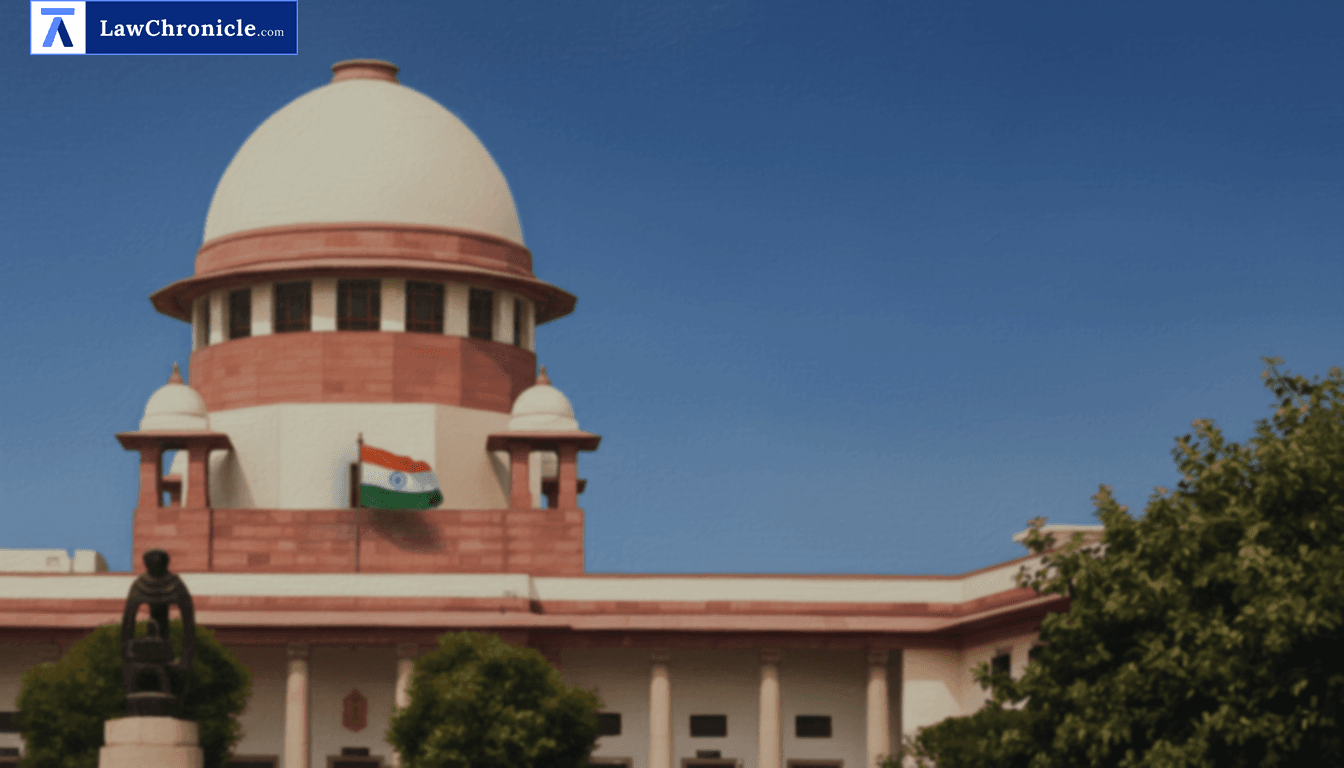
A bench of Justices Abhay S. Oka and Ujjal Bhuyan heard an appeal by Rajya Sabha Member Imran Pratapgadhi challenging a Gujarat High Court order that refused to quash an FIR registered after the appellant posted a video containing a poem on the social media platform X. The FIR alleged offences under Sections 196, 197(1), 302, 299, 57 and 3(5) of the Bharatiya Nyaya Sanhita, 2023, including promotion of enmity and wounding religious feelings.
The Court allowed the appeal, set aside the High Court order and quashed FIR No.11202008250014 (City A‑Division Police Station, Jamnagar), holding that the poem did not, on its face, attract the offences charged. The Court emphasised the need to protect Article 19(1)(a) rights when alleged offences arise from spoken or written words and stressed the statutory safeguard in Section 173(3) BNSS that permits a prior preliminary inquiry in certain cases. The judgment observed that "liberty of thought and expression is one of the ideals of our Constitution" and warned against treating every unpopular expression as criminal. The Court, in its reasoning, observed: “Therefore, when the commission of cognizable offences is alleged, where punishment is for imprisonment up to 7 years, which is based on spoken or written words, it will always be appropriate to exercise the option under sub‑Section (3) of Section 173 and conduct a preliminary inquiry to ascertain whether there exists a prima facie case to proceed. If an option under sub‑Section (3) is not exercised by the police officer in such a case, he may end up registering an FIR against a person who has exercised his fundamental right under Article 19(1)(a) even though clause (2) of Article 19 is not attracted. If, in such cases, the option under sub‑Section (3) of Section 173 is not exercised, it will defeat the very object of incorporating sub‑Section (3) of Section 173 of the BNSS and will also defeat the obligation of the police under Article 51‑A (a).”
Background The dispute arose from a 46‑second video of a mass marriage function in Jamnagar posted by the appellant from his verified X account; the background audio contained a poem in Urdu whose English translation the Court reproduced. A first informant alleged the poem incited enmity between communities and hurt religious and social sentiments, leading to registration of the FIR under multiple provisions of the BNSS. The appellant filed a petition under Section 528 BNSS read with Article 226 seeking quashing; the Gujarat High Court declined relief observing the post and responses could disturb social harmony and noting the investigation was at a nascent stage.
The Supreme Court examined the original Urdu text and its translation, and concluded the poem did not refer to any religion, caste, community or region, but used symbolic reference to "the throne" and communicated willingness to sacrifice in the face of injustice while preaching non‑violence. Applying precedents including Lalita Kumari on FIR registration, and authorities on mens rea and standards to judge provocative speech (Bhagwati Charan Shukla, Manzar Sayeed Khan, Javed Ahmad Hajam, Patricia Mukhim), the Court held that the ingredients of Sections 196, 197, 299 and 302 were not made out on the face of the complaint and that mens rea to promote communal enmity was absent. The Court noted Section 173(3) BNSS was a deliberate departure from CrPC practice and should normally be used by police leadership to permit a time‑bound preliminary inquiry where alleged offences arising from speech attract punishment between three and seven years, so as to protect fundamental freedoms. The Court therefore quashed the High Court order and the FIR and directed that further proceedings could not continue; no interim directions beyond quashing were imposed. The appeal was allowed.
Case Details: Case No.: 2025 INSC 410 (Criminal Appeal No.1545 of 2025) Case Title: IMRAN PRATAPGADHI v. STATE OF GUJARAT AND ANR. Appearances: For the Petitioner(s): Imran Pratapgadhi (Appellant) through senior counsel (name not recorded in the judgment) For the Respondent(s): State of Gujarat represented through the Solicitor General of India; 2nd respondent (first informant) — no counsel appearance recorded.
 Breaking News