Supreme Court quashes State refusals, orders regularisation and arrears for long-engaged daily wagers
 Copy Link
 Share
Share Save
Save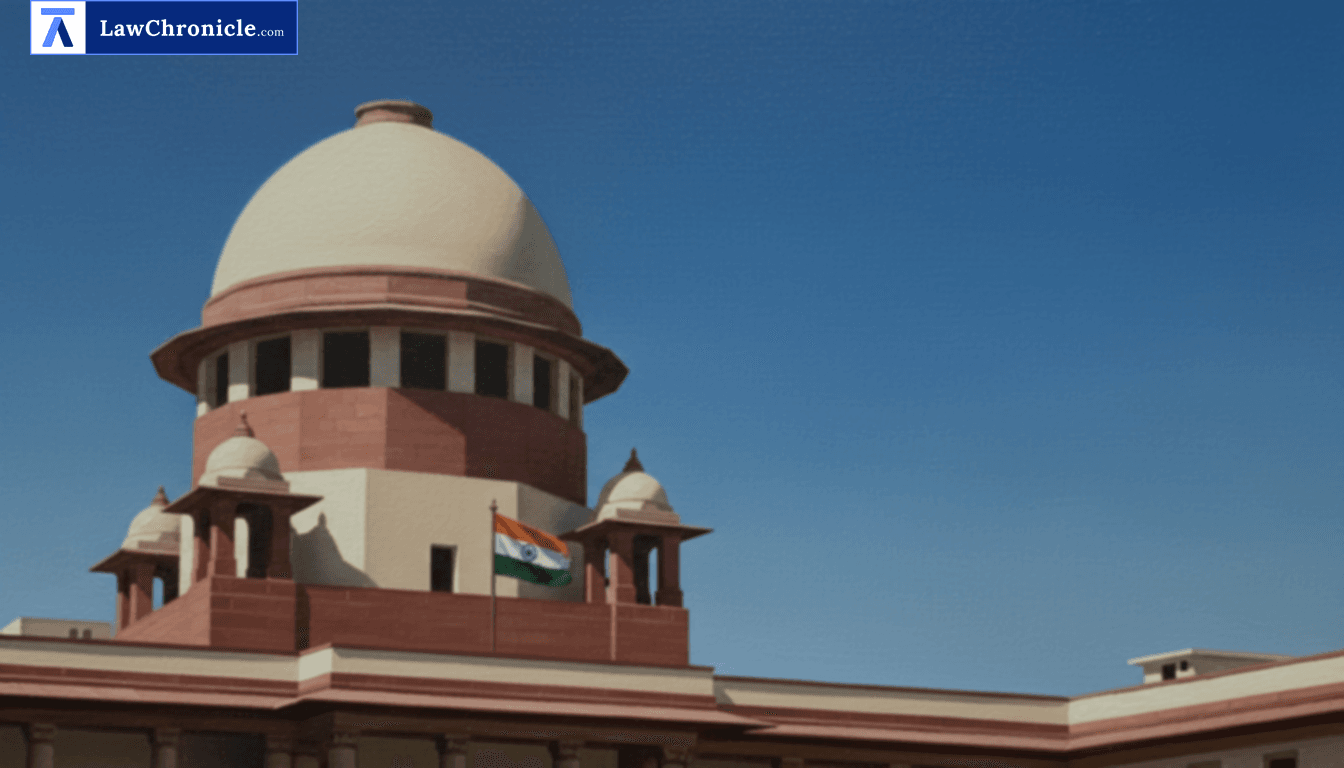
A bench of Justice Vikram Nath and Justice Sandeep Mehta heard an appeal against the Allahabad High Court’s dismissal of a writ petition by long-serving daily-wage employees of the U.P. Higher Education Services Commission challenging the State’s refusal to sanction permanent posts. The appellants contested two communications of the State dated 11.11.1999 and 25.11.2003 declining to create Group‑C/Group‑D posts and relying on “financial constraints” and a ban on creation of new posts.
The Court allowed the appeal, held that the High Court had materially erred by treating the dispute as a mere plea for regularisation and by not adjudicating the legality of the State’s refusals, and quashed the impugned orders insofar as they concerned the Commission’s proposals for Class‑III/Class‑IV posts. The Court emphasised that refusal to sanction posts could not be “immune from judicial scrutiny for arbitrariness” and criticised non‑speaking rejections based on generic financial pleas. The Court, in its reasoning, observed: “When public institutions depend, day after day, on the same hands to perform permanent tasks, equity demands that those tasks are placed on sanctioned posts, and those workers are treated with fairness and dignity. … We resolve it by insisting that public employment should be organised with fairness, reasoned decision making, and respect for the dignity of work.” The judgment also adopted the principle that recent authorities had cautioned that Umadevi could not be used “as a shield to justify exploitation through long‑term ‘ad hocism’” and stated that the State, as a “constitutional employer,” could not “balance budgets on the backs of those who perform the most basic and recurring public functions.”
Background The appellants were engaged by the Commission between 1989 and 1992 as Class‑IV attendants/peons and a Driver (Class‑III) and were paid as daily wagers, later on consolidated monthly amounts. The Commission had repeatedly sought sanction for fourteen posts beginning with a 1991 resolution and subsequent correspondence; the State refused in 1999 and again in 2003 citing financial constraints and a ban on new posts. The appellants filed Writ Petition No. 3162 of 2000; the High Court directed a fresh recommendation and interim payment of minimum pay in 2002, but ultimately the Single Judge dismissed the petition in 2009 relying on the absence of regularisation rules and the proposition in Secretary, State of Karnataka v. Umadevi. The Division Bench affirmed dismissal in 2017, treating the matter principally as one of regularisation and vacancy. This Court found that the High Court had failed to examine whether the State’s refusals were arbitrary, noting undisputed long‑term reliance on the appellants’ services, evidence of vacancies (including RTI material and an I.A. pointing to vacant posts), and comparator regularisations within the same Commission. The Court distinguished Umadevi, relying on recent precedents which warned against perpetuating precarious employment where work was perennial. The Supreme Court held the State’s refusals unsustainable, directed that all appellants be regularised from 24.04.2002 by creation of supernumerary posts in corresponding cadres, ordered fixation at not less than minimum of the regular pay scale (with protection of last drawn wages if higher), payment of arrears for the period from 24.04.2002 until regularisation/retirement/death within three months with 6% compound interest on default, recalculation of pension and terminal dues for retired appellants, payment to legal representatives of deceased appellants, and filing of a compliance affidavit by the competent authority within four months. The appeal was allowed and pending applications were disposed of; no order as to costs.
Case Details: Case No.: Civil Appeal No. 8558 of 2018 (2025 INSC 998) Case Title: Dharam Singh & Ors. v. State of U.P. & Anr. Appearances: (List advocates if available, for both sides using the format) For the Petitioner(s): Counsel not indicated in the reported judgment For the Respondent(s): Counsel not indicated in the reported judgment
 Breaking News