Supreme Court Quashes Summons In Defamation Cases Arising From Auction Coverage, Holds Mandatory Inquiry Under S.202 CrPC
 Copy Link
 Share
Share Save
Save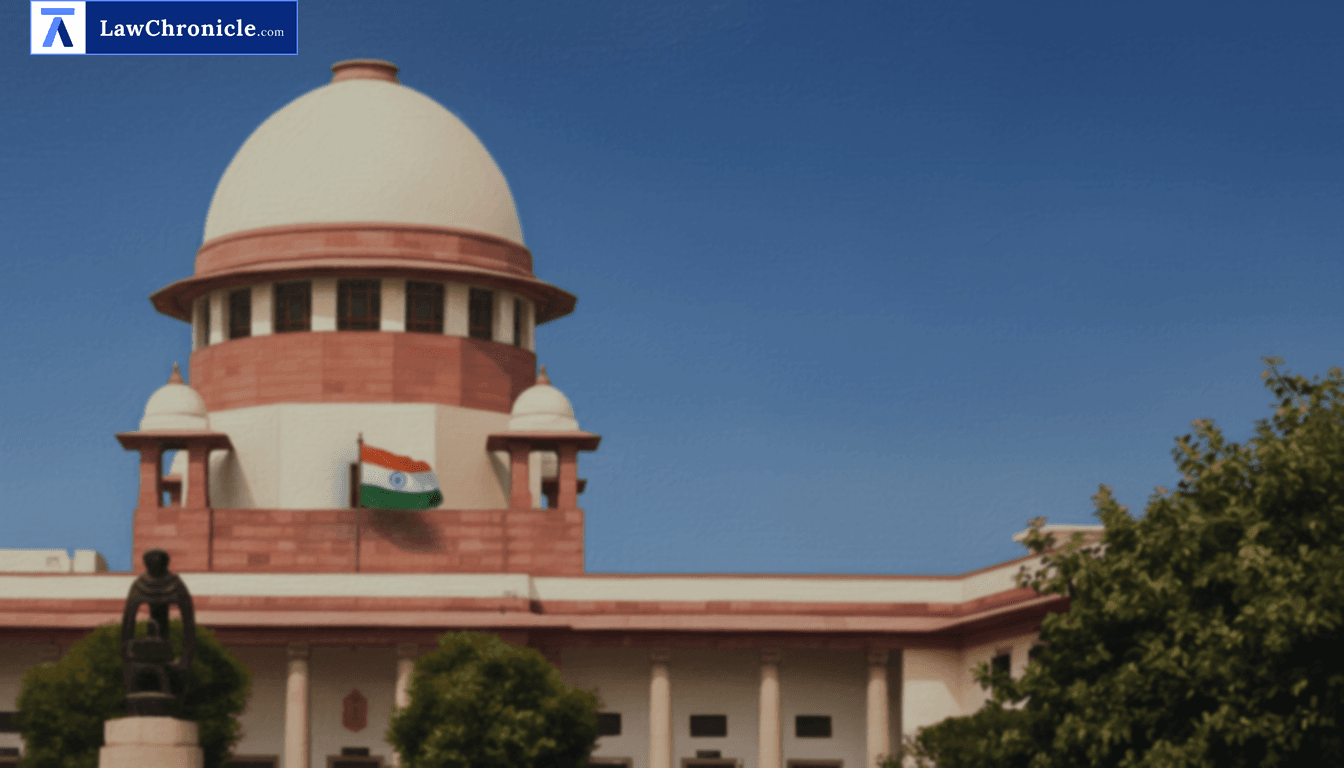
A bench of Justices R. Mahadevan and J.B. Pardiwala heard appeals by journalists and an editorial director challenging Karnataka High Court and magistrate orders that had permitted criminal proceedings under Sections 499 and 500 IPC arising from news reports on an art auction. The appeals arose out of a private complaint by M/s. Bid and Hammer Auctioneers alleging that several news articles published in different editions of The Times of India, The Economic Times and Mirror titles defamed the auction house by casting doubt on the authenticity of paintings offered at auction.
The Court allowed the appeals, quashed the impugned High Court order and the summons issued by the trial magistrate, and set aside the criminal complaint insofar as the appellants were concerned. The Court held that where accused persons resided outside the magistrate’s territorial jurisdiction the magistrate was obliged to conduct an inquiry or direct an investigation under Section 202 CrPC before issuing process, and that an editorial director could not be proceeded against on a mere blanket averment of oversight without specific allegations of control over the impugned publications. The Court, in its reasoning, observed: “Admitted position in law is that in those cases where the accused is residing at a place beyond the area in which the Magistrate exercises his jurisdiction, it is mandatory on the part of the Magistrate to conduct an enquiry or investigation before issuing the process. … The use of the expression ‘shall’ and the background and the purpose for which the amendment has been brought, we have no doubt in our mind that inquiry or the investigation, as the case may be, is mandatory before summons are issued against the accused living beyond the territorial jurisdiction of the Magistrate.” The Court further noted that “such a broad, general or blanket statement without specific or substantive details cannot justify the issuance of summons.”
Background The controversy began with a private complaint dated 22.08.2014 by Bid and Hammer alleging defamatory reporting in multiple newspapers on 27–29 June, 6–7 July and 20 July 2014, relating to authenticity concerns about works put up for auction on 27.06.2014. The trial magistrate recorded the complainant’s sworn statement, took cognizance on 29.07.2016, registered the matter as CC No.18491 of 2016 and issued summons to 14 accused including the company (Accused No.1), its editorial director Jaideep Bose (Accused No.2) and several journalists alleged to have authored the articles.
The appellants challenged the summons before the Karnataka High Court by Criminal Petition No.3829 of 2017. The High Court quashed the complaint only as to the company (A1) but dismissed the petition in respect of the individual appellants. The present appeals followed. Petitioners argued that many accused resided outside the magistrate’s jurisdiction (Mumbai/Kolkata), that Section 202 CrPC required a mandatory inquiry before issuing process in such cases, and that the complaint lacked specific averments tying the editorial director to editorial control under the Press and Registration of Books Act, 1867. They also relied on precedents protecting journalistic expression and on a prior order of this Court (M/s. DAG Pvt. Ltd. v. Bid & Hammer Auctioneers) in which similar criminal proceedings had been quashed.
The respondent contended that the articles caused serious reputational harm and that issuance of process at the stage of cognizance required only a prima facie view. This Court noted earlier interim stays of trial proceedings issued in August–November 2024 and examined statutory provisions including Sections 5 and 7 of the Press Act, Sections 499–500 IPC and Section 202 CrPC, and relevant precedents such as Abhijit Pawar and Vijay Dhanuka addressing the mandatory nature of inquiry under Section 202. Applying those principles, the Court found no proper inquiry under Section 202 was carried out though several accused lived beyond the magistrate’s jurisdiction, and that the complaint contained only broad assertions against the editorial director without particulars sufficient to displace the presumption required by the Press Act. The Court recorded that the auction had already taken place in 2014 and that remand for fresh inquiry would likely produce no useful purpose; accordingly it quashed the summons and the complaint as to the appellants. The Court reiterated the need for responsible journalism, observing that “The Pen is mightier than the sword,” and emphasized publication in “public interest and with good faith.”
Case Details: Case No.: Criminal Appeal Nos. 814–817 of 2025 (arising out of SLP (Crl.) Nos. 10212, 13443, 15653 & 16153 of 2024; Reportable: 2025 INSC 241) Case Title: Jaideep Bose & Ors. v. M/s. Bid and Hammer Auctioneers Private Limited Appearances: For the Petitioner(s): Mr. R. Basant, Senior Counsel (appearing for the Editorial Director petitioner; other counsel for various appellants not specified in the judgment text) For the Respondent(s): Counsel for the complainant/respondent (not specified in the reported judgment)
Date of Judgment: February 18, 2025 Coram: Justices R. Mahadevan and J.B. Pardiwala Order: Appeals allowed; impugned High Court order and summoning orders quashed and criminal complaint set aside insofar as the appellants were concerned; connected applications disposed.
 Breaking News