Supreme Court Restored Corruption Trial and Set Aside High Court Order That Quashed Sanction
 Copy Link
 Share
Share Save
Save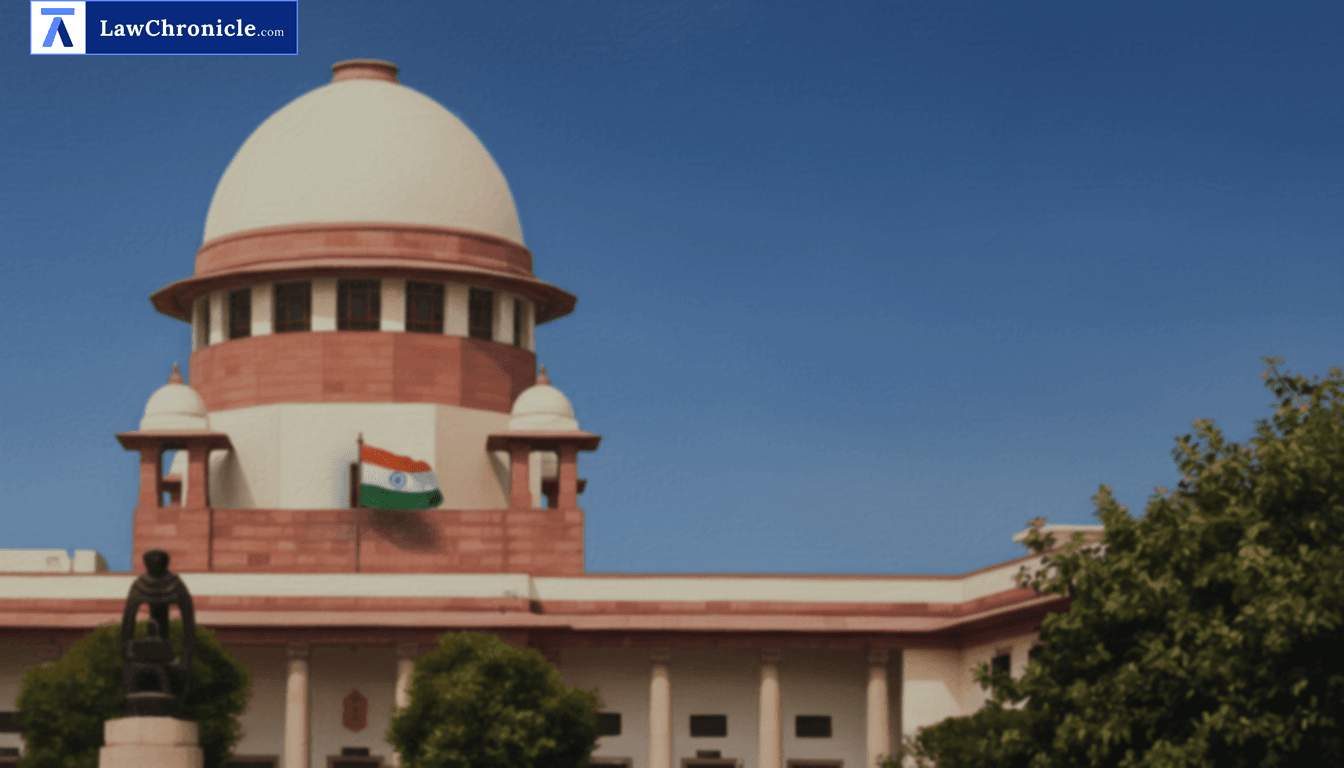
A bench of Justice Bela M. Trivedi and Justice Prasanna B. Varale heard the State of Punjab's appeal against the Punjab and Haryana High Court's order of 20.05.2019 which had quashed a Sanction Order dated 19.11.2018 and set aside consequent proceedings under the Prevention of Corruption Act. Leave was granted and the appeal arose from SLP(Crl.) No. 9114/2019.
The Court allowed the appeal, set aside the High Court judgment and restored the proceedings pending before the Special Court, Sangrur, to continue from the stage at which they were stopped. The bench held that the High Court erred in quashing the sanction and proceedings after the trial had commenced and the prosecution had examined witnesses, without recording that a "failure of justice" had been occasioned. The Court relied on this Court's decision in State of Karnataka, Lokayukta Police v. S. Subbegowda and stated that a sanction-related defect could not automatically warrant interference in appeal, confirmation or revision unless a failure of justice had in fact occurred. The Court, in its reasoning, observed: "11. The combined reading of sub-section (3) and (4) of Section 19 makes it clear that notwithstanding anything contained in the Code, no finding, sentence or order passed by the Special Judge shall be reversed or altered by a Court in appeal, confirmation or revision on the ground of, the absence of, or any error, omission or irregularity in the sanction required under sub-section (1), unless in the opinion of the Court, a failure of justice has in fact been occasioned thereby. sub-section (4) further postulates that in determining under subsection (3) whether the absence of, or any error, omission or irregularity in the sanction has occasioned, or resulted in failure of justice, the Court shall have regard to the fact whether the objection could and should have been raised at an earlier stage in the proceedings. The explanation to sub-section (4) further provides that for the purpose of Section 19, error includes “competency of the authority to grant sanction”. Thus, it is clear from the language employed in sub-section (3) of Section 19 that the said sub-section has application to the proceedings before the Court in appeal, confirmation or revision, and not to the proceedings before the Special Judge. The said sub-section (3) clearly forbids the court in appeal, confirmation or revision, the interference with the order passed by the Special Judge on the ground that the sanction was bad, save and except in cases where the appellate or revisional court finds that the failure of justice had occurred by such invalidity." The Court further noted that "whether the Sanction Order was passed by the competent authority or not, would be a matter of evidence."
Background The dispute arose from FIR No. 02 dated 10.01.2024 registered at Police Station Vigilance Bureau, Patiala Range, Patiala, alleging offences punishable under Sections 7 and 13(2) of the Prevention of Corruption Act, 1988. A Sanction Order dated 19.11.2018 authorised prosecution. The respondent accused filed a petition in the High Court (CRM M No. 11994 of 2019) seeking quashing of the Sanction Order; the High Court allowed the petition and set aside the consequential proceedings. The State of Punjab challenged that order before this Court.
The State contended that the High Court erred in interfering after the trial had commenced and the prosecution had already examined witnesses, placing reliance on S. Subbegowda. The respondent maintained that the Sanction had been granted by an officer not competent to do so and therefore the High Court rightly quashed the proceedings. The Supreme Court held that, in light of Section 19(3) and (4) of the Act and the authorities, an appellate or revisional court should not reverse or alter orders of a Special Judge on sanction grounds unless it was satisfied that a failure of justice had occurred; the propriety or competency of the authority granting sanction was a matter to be tested by evidence at trial. The Court found no recorded finding by the High Court that a failure of justice had been occasioned and therefore restored the trial court proceedings. The Court clarified that it did not express any opinion on the merits and that the respondent remained at liberty to raise all legally permissible contentions regarding sanction during the trial. The appeal was allowed and pending applications were closed.
Case Details: Case No.: Criminal Appeal No. ___ of 2025 (Arising out of SLP(Crl.) No. 9114/2019) Case Title: The State of Punjab v. Hari Kesh Appearances: For the Petitioner(s): Mr. Vivek Jain, D.A.G.; Mr. Karan Sharma, AOR For the Respondent(s): Mr. Vivek Gupta, AOR; Mr. Ankit Verma, Adv.
 Breaking News