Supreme Court Restores First Appellate Finding That Disputed Land Is Self‑Acquired and Sale Is Valid
 Copy Link
 Share
Share Save
Save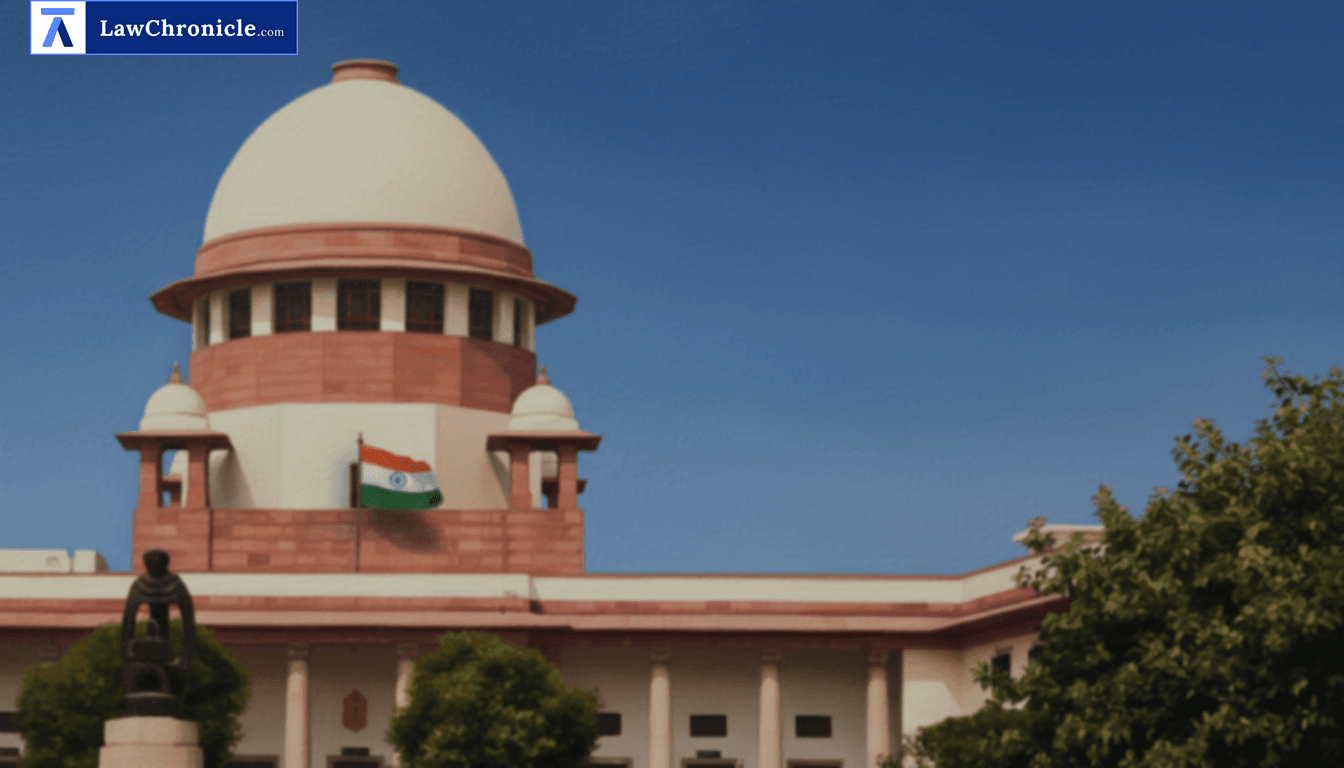
A bench of Justices R. Mahadevan and J.B. Pardiwala heard an appeal by the purchaser of agricultural land challenging the Karnataka High Court’s order which had set aside a first appellate court’s decree in a partition suit. The principal question before the Court was whether the suit property was ancestral (joint family) property or the self‑acquired property of the vendor and, consequently, whether the sale to the appellant was valid.
The Court allowed the appeal, held that the High Court erred by re‑appreciating evidence in a second appeal without a substantive question of law, and restored the First Appellate Court’s judgment that the disputed property was self‑acquired and the sale deed in favour of the appellant was valid. The Court emphasised the limited scope of a second appeal under Section 100 CPC and the circumstances in which a High Court could revisit findings of fact. The Court, in its reasoning, observed: "In our view, the so‑called substantial question of law framed by the High Court does not qualify to be a substantial question of law, rather the exercise of the High Court is a venture into the findings of the First Appellant Court by re‑appreciation of evidence. It is settled law that the High Court can go into the findings of facts only if the First Appellate Court has failed to look into the law or evidence or considered inadmissible evidence or without evidence. Section 103 permits the High Court to go into the facts only when the courts below have not determined or rendered any finding on a crucial fact, despite evidence already available on record or after deciding the substantial question of law, the facts of a particular case demand re‑determination. For the second limb of Section 103 to apply, there must first be a decision on the substantial question of law, to which the facts must be applied, to determine the issue in dispute. When the First Appellate Court in exercise of its jurisdiction has considered the entire evidence and rendered a finding, the High Court cannot re‑appreciate the evidence just because another view is possible, when the view taken by the First Appellate Court is plausible and does not suffer from vice in law." The Court set aside the High Court’s judgment and restored the First Appellate Court’s decree; the appeal was allowed and the parties were directed to bear their own costs.
Background
The dispute arose from a suit (O.S. No.169 of 1994) for partition and separate possession of a 7 acres 20 guntas property in Mahadevapura Village. The plaintiffs were four children of Defendant No.1; the appellant was Defendant No.2 and the purchaser of the suit land. Defendant No.1 and his brothers had executed a registered partition deed on 09.05.1986 allocating distinct shares. The suit property was allotted to C. Thippeswamy (one brother) and, by a registered sale deed dated 16.10.1989, was purchased by Defendant No.1; he later sold it to Defendant No.2 on 11.03.1993.
The trial Court decreed the plaintiffs’ partition suit; the First Appellate Court reversed that decree and held for the defendants; the High Court in Regular Second Appeal allowed the plaintiffs’ appeal by treating the property as ancestral and blending self‑acquisitions with family nucleus. The appellant challenged the High Court order before the Supreme Court.
On appeal, the Supreme Court reviewed the record of oral and documentary evidence. The plaintiffs contended that the vendor had purchased the land from joint family nucleus—income from allotted lands, a Rs.10,000 cash distribution at partition and funds from a grandmother—and therefore the land retained ancestral character; they alleged sale without necessity or consent. The respondents relied on oral testimony (DWs) and sale documents showing a loan advanced by a third party (DW3) which, the Court found, supported the position that Defendant No.1 purchased the land from his own funds/loan and later repaid DW3 by sale of a different parcel. The Court noted that “there was no presumption of a property being joint family property only on account of existence of a joint Hindu family” and reiterated established principles on the burden of proof, nexus of a family nucleus and the doctrine of blending.
Applying settled authorities on the limited ambit of Section 100 CPC and the principles governing ancestral versus self‑acquired property, the Court held that the High Court had impermissibly re‑appreciated evidence and wrongly applied the doctrine of blending. The Court restored the First Appellate Court’s judgment that the suit property was self‑acquired and the sale deed to the appellant was valid. The appeal was allowed and each party bore its own costs.
Case Details: Case No.: Civil Appeal No. 5401 of 2025 (Arising out of SLP (C) No. 6799 of 2022) Case Title: Angadi Chandranna v. Shankar & Ors. Appearances: For the Petitioner(s): Advocates not specified in the judgment text For the Respondent(s): Advocates not specified in the judgment text
 Breaking News