Supreme Court: Section 143 of Railways Act Covers E‑tickets; Proceedings Against Unauthorised Seller Restored, Agent’s Case Quashed
 Copy Link
 Share
Share Save
Save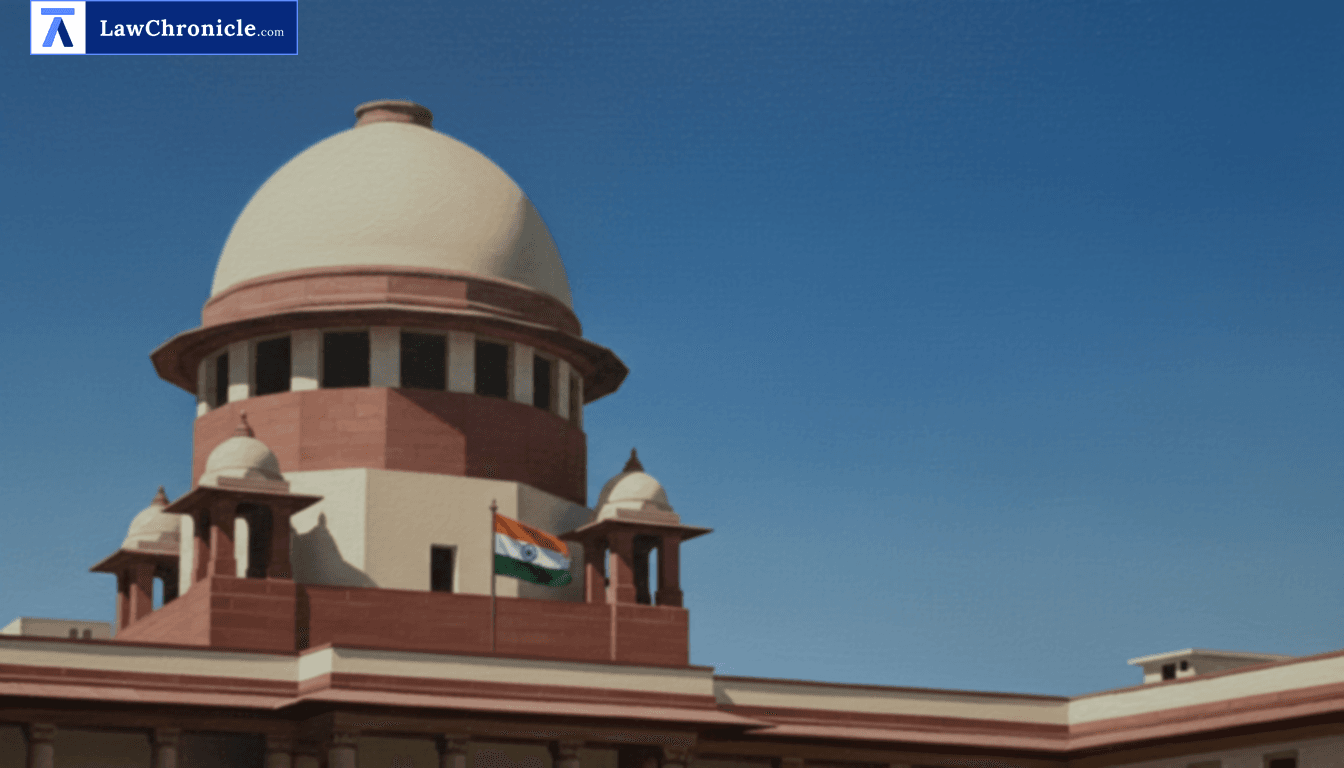
A bench of Justices Dipankar Datta and Prashant Kumar Mishra heard appeals raising a common question of law on the scope and interpretation of Section 143 of the Railways Act, 1989, in two connected matters: Inspector, Railway Protection Force, Kottayam v. Mathew K. Cherian & Anr. (Criminal Appeal No. 4169/2024) and J. Ramesh v. Union of India (Criminal Appeal Nos. 139-140/2025). The appeals challenged High Court orders that respectively quashed and declined to quash criminal proceedings under Section 143 relating to procurement and supply of railway e‑tickets.
Decision Summary: The Supreme Court held that Section 143 criminalised unauthorised procurement and supply of railway tickets irrespective of mode, and that the subsequent advent of e‑ticketing did not oust the provision’s operation. The Court observed that “Section 143, on its plain language, prohibits any person, other than a railway servant or an authorised agent, to conduct the business of procurement and supply of railway tickets.” It allowed the appeal in the lead matter and directed restoration of criminal proceedings against Mathew, but allowed the connected appeals and quashed proceedings against J. Ramesh, an authorised agent, holding that Section 143 did not punish authorised agents for breaches of contractual terms or for creation of multiple user IDs.
The Court, in its reasoning, observed: "We are further of the considered opinion that the mere fact of the system of e-reservation and e-tickets being introduced after the enactment of the Act does not render the provision in Section 143 toothless to combat the illegal sale of e-tickets. Section 143, importantly, makes no distinction between physical and online sale of tickets. The mischief that the provision seeks to remedy is that there should not be illegal and unauthorised procurement and sale of tickets, whatever be the mode – physical or online. The Kerala High Court seems to have missed this aspect."
Background: The disputes arose from separate RPF investigations. In the Kerala matter, Crime Case No. 524/2016 was registered after an RPF search at the office of Mathew, managing director of a non‑banking finance company, led to the arrest of an employee and seizure of material. The employee allegedly confessed to working under Mathew, who was accused of creating hundreds of user IDs on the IRCTC portal to procure and sell e‑tickets without railway authorisation. The Kerala High Court quashed proceedings, reasoning that “The Act was enacted much before the advent of e-ticket system” and that the online procurement of tickets by genuine travellers did not satisfy Section 143.
In the Madras matter, two FIRs (Crime No. 3116/2019 and 600/2020) alleged that J. Ramesh, owner of an authorised ticketing agency, created multiple user IDs, procured Tatkal and other tickets and charged service fees. The Madras High Court refused to quash the proceedings, observing that an authorised agent could not create other user IDs for illegal gain.
The Supreme Court reviewed statutory language and precedents on construction of statutes and quashing of criminal proceedings. It applied established principles that penal provisions must be read strictly but that statutory words, if broad enough, cover later developments (citing Senior Electric Inspector v. Laxminarayan Chopra and subsequent decisions). The Court held that the Kerala High Court erred in treating the Act as inapplicable to e‑ticketing; it found prima facie material against Mathew and restored the criminal prosecution. Conversely, the Court held that Section 143 did not criminalise creation of multiple user IDs by an authorised agent or remedy contractual breaches by criminal process; such disputes were for civil remedy. The Court directed that proceedings against Mathew “shall be taken to its logical conclusion, in accordance with law” and clarified that observations made were confined to the decision. No interim stay or other liberty beyond restoration/quashing was recorded.
Case Details: Case No.: 2025 INSC 51; Criminal Appeal No. 4169/2024 (Arising out of SLP (CRIMINAL) No. 2408/2017) and Criminal Appeal Nos. 139-140/2025 (Arising out of SLP (CRIMINAL) Nos. 9225-9226/2022) Case Title: Inspector, Railway Protection Force, Kottayam v. Mathew K. Cherian & Anr.; J. Ramesh v. Union of India (Connected Appeals) Appearances: For the Petitioner(s): Not indicated in the reported judgment For the Respondent(s): Not indicated in the reported judgment
 Breaking News