


Supreme Court Sets Aside Allahabad High Court Bail in Dowry-Death Case; Husband directed to surrender
 Copy Link
 Share
 Save
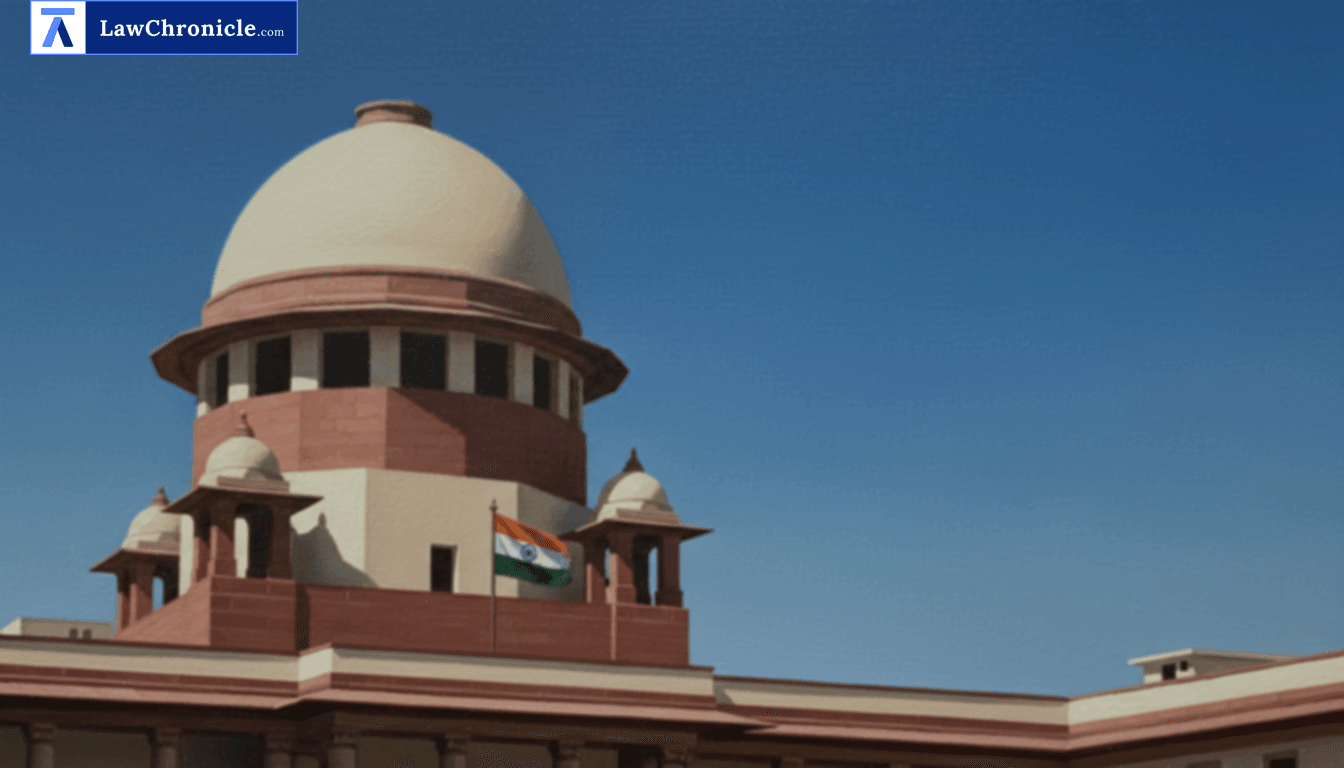
A Bench of Justices B.V. Nagarathna and R. Mahadevan heard an appeal by the father of the deceased challenging the Allahabad High Court’s order granting bail to the husband accused in an alleged dowry death. The appeal arose from Criminal Misc. Bail Application No. 7768 of 2024 (impugned order dated 09.01.2025) in relation to Case Crime No. 415 of 2023 registered at Kotwali, Fatehpur.
The Supreme Court allowed the appeal and set aside the High Court’s bail order, holding that the High Court failed to apply its mind to material factors and the statutory presumption in dowry-death cases. The Court noted that the High Court had invoked Article 21 and observed that “bail is the rule and jail is the exception”, but found that general bail principles could not supplant the statutory framework applicable to dowry deaths. The Court, in its reasoning, observed: “The dying declarations to the father and elder sister, coupled with consistent testimony of relatives and post-mortem noting of an abrasion suggestive of restraint, satisfy the foundational requirements of Section 304B IPC. Consequently, the presumption under Section 113B of the Evidence Act arises inexorably against Respondent No. 1.” The Court concluded that the bail order was perverse and unjustified, and directed that the accused surrender to custody forthwith.
Background The dispute arose after Aastha @ Saarika died on 05.06.2023 within four months of marriage. Her father alleged persistent dowry harassment, including a demand for a Fortuner, and said the deceased had telephoned her sister at about 1.30 am on the night of 04/05.06.2023, crying that a “smelly substance” had been forcibly administered. The post-mortem initially did not fix cause of death, but forensic analysis of viscera later detected aluminium phosphide. An abrasion on the left forearm was recorded. FIR No. 415/2023 was registered on 15.06.2023 under Sections 498A, 304B, 120B and 328 IPC and Sections 3 and 4 of the Dowry Prohibition Act; the chargesheet later implicated only the husband under Sections 498A, 304B and 328 IPC read with Sections 3 and 4 D.P. Act. The Sessions Court denied bail on 20.10.2023, but the High Court granted bail on 09.01.2025.
On appeal, the father challenged the High Court order, contending that the court ignored the gravity of the offence, dying declarations, corroborative witness statements, the FSL report and the statutory presumption under Section 113B of the Evidence Act applicable to dowry deaths within seven years of marriage. The husband argued delay in FIR, absence of independent corroboration for certain allegations, exoneration of some co-accused, and that he had already undergone substantial custody; he contended the High Court’s discretionary grant of bail was not vitiated.
The Supreme Court reviewed settled principles on annulment and cancellation of bail, including that a bail order passed without due application of mind or in disregard of material facts may be set aside. The Court applied authorities on Section 304B IPC and Section 113B Evidence Act (including Kans Raj, Rajinder Singh, Baijnath and related precedents) and observed that once foundational facts were shown — death within seven years, cruelty or harassment soon before death, and connection with dowry demand — the statutory presumption arises and must be weighed at the bail stage. The Court further noted investigative lapses, including a 104-day delay in arrest and transfer of probe to CB-CID after concerns were raised. Relying on the totality of circumstances and the nature of the evidence, the Court concluded the High Court failed to consider material factors and thereby annulled the bail. The Court emphasised that “dowry death is not merely an offence against an individual but a crime against society at large,” and confined its order to cancellation of bail while directing the trial to proceed on merits.
Case Details: Case No.: 2025 INSC 1367 (Arising out of SLP (Crl.) No. 8075 of 2025) Case Title: Yogendra Pal Singh v. Raghvendra Singh alias Prince and Another Appearances: For the Petitioner(s): Senior counsel for appellant (name not indicated in judgment) For the Respondent(s): Counsel for respondent (name not indicated in judgment)
Similar Articles
 Breaking News


