Supreme Court Sets Aside Convictions Over Section 313 Lapse; Juvenile Conviction Vacated After Board Inquiry
 Copy Link
 Share
Share Save
Save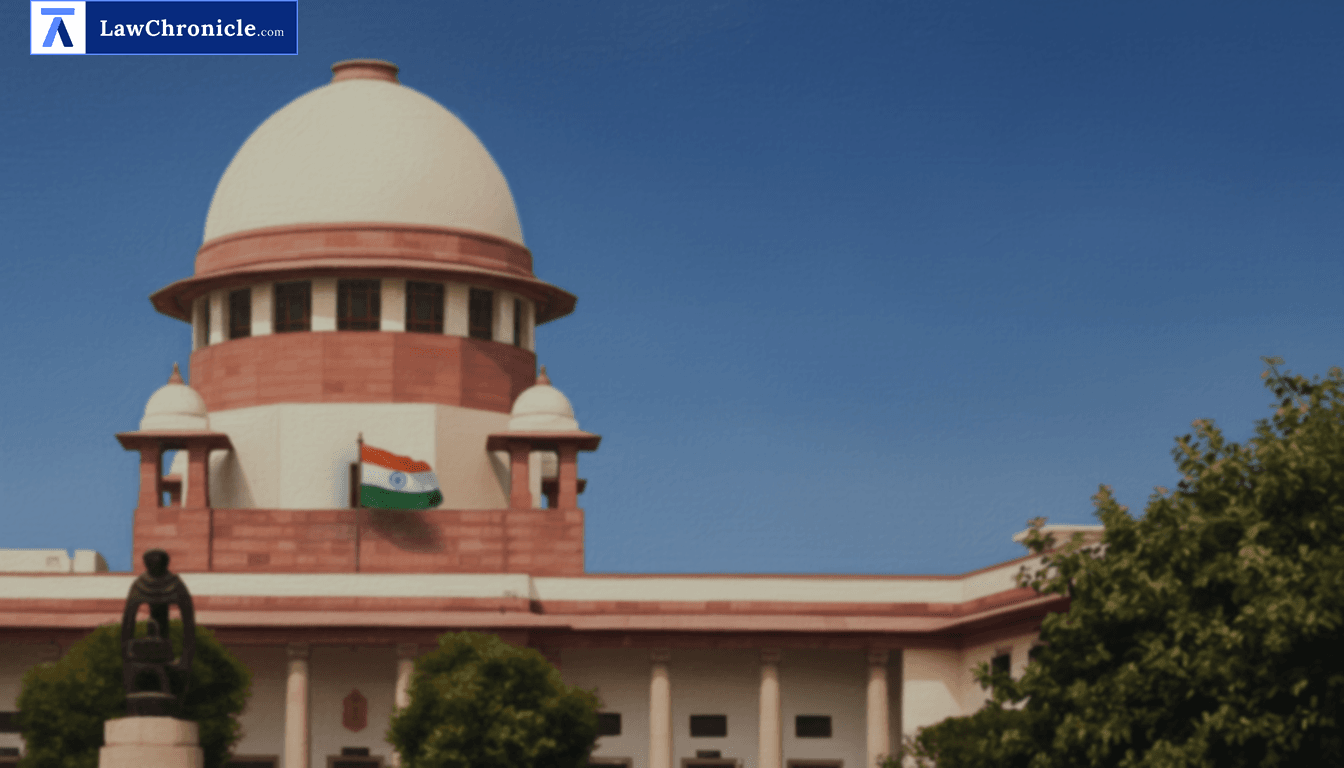
A bench of Justices Abhay S. Oka and Ujjal Bhuyan heard an appeal arising from the Patna High Court’s dismissal of related criminal appeals that affirmed convictions in a 1982 bank fraud prosecuted by the CBI. The Court addressed challenges to the trial court’s recording of statements under Section 313 Cr.P.C., and a separate plea that one appellant was a juvenile at the time of the offence.
The Court allowed the criminal appeal. It set aside the convictions and sentences imposed by the trial court on 29.05.2006 and affirmed by the High Court on 24.11.2011. The Court accepted the Special Judge’s finding that appellant No.3 was a juvenile on the date of the offence and held that his conviction and sentence “are hereby set aside on the ground of juvenility.” The Court further found that the trial court had not complied with the requirements of Section 313 Cr.P.C. and that the omission “caused serious prejudice” to the appellants; given the long delay since the alleged offences, a remand to record fresh Section 313 statements was not feasible and the appellants were entitled to benefit of doubt. The Court, in its reasoning, observed: "Therefore, there is no doubt that such omission, which is a serious irregularity, has completely vitiated the trial. Even if we take a more sanguine approach by taking the view that such omission did not result in the failure of justice, it is still a material defect albeit curable. ... In such circumstances, we are of the considered opinion that it is neither possible nor feasible to order such remand. Consequently, appellants are entitled to the benefit of doubt because of such omission in the recording of their statements under Section 313 Cr.P.C. since the trial court had relied on the evidence adverse to the appellants while convicting them." The Court also noted the statutory mandate under the Juvenile Justice Act: "If the court finds a person to be a juvenile on the date of commission of the offence ... the sentence, if any, passed by a court shall be deemed to have no effect."
Background The prosecution case related to transactions between September and December 1982 in which false transport receipts and forged bills, said to be issued by M/s Rohtas Carriers, were used to obtain payments from State Bank of India. The CBI alleged a conspiracy involving bank officials and traders that caused a principal loss of Rs.13,29,266.00. Three appellants before the Court — Ramji Prasad Jaiswal, Ashok Kumar Jaiswal and Bal Mukund Jaiswal — were tried in Special Case No.52/1983 and convicted under Sections 420, 468, 471 and 120B IPC read with Sections 5(2) and 5(1)(d) of the Prevention of Corruption Act; sentences were directed to run concurrently. The High Court dismissed their appeals on 24.11.2011.
On special leave before this Court, two principal contentions were pressed: (i) that statements under Section 313 Cr.P.C. were recorded in a "most mechanical manner" and did not confront the appellants with the specific incriminating evidence relied upon by prosecution witnesses, and (ii) that appellant Bal Mukund Jaiswal (No.3) was a juvenile at the time of the alleged offences. Pursuant to this Court’s order dated 21.09.2012, the Special Judge conducted a Section 7A inquiry under the Juvenile Justice (Care and Protection of Children) Act, 2000 and, on 28.11.2013, declared appellant No.3 to be a juvenile, noting that both oral and documentary evidence (including the matriculation certificate and school register) established a date of birth of 24.12.1965. The Special Judge recorded: "Thus from the evidence both oral and documentary it is evident that the convict Balmukund Jaiswal was juvenile on the date of offence."
The Supreme Court found that the juvenility finding required that the sentence “shall be deemed to have no effect” and that, in view of the passage of over four decades, remanding appellant No.3’s case to the Juvenile Justice Board was neither possible nor feasible; his conviction and sentence were set aside. As to the other two appellants, the Court held that the failure to put material circumstances to them under Section 313 was a grave irregularity that vitiated the trial and, given the long delay, could not be cured by remand; their convictions and sentences were accordingly set aside. The Court noted that the appellants were on bail and ordered that their bail bonds be cancelled.
Case Details: Case No.: Criminal Appeal No. 490 of 2025 (Arising out of SLP(Crl.) No. 2629 of 2012) (2025 INSC 738) Case Title: Ramji Prasad Jaiswal @ Ramjee Prasad Jaiswal and Ors. v. State of Bihar Appearances: For the Petitioner(s): Mr. Nagendra Rai (learned counsel for petitioner No.3); (other petitioner counsel not specified in the record) For the Respondent(s): Mr. H.P. Raval, Additional Solicitor General (acted on instructions); Mr. Rajiv Nanda (learned counsel for CBI)
 Breaking News